
Deciding when to travel to Vietnam requires more than selecting a general dry season or searching for one universally recommended month. The country’s long geography gives northern, central and southern regions different weather patterns, while mountains, islands and cities introduce further local variation. The most suitable period should therefore reflect the route, priority activities, tolerance for heat or rain, budget and desired flexibility. The five points in this article connect those elements into a practical planning method. The aim is not to identify a perfect month for the entire country. It is to choose the period that allows the most important parts of your particular journey to operate smoothly while keeping realistic alternatives for conditions that cannot be predicted months in advance.
Understand Regional Conditions Before Choosing Your Dates
The first three points concern the route, regional variation and the experiences you want to protect. Vietnam includes both tropical and temperate weather patterns, and the regions do not follow one identical seasonal calendar. A period that works well for northern landscapes may overlap with wetter conditions at some central destinations, while southern cities can remain workable when daily activities are arranged around showers. Vietnam’s official tourism website notes that some part of the country usually has suitable holiday weather throughout the year, although March to May often provides broadly favourable conditions. The correct starting point is therefore the route rather than a national season ranking. A useful overview of the best season to visit Vietnam can support this comparison without replacing destination-specific research.
Choose the Route Before Choosing the Season
The first point is to define the geographic scope before comparing months. A trip centred on Hanoi, Ninh Binh and Ha Long requires northern planning rather than a national average. A route through Da Nang, Hoi An and Hue depends more heavily on central coastal conditions. Ho Chi Minh City, the Mekong Delta and Phu Quoc involve tropical rain, marine access and different transport considerations. Choosing the dates first and then forcing every destination into them usually creates more compromises. Review a North Vietnam itinerary when the northern landscapes are central, then decide which weather variables have the greatest ability to change the experience.
For a countrywide journey, treat each region as a separate stage instead of expecting clear skies throughout the route. Begin in the area with more stable conditions, place essential outdoor activities early and retain museums, food experiences or wellness as alternatives. The order can also be reversed when one region is more suitable at the beginning or end of the holiday. This approach is more realistic than trying to find a week when Hanoi, central Vietnam and Phu Quoc all appear perfect. A good period allows most important experiences to operate comfortably. It does not remove every possibility of rain, cloud, heat or a schedule change across a geographically long country.
Compare Northern, Central and Southern Vietnam
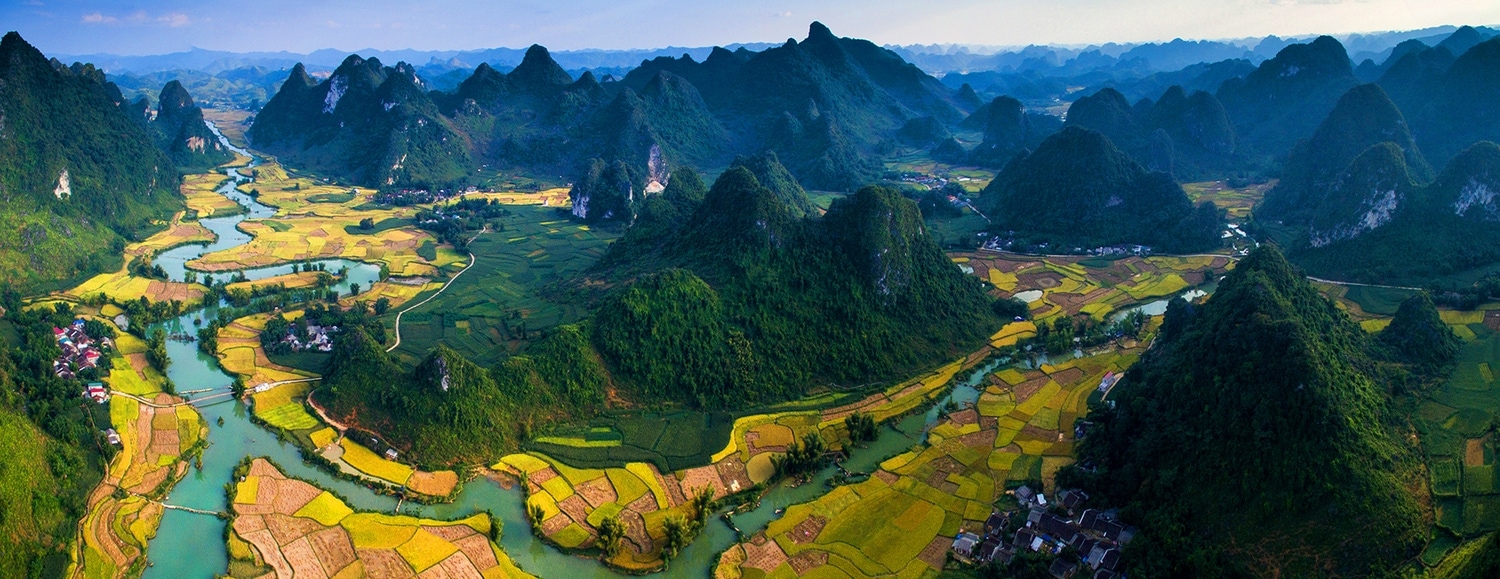
The second point is the seasonal rhythm of northern Vietnam. Hanoi is hot and humid during summer, with the main rainy period from June to August, while the months from September toward the end of the year are often cooler and drier. Sapa is commonly favoured in April and May or September and October for trekking and rice-terrace scenery. Ha Long may have clearer, cooler conditions from September to November, while April and May often bring sunshine and a refreshing breeze. Winter can be cold and misty in the north, which some travellers appreciate for atmosphere but others find uncomfortable. Select according to the intended landscape and activity rather than temperature alone.
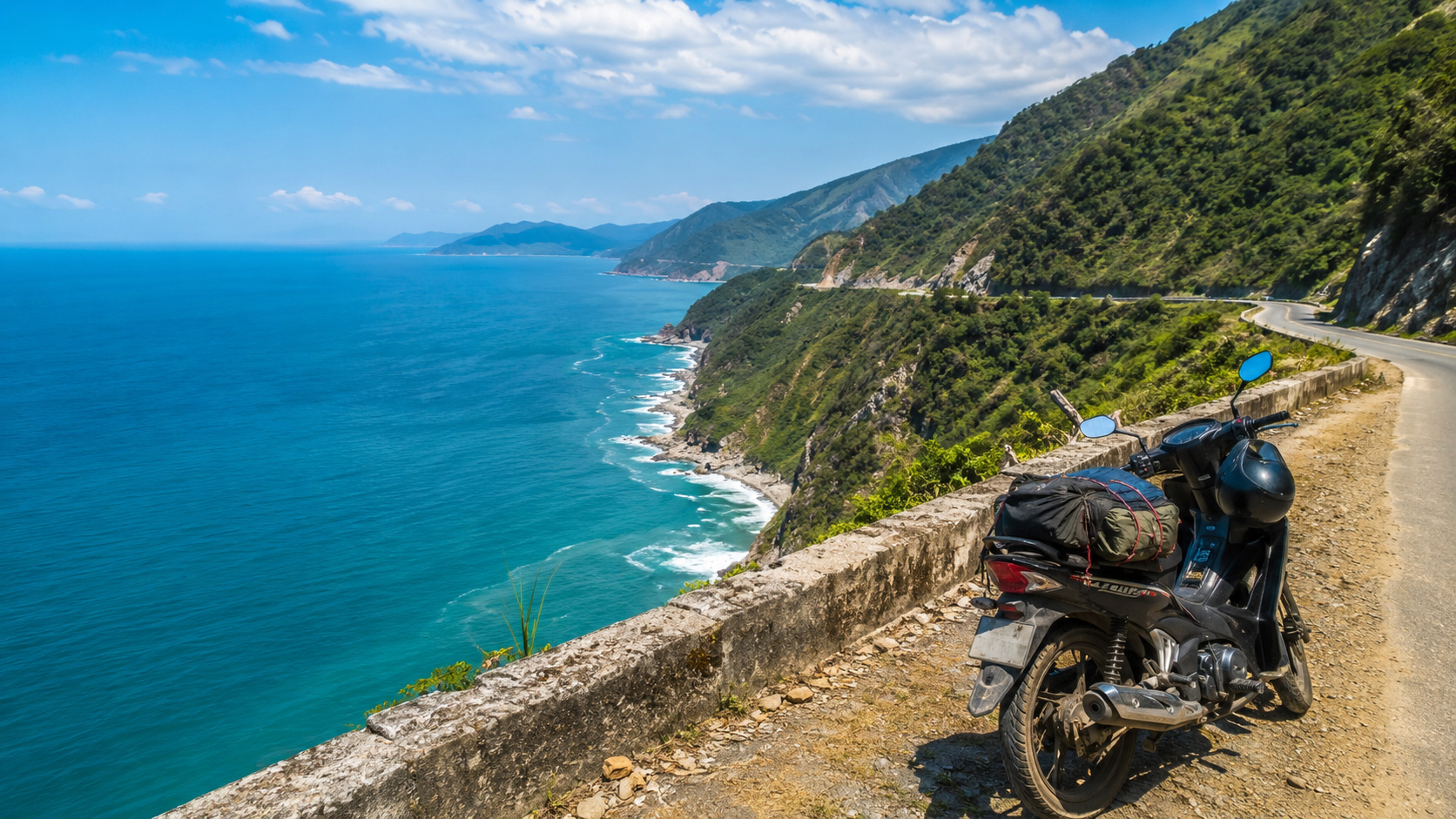
Central Vietnam follows another pattern, especially along the coast. Da Nang often has pleasant conditions from March to May and from September to October, while November through February can bring longer periods of rain. Hoi An may experience wet weather and storms between October and January, and Phong Nha can face heavy rain or flooding from October to December. These variations mean that even a central route should be assessed destination by destination. A beach stay, cave excursion and mountain-road journey are more sensitive to wind and rain than an urban food programme. Add buffer time when the principal activity depends on marine operations, cave access or a long scenic drive.
Southern Vietnam has more consistent temperatures but still moves between wetter and drier periods. Ho Chi Minh City generally experiences the rainy season from around May to November, although rainfall often occurs in concentrated periods rather than occupying every hour. Phu Quoc is cooler during the dry season from approximately October to March, becomes hotter in April and May, and enters stronger rainy conditions toward the middle of the year. The Mekong Delta can provide different experiences during the dry season, fruit season and high-water period. Travellers building a South Vietnam itinerary should decide whether beaches, river life, food or urban visits are the priority before rejecting an entire season.
Match the Timing with the Priority Activity
The third point is to protect the activity that determines the trip’s value. Sapa trekking, a Ha Long cruise, Phong Nha caves, Phu Quoc beaches and urban cultural visits have different levels of weather dependence. When trekking is the main purpose, trail surface and visibility matter more than a small accommodation discount. When the coast is central, sea conditions and boat operation deserve greater weight. A food, museum or heritage-city itinerary is usually easier to adapt around short rain. Choose the period for the hardest activity to replace, then arrange flexible experiences around it. Vietnam’s official monthly guide demonstrates that different destinations become more attractive at different times of year rather than supporting one fixed national travel season.
Turn Seasonal Information into a Flexible Itinerary
The final two points concern crowds, costs, personal comfort and contingency time. Pleasant weather often creates stronger demand at popular destinations, while lower seasons may offer better value but require more flexibility. Travellers need to decide which factor matters most among clearer conditions, fewer visitors, lower prices and the ability to book close to departure. No period will optimise every criterion simultaneously. A practical itinerary secures essential services, leaves adjustable activities flexible and establishes alternatives when real conditions differ from historical averages. This method turns climate information into a decision tool rather than a guarantee. A broader Vietnam trip preparation guide can help connect timing with transport, accommodation and the final booking sequence.
Consider Festivals, Peak Periods and Visitor Numbers
The fourth point begins with public holidays, festivals and domestic travel peaks. Tet offers a distinctive cultural atmosphere but can also change opening times, transport availability, staffing and prices. Long public holidays, summer weekends and major destination events may cause trains, flights and popular rooms to sell earlier. Vietnam Tourism’s official FAQ notes that some businesses may close during Tet, which can be important for visitors with limited time. When the festival itself is part of the purpose, book early and accept a different service rhythm. When quiet sightseeing is more important, avoid the busiest dates or remain longer so that major sites can be visited outside peak hours.
Balance Budget with Personal Comfort
Lower seasons may provide better room prices, greater availability and more individual attention, but the savings matter only when the main experience can still operate. A discounted island resort provides limited value when rough seas prevent the boat programme that motivated the stay. In contrast, a journey focused on food, wellness or city culture may work very well with fewer visitors and occasional rain. Separate the budget into services that must be secured early, experiences that can be booked closer to the date and a contingency fund for route changes. Travellers planning coastal time can review Vietnam beach timing before deciding whether the seasonal discount justifies greater uncertainty.
Personal comfort is also a genuine planning criterion. Travellers who struggle with heat and humidity should avoid placing several outdoor activities in the middle of hot days, even when a destination is marketed as suitable during that month. Families with children and older guests may require more breaks, private transfers or accommodation near the principal sites. Experienced independent travellers may accept rain and route changes in exchange for fewer visitors. The best time is shaped not only by climate data but also by how the group responds to temperature, humidity, slippery ground and long transfers. A theoretically good month can still be unsuitable when its daily conditions do not match the people making the journey.
Keep Buffers and Complete a Final Check
The fifth point is to protect the route with buffer time. Avoid placing cruises, flights, overnight trains and weather-dependent activities immediately after one another without recovery space. A free afternoon or an additional night in a transport hub can preserve the entire itinerary when weather or traffic causes delay. Island trips, trekking and cruises should ideally occur before the final day at a destination. When the activity must move, another suitable date remains available. Buffer time is not wasted time. It is a practical tool that prevents one operational change from forcing expensive adjustments to several later bookings and allows travellers to recover between demanding stages.
Prepare one principal activity and one alternative for each region. Clear days can support mountains, beaches, caves and scenic routes, while wet periods may suit museums, cooking sessions, spas, cafes or food tours. Alternatives should remain in the same area so that a weather change does not create another long transfer. Store opening times, cancellation conditions and support contacts before departure. When the backup plan already exists, adjustment becomes a routine decision rather than an emergency discussion. This also helps families and groups make faster choices because everyone understands which elements are protected and which can move according to the conditions.
Finally, review forecasts and operating notices close to departure. Historical climate patterns help select a month but cannot predict an individual day. About one week before travel, check weather information, transport providers, accommodation and tour operators. During the final 24 to 48 hours, update packing, pickup times and alternative activities. Do not cancel an entire journey simply because a rain icon appears in an application, but do not ignore official warnings either. A sound decision combines seasonal patterns with current operational information. Tradition Việt can then adjust route order, transfer timing or optional visits without changing the central purpose of the trip.
Choose the Period That Fits Your Own Journey
When to travel to Vietnam depends on five points: route, regional differences, priority activities, crowds and budget, and the flexibility built into the itinerary. Instead of searching for one perfect month, identify the experiences you would be most disappointed to lose and organise the dates around them. A northern landscape trip, a beach holiday and a countrywide route require different assessments. Preserve contingency time, prepare alternatives and review conditions close to departure. Tradition Việt can compare the travel period with your available days, route, budget and preferred style, helping create an itinerary that responds to real priorities rather than a generic statement about the best season.
Tradition Việt contact information
Hotline: (+84) 967 04 88 91 / (+84) 376 304 008
Email: info@traditionviet.com
Address: CT2A Hanoi Homeland, Hanoi, Vietnam