

Vietnamese cuisine tours should not feel like a race from one famous dish to another. The best food journeys in Vietnam are slower, warmer and more layered. They show how a bowl of noodles can carry the climate of a region, how herbs change from north to south, how a market morning reveals household habits, and how a simple meal can explain geography better than a map. Travelers often arrive knowing phở, bánh mì or spring rolls, but the deeper pleasure begins when food becomes a doorway into daily life. A strong cuisine tour should help guests taste, listen, compare, ask questions and understand why Vietnamese food feels so fresh, balanced and alive.
Follow flavor through region, market and memory
Vietnamese food changes as the country changes. The north often feels refined and restrained, with broths, herbs and seasonal details carrying the flavor. Central Vietnam can be sharper, more colorful and more intense, shaped by royal memory, coastal produce and small, expressive dishes. The south is generous, tropical and open, with sweetness, coconut, river fish, fresh vegetables and lively street-table energy. A cuisine tour should not flatten these differences into one general “Vietnamese food” experience. It should let travelers sense how land, weather, history and local habits shape the plate. This is where food becomes cultural travel, not only eating.
Check whether the tour explains regional differences
A strong food tour should help travelers understand why dishes taste different from one region to another. The guide does not need to deliver a formal lecture, but they should be able to explain why northern broths feel clean, why central dishes may carry more heat, or why southern food often feels sweeter and more abundant. These differences make the journey richer.
When comparing Vietnam food tours, look for signs that the itinerary goes beyond famous names. A good route should introduce ingredients, eating habits, market culture and the rhythm of local meals.
Look for markets, not only restaurants
Restaurants can be comfortable, but markets reveal the living structure of Vietnamese cuisine. A morning market shows herbs, rice noodles, fish, fruits, sauces, pickles, vegetables and small exchanges between sellers and regular customers. Even a short market stop can help travelers understand why Vietnamese food tastes fresh and immediate.
Let street food and home-style food meet
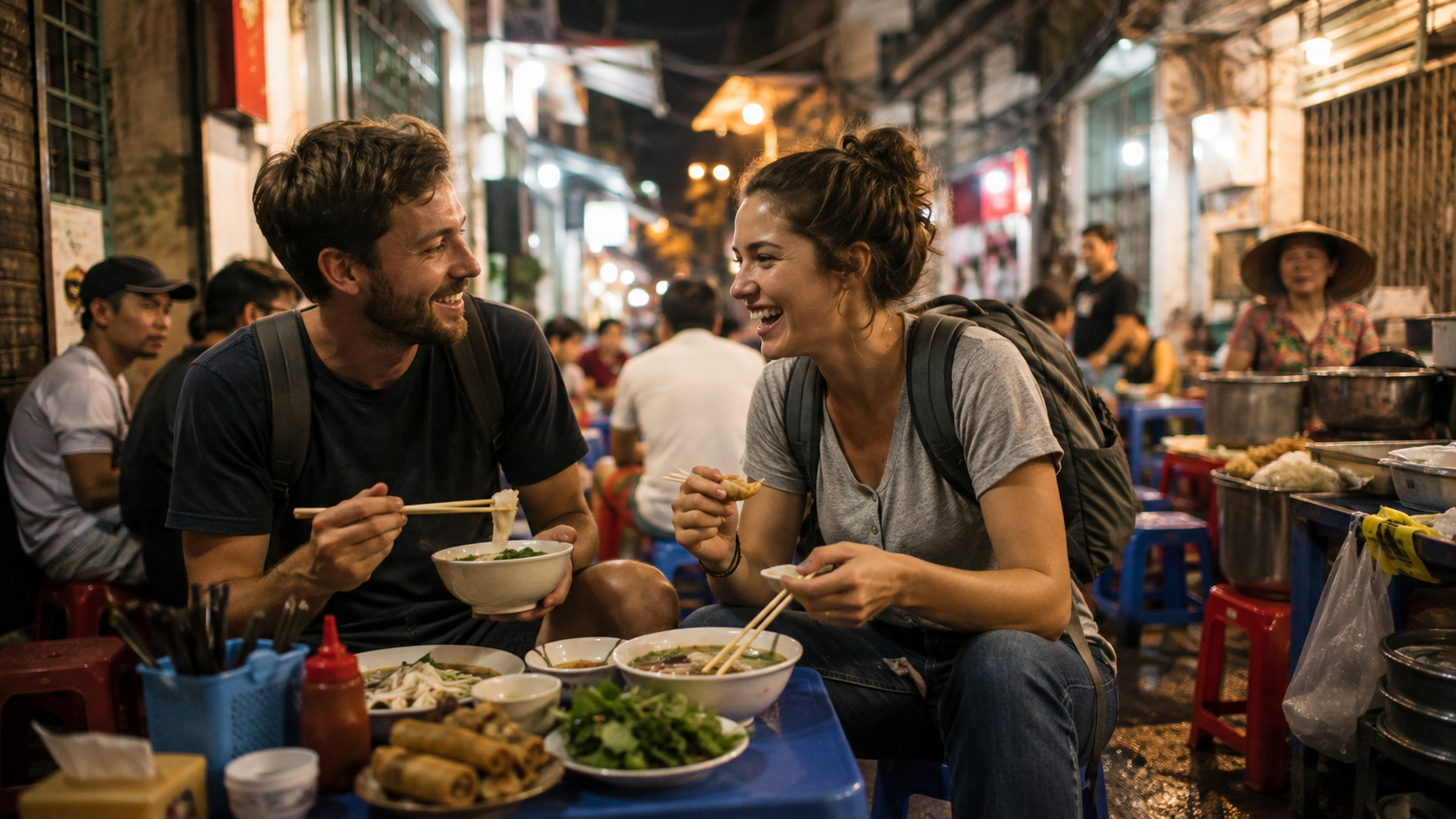
Street food gives energy to a cuisine tour. It brings low stools, steam, charcoal, quick service, neighborhood habits and the pleasure of eating close to the life of the street. But street food alone does not show the whole picture. Home-style meals, family recipes and regional cooking methods offer another kind of intimacy.
A balanced tour may begin with a market, move through a few street dishes, then include a slower meal where the guide can explain how families eat together. This mix helps travelers see Vietnamese food as both public and private.
Travelers should also check whether the tour is built around real timing. Breakfast dishes belong to morning streets. Certain snacks feel better in the afternoon. Some seafood meals need an evening rhythm. Food loses meaning when it is forced into the wrong hour.
For a more immersive angle, local Vietnamese food stories can help travelers imagine how meals, markets and family culture can connect in one route.
Choose a food experience that respects your body and curiosity
Food travel should be joyful, not overwhelming. Vietnam offers endless flavors, but a good cuisine tour knows when to pause. Travelers may want adventure, yet they also need hygiene awareness, dietary clarity, comfortable pacing and honest communication about spice, seafood, meat, alcohol or unfamiliar textures. A thoughtful guide helps guests try more without feeling pressured. They explain what is in each dish, how to eat it, what condiments change, and when to stop before the experience becomes heavy. The right tour respects both curiosity and comfort. It should invite travelers into Vietnamese food culture, not test how much they can consume in one evening.
Ask how dietary needs are handled
Travelers with vegetarian, allergy-related, religious or medical dietary needs should ask before booking. Vietnamese cuisine can be flexible, but not every dish can be adjusted at the last minute. Fish sauce, shrimp paste, pork broth and seafood may appear in places where travelers do not expect them.
A good provider should be honest about what is possible. They should suggest suitable dishes, avoid vague promises and help the guide prepare in advance. This is especially important in street-food settings, where kitchens are small and ingredients may already be prepared.
Notice the pacing of the meal route
A food tour should have rhythm. Too many dishes in too short a time can make even excellent food feel tiring. The best routes move between tasting, walking, listening and resting. A small tea stop, a coffee break or a slower seated dish can help the body absorb the experience.
Good pacing also helps the mind remember. Travelers are more likely to recall a dish when they know why it is eaten, how it is prepared and where it belongs in local life.
If the route includes cooking, the pace should be even slower. Cooking classes, market visits and tasting walks are different experiences. They can be combined, but only when the day has enough space.
For practical preparation, Vietnam food tour tips can help travelers avoid arriving too full, choosing the wrong time or underestimating how much walking may be involved.
Choose the guide, not only the menu
The guide is the person who turns food into understanding. A menu can list dishes, but a guide explains the memory behind them, the correct way to combine herbs, why a sauce matters, or how a street vendor becomes part of a neighborhood routine.
A strong guide also protects comfort. They notice when travelers are full, unsure or excited. They translate ingredients, manage hygiene concerns and keep the mood relaxed.
Travelers who want a smoother experience can choose Vietnam food tours with local support so the route can be shaped around taste, comfort level and travel style.
Vietnamese cuisine tours are most rewarding when food is treated as culture, not only consumption. The best routes connect region, market, street life, home cooking and human stories. They help travelers understand why Vietnam tastes different from north to south, why herbs matter, why broths carry patience, and why a small dish can hold a whole neighborhood’s rhythm. Choose a tour that explains, not only feeds. Choose one that respects dietary needs, paces the evening well and gives the guide room to tell stories. When planned with care, a Vietnamese food journey becomes one of the most intimate ways to meet the country.
Tradition Việt
Hotline: (+84) 967 04 88 91 / (+84) 376 304 008
Email: info@traditionviet.com
Adresse: CT2A Hanoi Homeland