

Vietnamese cuisine tours allow travellers to understand the country through markets, ingredients, family meals, neighbourhood eateries and the different flavours created by each region. A programme containing many dishes does not automatically offer depth, however, especially when tastings are crowded together, stops lack context or dietary needs remain unclear. The 15 points below help travellers define their food interests, choose a regional route, balance street food with cooking activities, control the budget and protect health and digestion. When these elements are prepared systematically, the journey becomes more than a series of meals. It becomes a practical and respectful way to read Vietnamese culture through taste, daily routines and the people who prepare food.
Build the Cultural Foundation of the Culinary Journey
The first eight points establish the cultural and experiential foundation of the journey. Vietnam’s northern, central and southern cuisines differ noticeably, and every city has its own eating times, ingredients and social spaces. A tour should therefore begin with the traveller’s genuine interests rather than a random collection of famous dishes. Dietary profiles, preferred regions, the number of tasting sessions and the type of activity all need early definition. When markets, neighbourhood eateries, cooking classes, family meals and recovery time are connected through one clear thread, food becomes a way to understand place and identity. This approach prevents the itinerary from becoming a repetitive sequence of stops chosen only because they are popular online.
Define the Culinary Style, Dietary Profile and Priority Regions
Point one is to define the culinary style the travellers want. Some people prefer street food and long-established local eateries, while others value selected restaurants, cooking classes or meals with a host family. A group may be particularly interested in coffee, vegetarian dishes, seafood, regional cakes or seasonal ingredients rather than trying the largest possible number of foods. Describing the desired journey with three words such as local, gentle and interactive gives the organiser a practical filter. A Vietnam food tour guide can provide a starting framework, but the final selection should reflect how the travellers genuinely want to experience the country through food.
Point two is to prepare a detailed dietary profile for every traveller. The organiser needs to know about allergies, vegetarian requirements, spice tolerance, religious restrictions, digestive concerns and ingredients that cannot be accepted under any circumstances. Vegetarian guests should clarify whether they consume eggs, dairy, fish sauce or broths made from meat, because a dish name does not always reveal every component. Children, older travellers and people newly adjusting to a tropical climate may need a gentler tasting rhythm. The more precise the profile becomes, the easier it is for the guide to choose suitable venues, control portions and communicate with kitchens before the group arrives rather than attempting to solve dietary problems at the table.
Point three is to choose the principal culinary regions instead of trying to represent the whole country within several days. Hanoi suits travellers interested in noodle dishes, grilled food, cakes, coffee and the culture of small neighbourhood eateries. Hue adds depth through refined portions, multiple small dishes and the relationship between imperial traditions and everyday cooking. Hoi An connects markets, herbs, noodles, home-style food and cooking classes, while Ho Chi Minh City reflects strong regional exchange. The Mekong Delta introduces fruit, waterways and locally produced ingredients. A Hue cultural guide is useful when central food traditions form part of a wider heritage route. Fewer regions understood properly will remain more memorable than rushed tasting.
Design a Compact Route and Natural Eating Rhythm
Point four is to build a compact route and protect a natural eating rhythm. Hanoi, Hue and Hoi An can form one coherent culinary axis, while Ho Chi Minh City and the Mekong Delta create another. Repeated flights merely to include one famous dish often weaken both time and budget. Each day should not contain too many tasting sessions because travellers still need to digest, sightsee, transfer and rest. A market and light breakfast may open the morning, a cooking class or family meal can anchor lunch, and the evening may remain free or contain one principal experience. When geography and mealtimes support each other, food becomes a natural part of the journey rather than another checklist that must be completed.
Combine Markets, Street Food, Cooking Classes and Local Meals
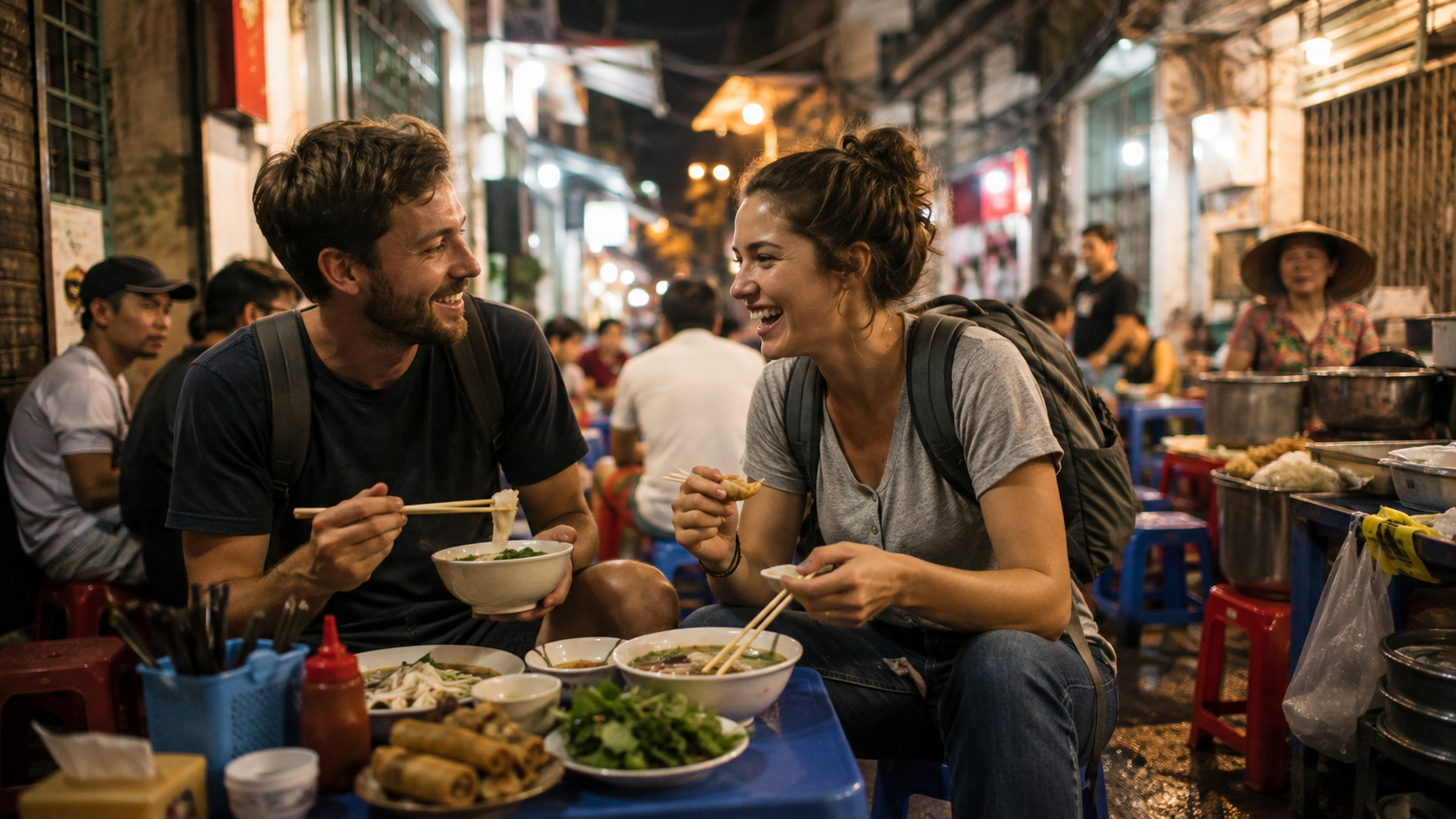
Point five is to use markets as an introduction to ingredients, while point six is to choose street food through context rather than fame alone. Markets reveal herbs, noodles, fish, meat, fruit, spices and the way households shop for daily meals. A capable guide can explain seasonality, ingredient selection and regional variation. Street-food stops should favour steady local turnover, visible preparation and dishes suited to the group’s health profile. Several well-explained tastings are more valuable than continuous eating without understanding how the food is normally enjoyed. Travellers should also observe the surrounding rhythm, including who eats there, at what time and whether the place functions primarily for local residents or for organised visitor groups.
Point seven is to add a cooking class when travellers want to understand technique, while point eight is to balance organised activities with natural meals. A good class should remain manageable in size and allow enough time to introduce ingredients, sauces and the logic of flavour combinations. Preparing one or two clear dishes can be more memorable than completing a long menu mechanically. Family meals, trusted neighbourhood restaurants and independent dining periods then provide a more everyday perspective. Travellers interested in this balance can review local experiences in Vietnam before choosing activities. Combining learning, observation and ordinary dining gives the route cultural depth without turning every meal into a scheduled performance.
Complete Health, Budget and Service Operations
The remaining seven points concern operation, health and service quality. A culinary itinerary may look attractive on paper and become exhausting when meals are placed too closely together, transport is inconvenient or the quotation does not identify dishes, drinks and supplements. Travellers should check walking distance, seating, hygiene, water, group size and the guide’s responsibilities. Budget, timing, cancellation conditions and the effect on local communities also need to be considered together. When these operational details are transparent, travellers can approach unfamiliar food with greater confidence and retain enough energy for the wider journey. The purpose is to create a tasting rhythm that remains enjoyable over several days rather than producing one intense programme followed by fatigue.
Control Food Volume and Physical Adaptation
Point nine is to limit the quantity of food and protect breaks between tastings. A walking tour should not become a sequence of eight or ten full portions within a short period, especially on the first day after a long flight. Small servings, drinking water and moderate walking help the body adjust. The guide should know which dishes can be shared, which stop can be removed when the group is full and when coffee or tea is more appropriate than another substantial course. Children and older travellers often benefit from shorter sessions. The value of the tour lies in context, conversation and sensory comparison, not in the total number of plates listed in the programme or consumed before the group can appreciate them.
Point ten is to prepare realistically for hygiene, digestion and climate. Travellers should use controlled drinking water, clean their hands before eating, avoid introducing too many raw herbs or highly spicy dishes on the first day and carry necessary personal medication. This does not require avoiding street food. It means selecting dependable places, eating freshly prepared dishes and allowing the body to adapt gradually. Report discomfort early so the schedule can become lighter. A well-designed programme has simple alternatives such as rice, soup, porridge or mild noodles when someone needs recovery. The practical local travel tips can also help travellers approach markets, homes and food stops with greater preparation and respect.
Evaluate Guiding, Costs and Community Responsibility
Point eleven is to select a guide who understands food and can communicate accurately with kitchens. The guide should explain ingredients, eating methods, the background of a dish, spice levels and regional variations in accessible language. They also need to recognise when a venue is overcrowded, when an item does not suit the group or when one traveller needs a smaller portion. A strong guide does not pressure guests to try everything and does not turn the programme into repeated shopping. For groups with allergies or special diets, the ability to confirm details directly with cooks or restaurant staff is essential. Guide quality often determines whether the activity is merely a large meal or a meaningful cultural experience.
Point twelve is to demand transparent pricing, while point thirteen is to verify the timing and logistics of each activity. The quotation should identify tastings, drinks, cooking classes, market visits, transport, guiding, private meals, shared services and exclusions. Travellers should also know the walking distance, available seating and final location. Markets, lunch venues, cooking schools and evening restaurants operate according to different rhythms, so the route must respect real opening and preparation times. Reviewing local experience logistics can help compare cost, comfort and operational demands. A low headline price offers little value when guests pay repeatedly on site or spend too much time moving between disconnected food stops.
Point fourteen is to choose services that respect communities and avoid turning ordinary life into a staged display. Travellers should request permission before photographing vendors, cooks or host families, avoid blocking market aisles and never ask people to repeat actions only for video. Purchases should follow genuine interest rather than pressure built into the itinerary. Small groups, reasonable visit lengths and transparent payment usually support more natural interaction. When visiting Hue, Hoi An, craft communities or river regions, allow time to hear the story of ingredients and producers. Responsible behaviour protects the cultural meaning of food and helps the visit remain an exchange between people rather than a commercial performance designed entirely around visitor expectations.
Maintain One Clear Support Contact
Point fifteen is to maintain one support contact with complete information before and during the journey. Travellers should provide dates, group size, budget, preferred regions, allergies, dietary rules, spice tolerance and the experiences they value most. The coordinator needs to confirm venues, pickup times, tasting quantities, transport, cancellation conditions and alternatives when a traveller feels unwell or a restaurant changes its availability. Reliable support does not promise that every ingredient or dish will always be present, because markets and preparation schedules can vary. Its value lies in proposing an appropriate substitute, explaining additional costs before approval and preserving the narrative of the day. Clear responsibility allows the group to concentrate on tasting and learning rather than coordinating several suppliers.
Build a Meaningful and Manageable Culinary Journey
Vietnamese cuisine tours become clearer when these 15 points operate as one connected plan. Travellers need to define their culinary style, dietary profile, priority regions, compact route and the activities that genuinely add value. Markets, street food, cooking classes and local meals should be balanced with rest, hygiene, transparent budgeting and dependable support. The strongest journey does not contain the largest number of dishes. It helps travellers recognise regional differences while remaining healthy and curious throughout the trip. Tradition Việt can use food preferences, health requirements, available time and budget to build a culinary route that is culturally meaningful, operationally clear and respectful toward the communities whose markets, kitchens and daily traditions make the experience possible.
Tradition Việt contact information
Hotline: (+84) 967 04 88 91 / (+84) 376 304 008
Email: info@traditionviet.com
Address: CT2A Hanoi Homeland, Hanoi, Vietnam