
Vietnamese cuisine tours become far more rewarding when they are planned as a route through regions, habits and daily life rather than a list of dishes to taste. Food in Vietnam changes with geography, climate, history and local rhythm. Hanoi feels different from Hue, Hoi An, Ho Chi Minh City, the Mekong Delta or coastal towns. A coherent food itinerary lets travellers taste these differences in the right order. It also protects appetite, energy and curiosity. The goal is not to eat everything in one trip. It is to understand how meals, markets, families, streets and landscapes make Vietnamese cuisine feel alive.
Build the route around regional flavor
A strong food journey begins with geography. Northern dishes often feel delicate, balanced and tied to old-city habits. Central Vietnam can be more intense, aromatic and connected to imperial and coastal influences. The south often feels generous, fresh, sweet, river-based and tropical. A traveller who treats Vietnamese cuisine as one single style may miss the best part: regional difference. The itinerary should move through food identities, not only restaurant names. This makes each meal part of the route’s story.
Idea one: Give every region a food purpose
Hanoi can introduce breakfast culture, noodles, herbs, dipping sauces and old-quarter street rhythm. Hue can bring royal-influenced small dishes and refined local flavors. Hoi An may combine market life, herbs, noodles and cooking experiences. Ho Chi Minh City can add southern energy, late-night eating and diverse neighborhoods.
A Vietnam food tours guide can help travellers place each food stop inside a wider itinerary rather than treating meals as random extras.
Idea two: Do not repeat the same food experience in every city
A food tour in every destination may sound attractive, but repetition can reduce impact. Choose different formats: one street food walk, one market visit, one cooking class, one family-style meal and one seafood evening.
Let markets, streets and kitchens play different roles
Vietnamese cuisine is not experienced only at the table. Markets reveal ingredients. Streets reveal rhythm. Kitchens reveal technique. Family meals reveal balance. A coherent cuisine tour uses these layers at different points. Travellers might begin with a guided street food walk to gain confidence, then visit a market, then join a cooking class, then leave free evenings for independent discovery. This structure teaches the traveller how to eat better as the trip continues. Food becomes a language they gradually understand.
Idea three: Start with a guided food walk early
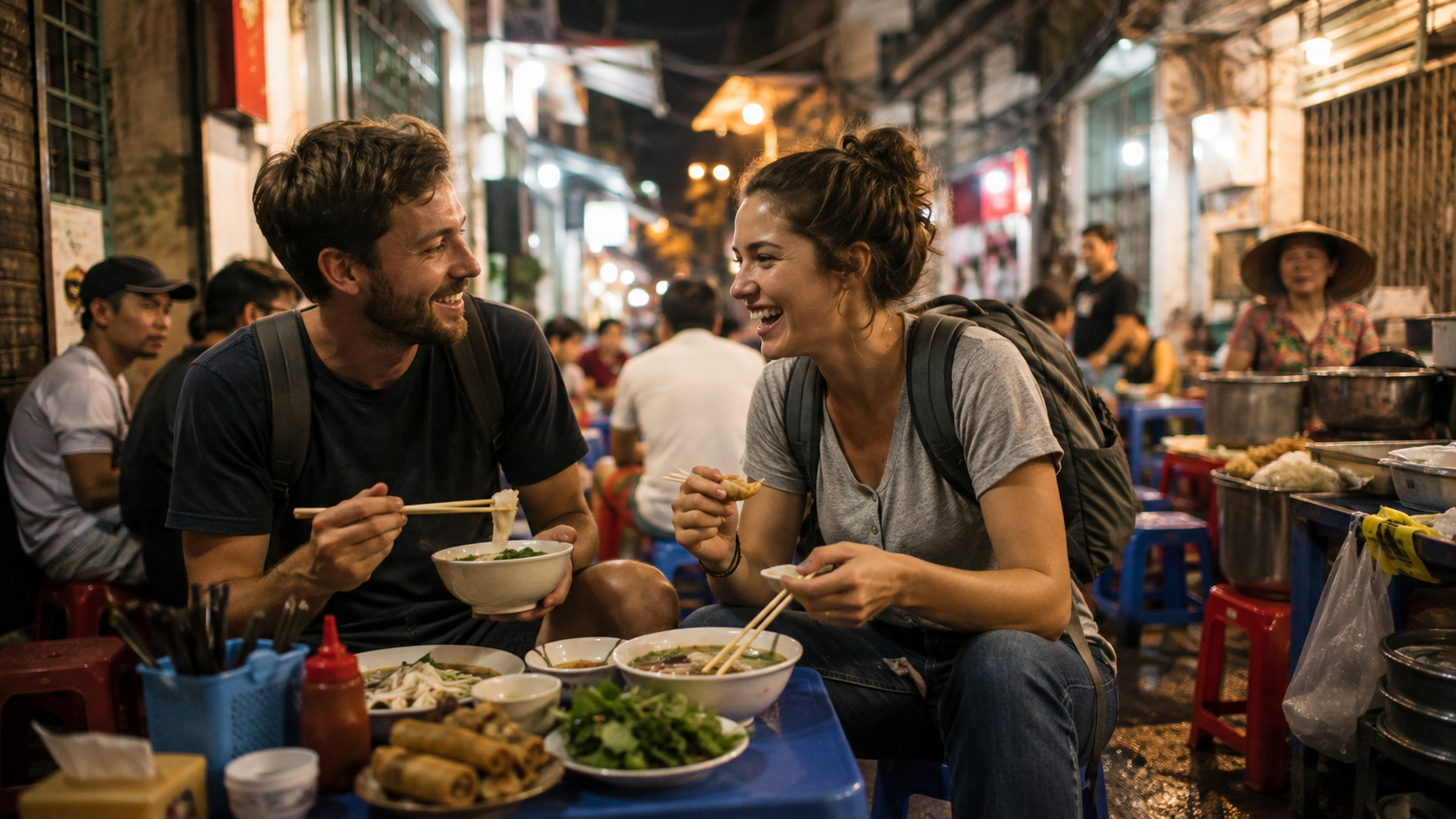
A guided food walk early in the trip helps travellers understand ordering habits, sauces, herbs, stools, shared tables and local timing. It builds confidence for later independent meals.
This is especially useful in Hanoi or Ho Chi Minh City, where the first street food experience can feel exciting but overwhelming.
For travellers who want a sensory beginning, Vietnam food tours with local stories can show how a meal becomes cultural context.
Idea four: Add one market visit before a cooking class
A cooking class becomes deeper when travellers first see the ingredients. Herbs, rice noodles, fish sauce, tropical fruit and vegetables gain meaning when explained in a market setting.
Idea five: Keep some meals unplanned
Not every meal should be booked. Open meals allow travellers to return to a favorite dish, follow a guide’s recommendation or discover a small local restaurant near the hotel.
This flexibility keeps the food journey human.
It also prevents the itinerary from becoming too heavy.
Idea six: Respect appetite and digestion
A cuisine route should not overload lunch and dinner every day. Leave lighter meals after rich tastings, and avoid placing a large dinner immediately after a long transfer.
Connect food with travel rhythm
Food experiences should be placed where the body can enjoy them. A long food walk after an overnight flight is rarely ideal. A cooking class after a heavy morning transfer may feel tiring. A seafood dinner after a relaxed beach day can be perfect. A Mekong Delta lunch after a boat route feels natural because the food belongs to the landscape. When meals are placed well, they do more than fill time. They help the itinerary breathe.
Idea seven: Place food tours when travellers have energy
Food tours require walking, listening, tasting and curiosity. Schedule them after rest, not after exhaustion.
Idea eight: Use food to soften transfer days
A simple local dinner near the hotel can make a transfer day feel successful without overloading it. Food can welcome travellers gently into a new city.
A practical Vietnam food tours planning guide can help match meals, walking and timing more comfortably.
Idea nine: Include one countryside or river meal
A rural lunch, Mekong Delta meal or garden-based experience can show how Vietnamese cuisine connects to land and water. This adds depth beyond city restaurants.
Idea ten: Choose seafood where the coast makes sense
Coastal destinations such as Nha Trang, Da Nang, Hoi An or Phu Quoc can carry seafood memories beautifully. Let location guide the menu.
Idea eleven: Ask for a route built around your food style
Some travellers want street food. Others want refined dining, vegetarian options, family cooking, seafood or regional specialties. A tailored Vietnam cuisine tour proposal can align dishes, cities, guides and pacing before the trip begins.
Vietnamese cuisine tours become stronger when they follow a coherent route through region, rhythm and experience type. Give each destination a food purpose, avoid repeating the same format, start with guidance, include markets and kitchens, and protect appetite with sensible timing. Vietnam’s food culture is rich because it belongs to daily life: breakfast stalls, family meals, herbs, markets, rivers, old streets and coastal tables. When the route allows these layers to appear naturally, the traveller does not only taste Vietnam. They begin to understand it.
Tradition Việt
Hotline: (+84) 967 04 88 91 / (+84) 376 304 008
Email: info@traditionviet.com
Adresse: CT2A Hanoi Homeland