

Vietnam food tours are suitable for more types of travelers than many people think. They are not only for serious food lovers or adventurous eaters. For first-time visitors to Vietnam, a food tour is a quick way to understand the city, street culture, ordering habits, meal times, local eateries, and flavors that may be difficult to choose by looking only at a menu. A guided meal can sometimes help travelers understand a destination more gently than a packed sightseeing day.
However, not every food tour suits everyone. Families need a different pace from young groups of friends. Older travelers need more comfortable seating and shorter walking distances. Vegetarians, guests with allergies, travelers who avoid spicy food, or those with lighter taste should be planned for in advance. So the better question is not only whether you should take a food tour, but which kind of food tour suits you, in which city, and at what point in the trip.
Travelers Who Benefit Most from Vietnam Food Tours
Food tours in Vietnam are especially useful for travelers who want to eat well without guessing too much. In cities such as Hanoi, Hue, Hoi An, Da Nang, and Ho Chi Minh City, good food can be found in small alleys, long-running eateries, morning markets, sidewalk stalls, or neighborhoods that rarely appear in standard sightseeing routes. Having a guide makes the experience less confusing and more reassuring.
First-time visitors to Vietnam
For first-time visitors, a food tour is a very good introduction. You become familiar with dishes, eating styles, seasonings, herbs, dipping sauces, small local eateries, and street rhythm without having to figure everything out alone from the beginning. A good guide helps you understand which dishes to try first, which flavors are stronger, how to order, and where to eat in a way that is both delicious and suitable.
Travelers who prefer local culture over luxury restaurants
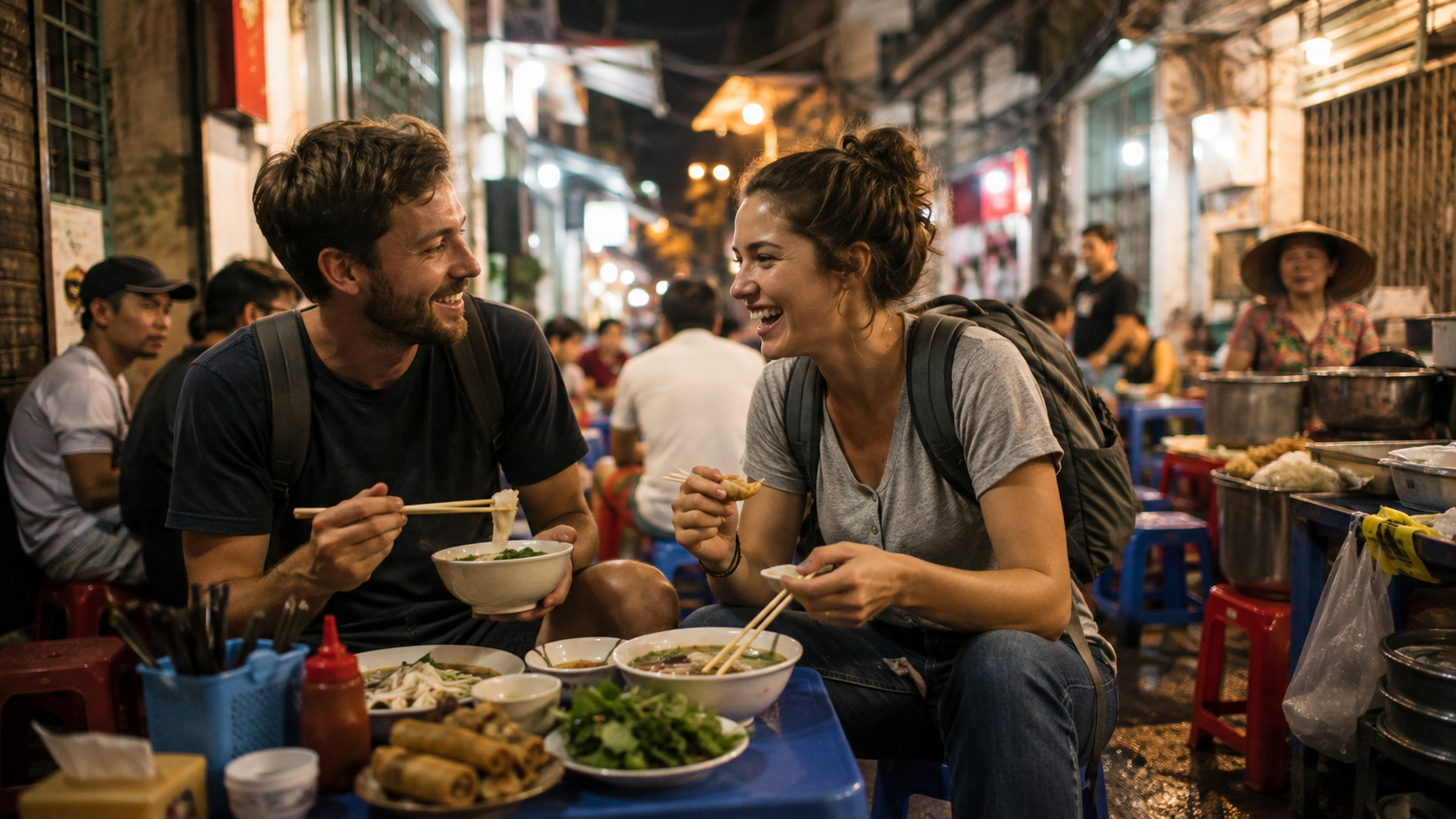
Food tours are ideal for travelers who want to see Vietnam through everyday life. Small eateries, plastic stools, kitchen sounds, morning markets, dark alleys, broth aromas, and stories from food vendors often feel closer to local life than a meal in a large restaurant. The charm lies in entering a real eating space where local people still come every day.
In Hanoi, this may be a morning bowl of pho in a long-running eatery, bun cha on a small street, or egg coffee in an alley. In Hue, it may be a meal with many small dishes, each only a few bites but carrying the refinement of the former imperial city. In Hoi An, visiting a market and trying cao lau, mi Quang, or banh mi helps travelers see that the city is not only lanterns and old houses.
Culture-focused travelers do not always need a food tour with too many dishes. They need the right stories, a comfortable pace, enough time to observe, and a guide who can connect food with history, daily habits, climate, and local people. In that way, the food tour becomes more than dinner; it becomes a cultural layer that is easy to remember.
Families, couples, and friends looking for a light experience
Food tours can suit families very well if they are designed at a comfortable pace. Children often enjoy approachable dishes such as banh mi, pho, steamed rice rolls, sweet soups, fruit, or light grilled food. Adults can add coffee, regional dishes, markets, or cultural stories. The key is choosing eateries with comfortable seating, stops that are not too far apart, and a tour duration that does not stretch too long.
For couples or groups of friends, a food tour can become a very enjoyable evening. Instead of sitting in one restaurant, the group can move through a few neighborhoods, taste several small dishes, drink coffee or local beer, stop at alley eateries, and finish with dessert. This feels lighter than a formal sightseeing tour but still creates shared memories.
When Should a Food Tour Be Chosen More Carefully?
Food tours are easy to enjoy, but they still require care when travelers have specific needs. Not everyone can eat spicy food, fermented sauces, seafood, offal, raw dishes, or strong seasonings. Not everyone feels comfortable walking for a long time, sitting on low stools, crossing busy streets, or riding a motorbike in a large city. Before booking, explain taste, health, mobility, and the type of setting that feels comfortable.
Vegetarians, allergy-sensitive travelers, or light eaters
Vegetarians, travelers with seafood allergies, those who avoid meat, gluten-free guests, or people with specific requirements can still join Vietnam food tours, but they should inform the organizer in advance. Some Vietnamese dishes include bone broth, fish sauce, dried shrimp, scallion oil, or hidden ingredients in dipping sauces. Without clear information, it is difficult for a guide to adjust accurately on the spot.
For light eaters, it is better to choose a tour that increases the level of flavors gradually. Starting with approachable dishes such as pho, banh mi, steamed rice rolls, mi Quang, or sweet soups is more comfortable than beginning immediately with fermented flavors, strong spice, or unfamiliar textures. A good tour keeps travelers curious without pushing them beyond their limits.
If allergies are serious, a private tour is usually safer than a shared tour. With a private setup, the guide can choose more suitable eateries, check ingredients more carefully, and adjust the pace according to the guest’s needs. This is a small but important detail, especially when traveling with children or people with clear dietary limits.
Older travelers or guests who do not want too much movement
Older travelers can still enjoy food tours, but they should avoid tours with long walking distances, too much standing, or very crowded eateries. A more suitable plan may include fewer stops, better seating, shorter routes, transfers if needed, and easier-to-digest dishes. A food tour does not need to be extremely “rough” to feel local.
Some cities also suit this group better if the right area is chosen. In Hoi An, a tour can be gentler because the old town is walkable and many dishes are close together. In Hanoi, choose a compact Old Quarter route and avoid overly crowded hours if guests are not used to them. In Ho Chi Minh City, if traffic feels stressful, a private tour with suitable transport or a shorter walking route will feel more comfortable.
Travelers who want to combine food tours with a private itinerary
Food tours also suit travelers who want to use cuisine as part of a custom itinerary. You can place a food tour on the first day to get used to a city, in the middle of the trip to change the mood after sightseeing, or near the end as a farewell to Vietnam. The important thing is not to schedule it too late after a long travel day.
Tradition Việt can help you choose a suitable food tour through /en/vietnam-food-tours/. If you are not sure whether to take a food tour in Hanoi, Hue, Hoi An, Da Nang, or Ho Chi Minh City, Talk to a Vietnam travel advisor so the route is designed around taste, energy, timing, and companions.
FAQ
Who are Vietnam food tours best for?
Food tours are suitable for first-time visitors, culture-focused travelers, families, couples, groups of friends, and anyone who wants to eat well without choosing local eateries alone.
Should light eaters take a food tour?
Yes. You can choose a lighter tour with fewer dishes, smaller portions, and more focus on experience, stories, and local eateries rather than quantity.
Are food tours suitable for families with children?
Yes, if the tour has a comfortable pace, is not too long, includes approachable dishes, has good seating, and can adjust to children.
Can vegetarians join Vietnam food tours?
Yes, but they should inform the organizer in advance so the guide can choose suitable dishes and eateries. Some Vietnamese dishes include hidden ingredients such as fish sauce, bone broth, or dried shrimp.
Are food tours suitable for older travelers?
Yes, if the tour has shorter walking distances, fewer stops, comfortable seating, and avoids too much movement in very crowded areas.
Should I choose a private or shared food tour?
A private tour is better if you travel with family, have dietary requirements, prefer a slower pace, or need to combine the tour with your own itinerary. A shared tour works if you are flexible and enjoy a livelier atmosphere.
Vietnam food tours are not only for big eaters. They suit anyone who wants to understand the country through meals, streets, markets, and small local habits. When the city, pace, and level of food exploration are chosen well, the food tour becomes approachable, safe, and emotionally rich.
To choose a food tour that fits your taste, age, energy, and Vietnam itinerary, Talk to a Vietnam travel advisor. Tradition Việt can help you enjoy Vietnamese cuisine in a way that is delicious, comfortable, and truly suited to your travel group.