

The most memorable Vietnam food tours often do not begin with the question “what should we eat?” They begin with the feeling of entering a city through smells, sounds, light, and local eating habits. A morning bowl of pho in Hanoi, a small plate of steamed rice cakes in Hue, a hot banh mi in Hoi An, or a late-night bowl of hu tieu in Ho Chi Minh City can all become a slice of daily life when travelers are guided in the right way.
Vietnamese cuisine is not only found in recipes. It lives in vendors who open early, families who preserve one dish across generations, markets that change with the seasons, charcoal stoves beside the sidewalk, and the way locals invite each other to “go eat something” after a long day. When a food tour is told as a story, travelers do not only feel full; they feel closer to the city.
The Local Story Behind a Vietnam Food Tour
A good food tour does not need to turn every dish into a long lecture. What matters is helping travelers understand why that dish is there, who usually eats it, when it tastes best, and how it reflects climate, history, and daily habits in each region. When small stories are told at the right time, an ordinary eatery becomes a memorable stop.
Each dish is a doorway into local life
A Vietnamese dish often carries more layers of information than it seems. Pho is not only broth and rice noodles, but also morning rhythm, street life, quick yet careful eating, and the patience of the cook. Bun cha is not only grilled pork, but charcoal smoke, fresh herbs, dipping sauce, and a very Hanoi way of eating. In Central Vietnam, small dishes such as banh beo, banh nam, and banh loc speak of precision, restraint, and the habit of enjoying many flavors in one meal.
Markets, alleys, and family eateries add depth
If travelers only eat in beautiful restaurants, they may miss the most vivid part of Vietnamese cuisine. Morning markets show where ingredients come from, what locals buy, which produce belongs to which season, and how a food day begins. Small alleys reveal eateries connected with neighborhood life, where regular customers often order without looking at a menu.
Family eateries are often where the story becomes clearest. Some places keep refining one broth through years of experience. Some sell only one dish but do it consistently well. Some banh mi carts open only during familiar hours. These stops do not need to be famous online, but they help travelers feel the continuity of local life.
The guide connects food with the city
A good guide does more than take travelers to tasty eateries. They explain dishes in a clear way, adjust tasting levels according to preference, show how to eat herbs, mix dipping sauce, order extra drinks, and notice small details around the table. Because of this, travelers do not feel they are only “trying strange food,” but entering a part of life with its own logic.
The guide’s role becomes especially important when a dish has strong or unfamiliar flavors. Food with fermented sauce, spice, offal, dried seafood, or unusual texture may make travelers hesitate without the right explanation. When introduced gradually, many people are willing to try a small bite and understand the dish in its local context, even if it does not become their favorite.
A guide also helps maintain the rhythm of the experience. Sometimes it is time to tell a story; sometimes it is better to let travelers eat quietly. Sometimes the group should pause to observe the street, and sometimes it should move before everyone becomes too full. This subtle sense of rhythm is what makes a food tour different from following an online restaurant list alone.
An Immersive Food Tour Example in a Vietnam Itinerary
Imagine a food tour that does not chase the number of dishes, but follows the feeling of the city. Travelers begin as the air cools down, enter a neighborhood full of small eateries, hear kitchen sounds, watch locals finishing work, and stop at places with a clear role. Each dish is not only tasted; it opens another view of where they are.
An evening in Hanoi through food and small streets
An evening in Hanoi may begin at a bun cha eatery on a small street, where the smell of grilled pork arrives before you see the stove. The guide can explain how to eat noodles, herbs, dipping sauce, and why this dish suits the lunch or evening rhythm of local people. After that, the group walks through nearby streets, stopping for hot steamed rice rolls or a light snack in an alley.
Hanoi’s strength is that many dishes are not too far from one another, yet each stop has its own atmosphere. One eatery may be long-running, another serves very quickly, another sits inside a narrow lane, and another café is upstairs. The food tour therefore becomes not only eating, but also reading the city through smell, sound, and eating habits.
At the end, a cup of egg coffee or iced milk coffee can slow the experience down. After several savory dishes, the creamy, slightly bitter flavor and café setting give travelers time to look back on what they have just experienced. This is often when the story of the city settles, no longer as information but as feeling.
A Central Vietnam journey through Hue and Hoi An
In Central Vietnam, a food tour can carry a different tone. Hue suits small dishes, layered flavors, and stories about refinement in eating. A meal may include bun bo, banh beo, banh nam, banh loc, mussel rice, or sweet soup. Each dish is not large, but together they create a clear picture of Central Vietnam taste: bold, compact, balanced, and full of detail.
Hoi An feels more approachable to many travelers. A market walk, a banh mi, a bowl of cao lau, mi Quang, or a sweet soup can tell stories about the old trading port, ingredient exchange, and how this small city keeps its own flavor amid heavy tourism. With a knowledgeable guide, travelers see that Hoi An is not only beautiful at night, but also has a food life worth listening to.
Tradition Việt can help you choose a food tour that fits your itinerary through /en/vietnam-food-tours/. If you want the food tour to be more than eating, and instead become a local story with the right rhythm, stops, and flavors, Talk to a Vietnam travel advisor so the experience is designed around city, taste, and companions.
Why immersive food experiences should be customized
An immersive food tour cannot simply copy the same dish list for every traveler. First-time visitors to Vietnam need a different introduction from travelers already familiar with Asian food. Families with children need more approachable dishes and more comfortable seating than young friends who want to explore night alleys. History lovers want different stories from travelers who only want a gentle and delicious evening.
Customization helps the food tour keep the spirit of each city while still fitting the people traveling. In Hanoi, the focus may be old streets, long-running eateries, and coffee. In Hue, it may go deeper into small dishes, gentle heat, and imperial-folk food stories. In Hoi An, it may combine markets, local dishes, and the old-town setting. In Ho Chi Minh City, it may explore alleys, night eateries, and cultural mixing.
When a food tour is designed as part of the whole itinerary, it also makes the following days easier. Travelers learn which dishes they like, which neighborhoods are worth returning to, how to order, and what to avoid according to personal taste. One well-guided evening can open the way to many more enjoyable independent meals throughout the Vietnam trip.
FAQ
How is a Vietnam food tour different from eating on your own?
A food tour includes a guide who helps choose eateries, explain dishes, support taste preferences, tell local stories, and help travelers understand the cultural context behind each dish.
Is a food tour only about eating many dishes?
No. A good food tour needs a suitable rhythm, clear stories, carefully chosen dishes, and enough time for travelers to observe, taste, and understand the city.
Which cities are good for story-based food tours?
Hanoi, Hue, Hoi An, and Ho Chi Minh City are all excellent. Each tells a different story through old streets, refined Central dishes, local markets, alleys, or night eateries.
Should I choose a private food tour for a deeper experience?
Yes. A private tour makes it easier to adjust dishes, pace, story depth, stops, and personal needs, especially if you travel with family or have specific taste preferences.
Are food tours suitable for travelers who are not food experts?
Yes. You do not need deep food knowledge before joining. A good tour starts with approachable dishes and gradually introduces more distinctive flavors at a comfortable pace.
When should I include a food tour in my Vietnam itinerary?
A food tour can be placed on the first day to get used to a city, in the middle of the trip to change atmosphere, or near the end as a memorable farewell to Vietnam.
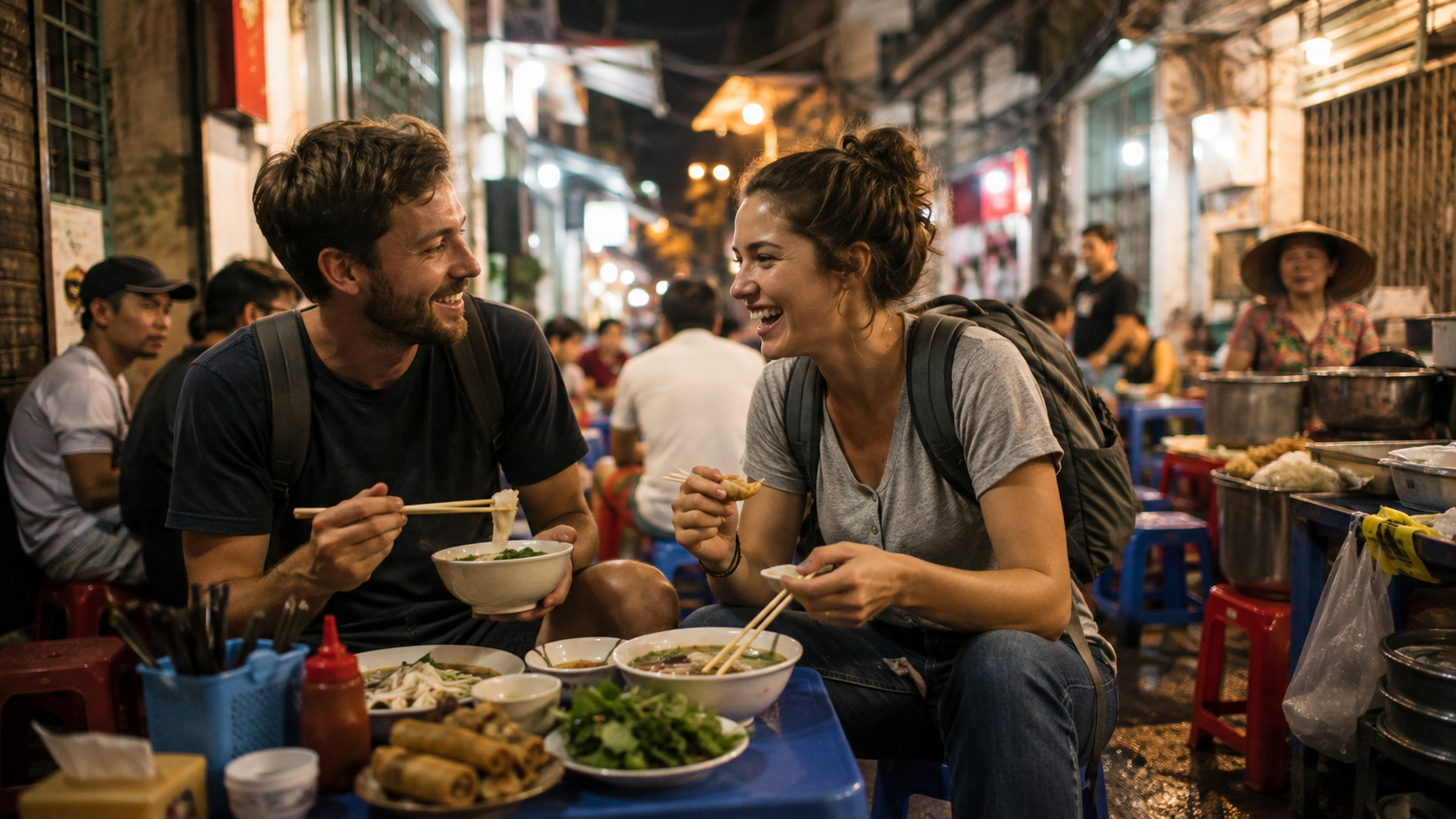
A deep Vietnam food tour does not only tell stories through words. It tells them through kitchen aromas, market voices, plastic stools beside the sidewalk, dipping sauce on the table, and eateries that have belonged to local life for years. When travelers are guided with the right rhythm, each dish becomes a small chapter in a larger story about Vietnam.
To build a food tour experience that is delicious, safe, and rich in story, Talk to a Vietnam travel advisor. Tradition Việt can help choose the city, timing, dishes, and guiding style so the food journey becomes a truly soulful part of your trip.
TVEN-EN-20260530-5 | Tradition Việt