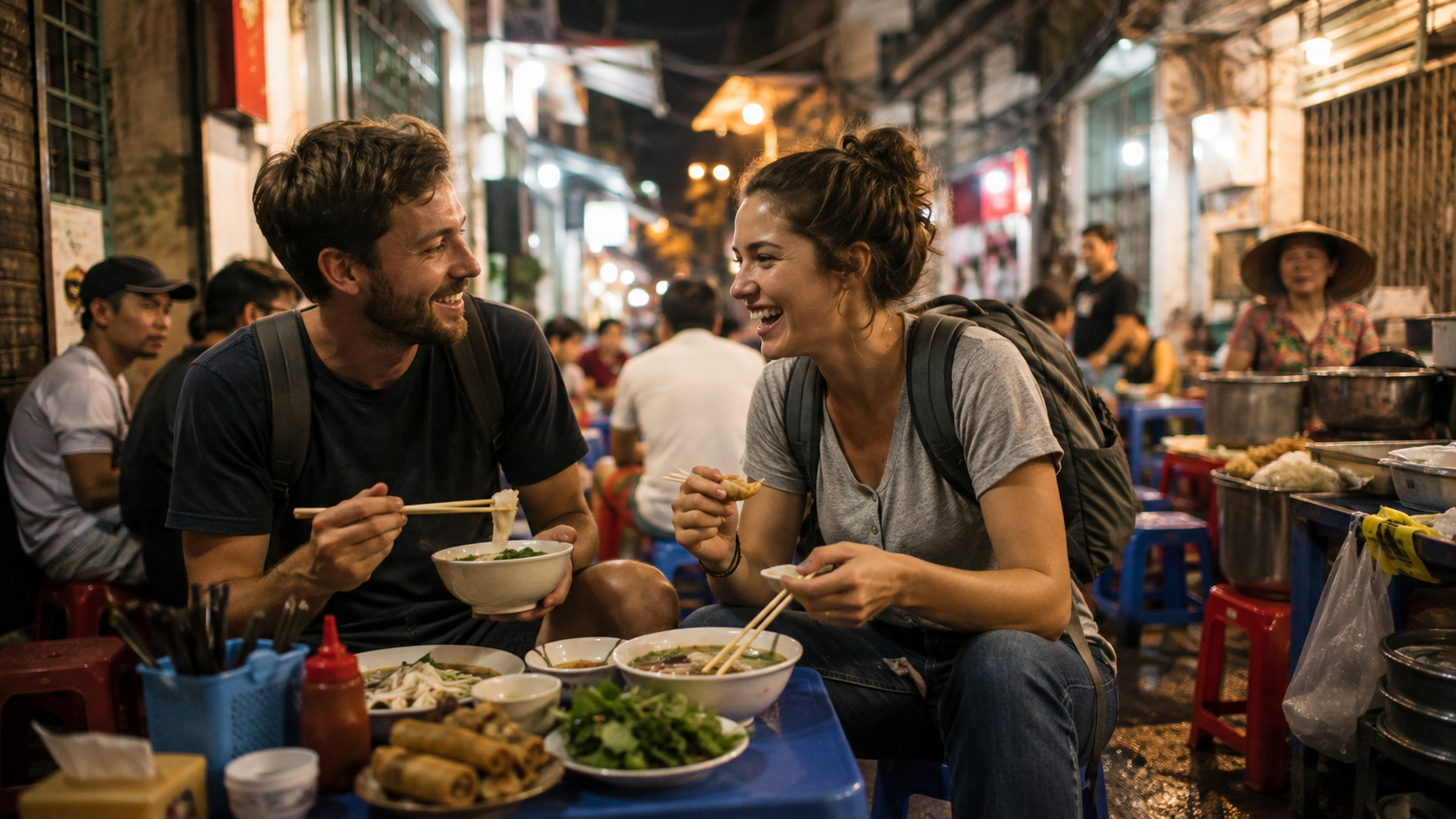


Vietnam food tours are not just about eating many dishes within a few hours. For first-time visitors, food is one of the closest doors into local life: motorbike sounds around a small eatery, steam rising from a bowl of pho, plastic chairs moving on the sidewalk, dinner in an alley, morning markets, iced milk coffee, and the story behind each dish. When guided well, a meal can explain more than a sightseeing stop.
What makes food tours in Vietnam attractive is the difference between regions. Hanoi has pho, bun cha, steamed rice rolls, and long-running eateries in the Old Quarter. Hue is refined with bun bo, small steamed cakes, mussel rice, and gentle heat. Hoi An stands out with cao lau, mi Quang, banh mi, and local markets. Ho Chi Minh City brings energy with street food, small alleys, night eateries, and many cultural layers. A good food tour helps travelers eat well, eat safely, and understand more deeply the place they are passing through.
Why Food Tours Are a Valuable Vietnam Experience
Vietnamese food can be explored independently, but a food tour makes the experience easier to approach, especially for travelers unfamiliar with streets, language, and local ordering habits. Instead of choosing places only through online reviews, travelers can be guided to eateries that match taste, timing, safety, and cultural context. The point is not to eat as many dishes as possible, but to understand why that dish belongs to that place.
Food tours help travelers understand Vietnam through daily life
A good food tour often begins with small details. It may be how Hanoians eat bun cha at lunchtime, how people in Saigon stop for late-night hu tieu, how Hue locals enjoy many small cakes in one light meal, or how a Central Vietnam market starts very early. These details make the food less unfamiliar and show travelers that cuisine is not separate from local life, but part of everyday habits.
In Vietnam, many of the best dishes are not found in luxury restaurants. They may be in sidewalk eateries, alleys, in front of a family home, near a market, or on a small cart that opens only for a few hours each day. For newcomers, it may be difficult to know which places are worth trying, which dishes fit their taste, and which places should be avoided. A knowledgeable guide makes the experience less confusing and gives travelers more confidence when trying new food.
A food tour also makes conversation with the destination feel more natural. When sitting at a small eatery, travelers do not only eat; they observe how locals order, share tables, add herbs, mix dipping sauce, or drink coffee after a meal. These details are hard to notice when moving quickly through the streets. Because of this, a food tour becomes part of what gives a Vietnam journey more depth.
Each region has its own flavor and eating style
Hanoi often feels classic, with dishes linked to old streets, broth, charcoal grilling, herbs, and a slower eating rhythm. A food tour in Hanoi may take travelers from a morning bowl of pho to lunch bun cha, hot steamed rice rolls, and egg coffee in a small alley. The beauty is not only in the food, but also in the street atmosphere, how the eateries operate, and the feeling that generations have eaten there.
Central Vietnam has stronger seasoning and its own identity. Hue is refined, with many small dishes and clear flavors that do not feel showy. Hoi An is more accessible with cao lau, mi Quang, banh mi, sweet soups, and local markets. Da Nang has the advantage of the sea, with seafood, rice paper rolls, mi Quang, and a younger coastal mood. These are all Vietnamese dishes, but seasoning, portion size, herbs, and dipping sauces shift from region to region.
Food tours are not only for big eaters
Many travelers think food tours are only for people who can eat a lot, but that is not always true. A good tour can be light, slow, carefully portioned, and focused more on experience than quantity. Light eaters, families with children, older travelers, or guests interested in culture can still enjoy the experience if the itinerary is chosen well.
How to Choose the Right Vietnam Food Tour
A good food tour should match the city, time of day, taste, walking pace, and openness of the traveler. Some people enjoy walking through the Old Quarter. Others want to explore alleys by motorbike. Some need a private tour because they travel with family or have dietary requirements. Before booking, decide whether you want something gentle, deeply local, street-food focused, regional, or combined with urban history.
Choose by city and time of day
Hanoi works well for walking food tours around the Old Quarter, where many dishes are close to one another and street life is full of detail. Morning is suitable for pho, steamed rice rolls, and coffee; evening works well for bun cha, grilled dishes, draft beer, or snacks in small lanes. If you want to feel an older city rhythm, Hanoi is a strong choice for first-time visitors to Vietnam.
Ho Chi Minh City is often excellent for evening food tours, especially if travelers want to see alleys, night eateries, street food, and the energy of southern urban life. Some tours use motorbikes, but that format does not suit everyone. If traveling with children, older guests, or travelers unfamiliar with traffic, choose a private tour, suitable transport, or a gentler walking route.
Pay attention to food safety, taste, and personal needs
Vietnamese street food is fascinating, but travelers should still choose tours that screen eateries carefully. A good place needs fresh ingredients, steady local traffic, clean preparation, and dishes suitable for foreigners trying them for the first time. Not every famous dish suits everyone, especially spicy food, fermented flavors, offal, raw seafood, or strongly flavored specialties.
Tradition Việt can help you choose food tours that fit your journey through /en/vietnam-food-tours/. If you are unsure whether to take a food tour in Hanoi, Hue, Hoi An, or Ho Chi Minh City, Talk to a Vietnam travel advisor so the itinerary is built around taste, timing, budget, and companions.
Connect the food tour with your wider Vietnam itinerary
A food tour should be placed well within the trip. On the first day in Hanoi or Ho Chi Minh City, a light food tour can help travelers quickly get used to the city. After several heritage days in Central Vietnam, a guided dinner in Hue or Hoi An adds local flavor. Near the end of the journey, a food tour can also become a memorable farewell to Vietnam.
If the itinerary already includes many daytime activities, choose a moderate evening food tour and avoid something too late or too heavy. If traveling with family, prioritize short stops, comfortable seating, shareable dishes, and alternatives if children do not enjoy a certain food. Couples or friends may choose a deeper tour with more stories, coffee, night markets, alleys, and local eateries.
A well-arranged food tour does not make the itinerary heavier. Instead, it gives the journey everyday pauses: sitting down, eating slowly, listening to stories, watching the street, and realizing that Vietnam is not only found in landscapes. Vietnam is also found in herbs, dipping sauce, small charcoal stoves, cups of coffee, and the way people invite each other to eat after a long day.
FAQ
What is a Vietnam food tour?
A Vietnam food tour is a guided experience where travelers try local dishes, explore eateries, markets, alleys, or food streets, and learn more about the eating culture of each region.
Are food tours in Vietnam safe?
Yes, if you choose a reliable operator and carefully selected eateries. Travelers should share allergies, foods they avoid, spice preferences, and personal requirements in advance.
Which cities are best for food tours in Vietnam?
Hanoi, Hue, Hoi An, and Ho Chi Minh City are all excellent choices. Each has a distinct flavor, from old streets and refined Central dishes to southern street food.
Are food tours suitable for families?
Yes, if the tour is moderate, not too long, includes shareable dishes, comfortable seating, and can be adjusted for children or older travelers.
Do I need to eat spicy food to enjoy a Vietnam food tour?
No. Many Vietnamese dishes are not very spicy, and spice levels can often be adjusted. Travelers should explain their taste preferences in advance so the guide can choose suitable dishes.
Should I book a private food tour?
Yes, if you travel with family, have dietary needs, prefer a slower pace, or want to combine the food tour with your own daily itinerary.
A memorable Vietnam food tour is not about how many dishes you eat. It is about how each dish opens a view into the city, people, and local habits. When guided well, a meal in a small alley, a morning coffee, or a bowl of noodles by the street can become a lasting memory of the journey.
To choose a food tour that fits your taste, timing, and Vietnam itinerary, Talk to a Vietnam travel advisor. Tradition Việt can help connect the food of Hanoi, Hue, Hoi An, Da Nang, Ho Chi Minh City, and other destinations into an experience that is delicious, safe, and rich in story.