

Street food experiences in Vietnam can become one of the strongest memories of the entire journey because food here is not separated from daily life. A bowl of noodles, a small plastic stool, a market snack, a coffee pause or a family-run street counter can reveal more about Vietnam than a long sightseeing list. The value is not only taste. It is rhythm, habit, region, language, movement and local confidence. Travellers who approach street food with curiosity and good guidance often discover Vietnam in a more intimate way. These eight reasons explain why street food deserves to be treated as a real highlight of the trip.
Street food makes Vietnam feel immediate
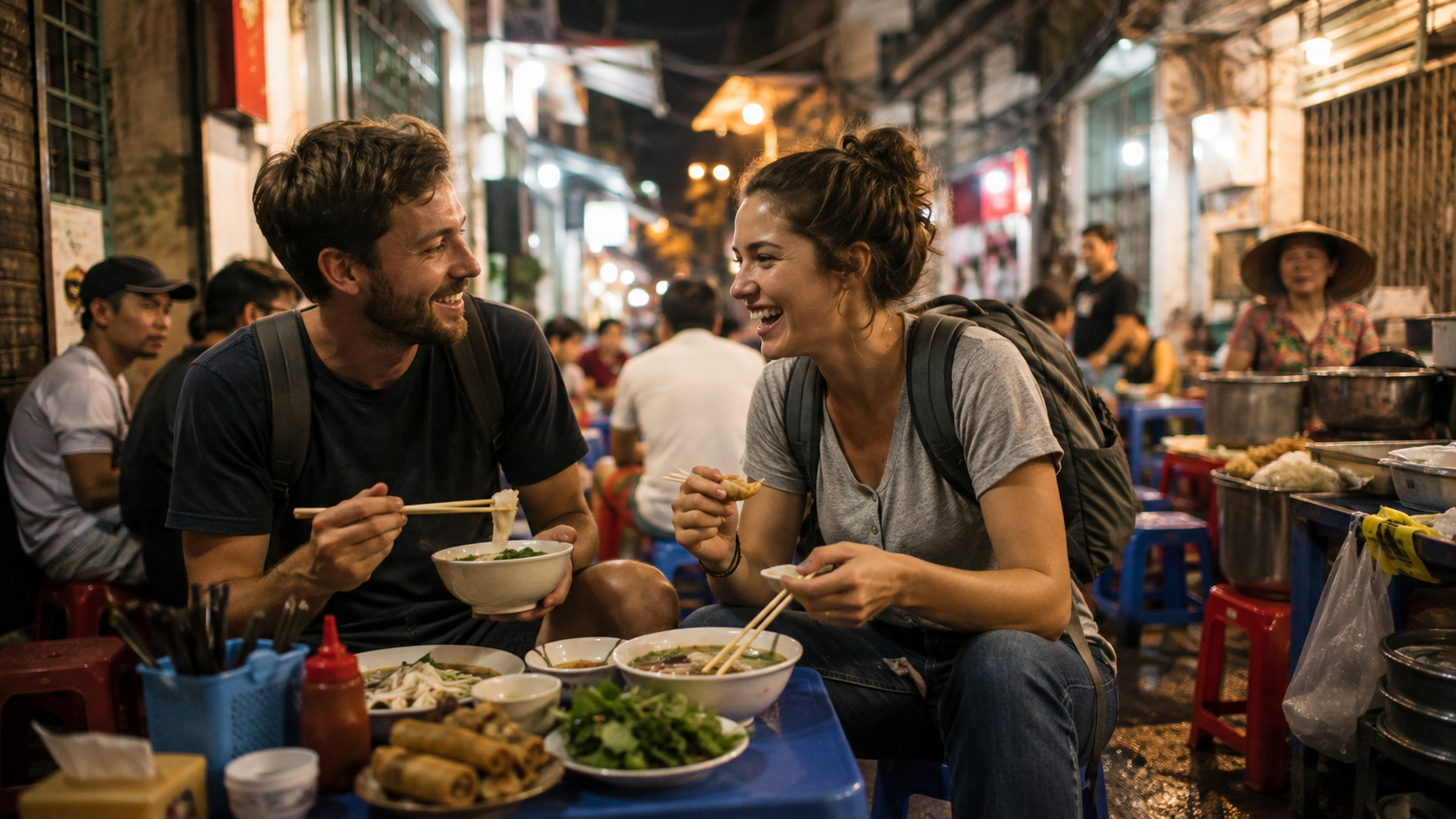
Street food brings travellers close to the country’s everyday rhythm. It happens in the morning before work, at lunch counters, after-school snack corners, evening grilling spots and late-night noodle shops. Unlike a formal restaurant, street food often places visitors directly inside local movement. The sounds, smells, gestures and pace all become part of the experience. This immediacy is why many travellers remember a simple dish more vividly than a famous monument. It feels alive, unpolished and deeply connected to place.
Reason one: it reveals local habits naturally
Travellers learn when people eat, how they sit, what they order, how sauces are used and why certain dishes belong to certain times of day.
A Vietnam food tours guide can help travellers understand how food experiences fit into a wider Vietnam itinerary.
Reason two: it turns ordinary streets into cultural spaces
A street food stop is not only about the dish. It is about sidewalks, families, vendors, regular customers and daily routines that repeat with quiet precision.
Regional flavor becomes easier to understand
Vietnamese street food changes from north to central to south. Hanoi may feel balanced and herb-driven. Central dishes can be more intense, aromatic and layered. Southern food often feels generous, tropical and lively. A street food route allows travellers to taste these differences without needing formal lectures. Each bowl, roll or snack becomes a small regional lesson. Food makes geography easier to feel.
Reason three: each region adds a different taste memory
A trip that includes Hanoi, Hue, Hoi An, Ho Chi Minh City or the Mekong Delta can show how climate, history and ingredients shape the plate.
A Vietnam cuisine tour proposal can help connect regional meals into one coherent food route.
Reason four: street food helps travellers move beyond famous dishes
Pho, banh mi and bun cha are important, but Vietnam offers much more. Snacks, soups, rolls, desserts, coffee and breakfast dishes add depth.
A good food journey should not stop at the obvious.
It should help travellers become braver without feeling unsafe.
This is where local guidance can make the experience smoother.
Reason five: small portions create variety
Street food allows travellers to taste several dishes in one evening if portions are managed well. Variety becomes part of the pleasure.
Guidance makes the experience safer and richer
Street food can feel intimidating for first-time visitors. Menus may not be translated. Seating can look informal. Ordering habits may be unfamiliar. A guide can reduce hesitation and explain what to eat, how to season, where to sit and what each dish means locally. This does not remove adventure. It makes the adventure more intelligent. Once travellers learn the basics, they can explore later meals with more confidence.
Reason six: a guided walk builds confidence
An early food walk helps travellers understand sauces, herbs, seating, ordering and payment habits. It can improve the rest of the trip.
A Vietnam food practical tips guide can help travellers prepare for comfort, hygiene and appetite rhythm.
Reason seven: food stories make the meal memorable
A dish becomes more meaningful when travellers hear why locals love it, when it is eaten and how it connects to family or neighborhood habits.
Reason eight: food can become the softest cultural bridge
Even travellers who feel nervous about history or language can connect through taste, smiles and shared curiosity.
Street food experiences in Vietnam are worth making a real highlight because they bring travellers close to daily life. They reveal local rhythm, regional flavor, family habits and street culture in a direct and memorable way. With good pacing and local guidance, street food becomes more than a meal. It becomes an introduction to how Vietnam lives. Travellers who taste carefully often understand the country more warmly, one dish and one street corner at a time.
Tradition Việt
Hotline: (+84) 967 04 88 91 / (+84) 376 304 008
Email: info@traditionviet.com
Adresse: CT2A Hanoi Homeland