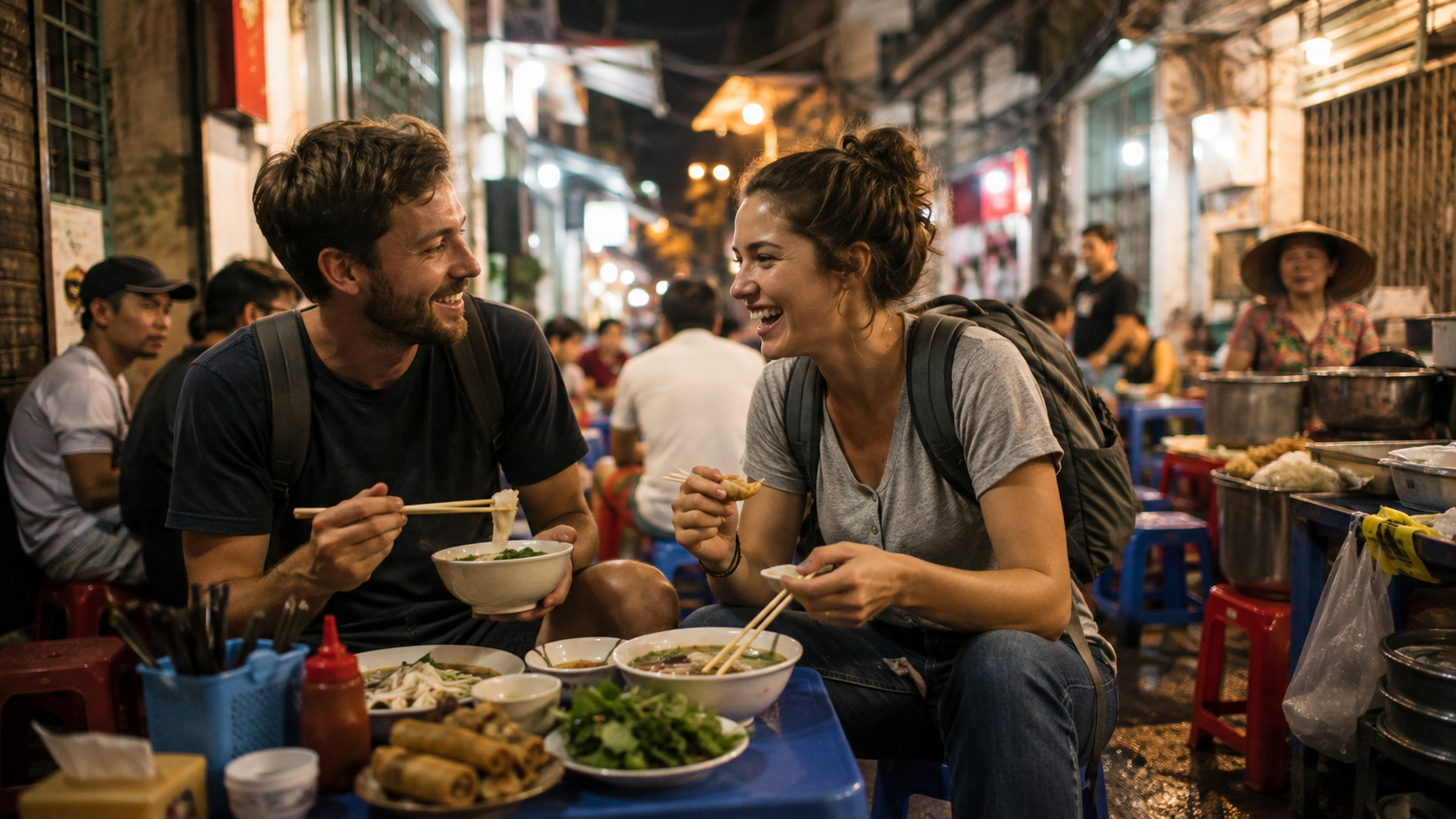


Local food tasting in Hanoi can become a true highlight of a Vietnam trip because the capital’s food culture is layered, precise and deeply connected to daily life. Hanoi is not only a place to try famous dishes. It is a city where breakfast steam, coffee counters, noodle shops, market snacks, family recipes and old neighborhood routines all shape the traveller’s memory. A good tasting route should not rush from dish to dish. It should help visitors understand why Hanoi eats this way, how flavors are balanced and how food fits the city’s rhythm.
Hanoi food introduces the city through everyday detail
Hanoi can feel intense for first-time visitors: narrow streets, motorbikes, small shops, old houses and lively sidewalks. Food tasting slows this complexity down. A guide can lead travellers from one dish to another while explaining what locals eat, when they eat it and how to enjoy it properly. This makes the city easier to read. Instead of only seeing traffic and old streets, travellers begin to notice breakfast habits, lunch crowds, coffee culture and the small gestures that make Hanoi food feel intimate.
Reason one: it makes the Old Quarter easier to understand
Food gives the Old Quarter structure. A bowl of noodles, a coffee stop or a snack counter can help travellers connect streets with real local routines.
A Hanoi food tour guide can help compare tasting formats before choosing a route.
Reason two: it gives a soft first-day orientation
A food tasting can introduce walking rhythm, local seating, flavors and street confidence without feeling like a formal sightseeing tour.
Reason three: it turns dinner into cultural learning
A Hanoi meal can reveal herbs, broth, dipping sauce, texture, balance and family habits. These details make the experience richer.
The variety goes far beyond the famous dishes
Many travellers arrive knowing pho, bun cha and banh mi, but Hanoi’s local food scene reaches further. There are rice rolls, crab noodle soup, sticky rice, grilled snacks, desserts, egg coffee, fresh herbs, seasonal fruit and comfort dishes that locals eat at specific times of day. A strong tasting route should balance iconic dishes with less obvious choices. This gives travellers both recognition and discovery.
Reason four: travellers taste Hanoi beyond clichés
A local guide can introduce dishes that are less famous internationally but still deeply loved in the city.
A Hanoi street food itinerary guide can help shape a tasting route with good timing and variety.
Reason five: breakfast food can be especially revealing
Morning food in Hanoi shows the city at work: quick bowls, hot rolls, coffee, conversation and movement before the tourist day begins.
A morning route feels different from an evening route.
Both can be valuable.
The right choice depends on appetite, schedule and travel energy.
Local guidance improves comfort and confidence
A food tasting in Hanoi is easier with someone who knows where to go, what to order and how to pace the meal. This matters for travellers with dietary concerns, limited time or nervousness about hygiene. Guidance also prevents the experience from becoming a random list of dishes. A guide can explain why each stop matters and help travellers understand how to eat like a guest rather than only as a tourist.
Reason six: ordering becomes less intimidating
Travellers do not need to decode every sign or menu alone. A guide can help with dish names, toppings, sauces and portion sizes.
A Hanoi street food mistakes guide can help travellers prepare for crowds, timing and food walk rhythm.
Reason seven: dietary needs can be handled more carefully
Vegetarian preferences, allergies, seafood concerns or spice limits should be discussed before the tour. A private tasting can adapt more easily.
Reason eight: portion control makes the route more enjoyable
A food tasting should end satisfied, not overwhelmed. Small portions and good order help travellers taste more without exhaustion.
Food tasting creates memories that feel personal
Hanoi food is memorable because it is human. Travellers may remember a vendor’s hands, a tiny stool, steam from a bowl, the sound of scissors cutting herbs or the first sip of coffee after a walk. These memories are small, but they feel personal. A good tasting route leaves space for attention. It should not move so fast that every dish becomes only another checklist item.
Reason nine: coffee culture adds a gentle pause
A coffee stop gives travellers time to rest, ask questions and observe the city from a slower angle.
A Hanoi food tour with local support can help match food route, hotel location, appetite and dietary needs.
Reason ten: food helps travellers return independently
After a guided tasting, visitors often feel confident enough to revisit a dish, café or neighborhood alone.
Reason eleven: shared dishes create conversation
Food tasting is social. Couples, families and small groups often connect naturally over flavors, surprises and local stories.
Reason twelve: Hanoi food supports many travel styles
It can be casual, private, family-friendly, premium, budget-conscious or photography-friendly depending on route design.
Reason thirteen: local markets add texture
Markets reveal ingredients before they become meals. Herbs, noodles, fruit, fish and rice products make food culture more visible.
Reason fourteen: the experience fits well early in the itinerary
A first or second day food tasting can improve confidence for the rest of the Vietnam trip.
Reason fifteen: it turns Hanoi into more than a stopover
Food tasting helps travellers feel that Hanoi is not only a gateway to Halong Bay or Sapa. It is a destination with its own depth.
Local food tasting in Hanoi deserves to be a real highlight because it introduces the capital through taste, habit and daily rhythm. The experience can move beyond famous dishes into breakfast culture, coffee, markets, sauces, herbs and local stories. With good guidance, travellers gain confidence and understand the city more warmly. Hanoi becomes easier to read, easier to enjoy and much harder to forget.
Tradition Việt
Hotline: (+84) 967 04 88 91 / (+84) 376 304 008
Email: info@traditionviet.com
Adresse: CT2A Hanoi Homeland