
Hue is not the right choice for every traveller in the same way. Some visitors come for the Imperial City, royal tombs and stories of the Nguyen Dynasty; others remember Hue through a quiet morning by the Perfume River, a family-style meal in a garden house, or the sound of a pagoda bell after light rain. Choosing Hue is therefore not only about adding another stop to a Vietnam itinerary. It is about choosing a slower, more reflective and more cultural way to travel. For anyone considering Hue, the real question is not simply whether the city is beautiful, but whether its atmosphere matches the kind of experience they want from Vietnam.
The travellers who usually enjoy Hue the most
Travellers interested in heritage, architecture and Vietnamese history
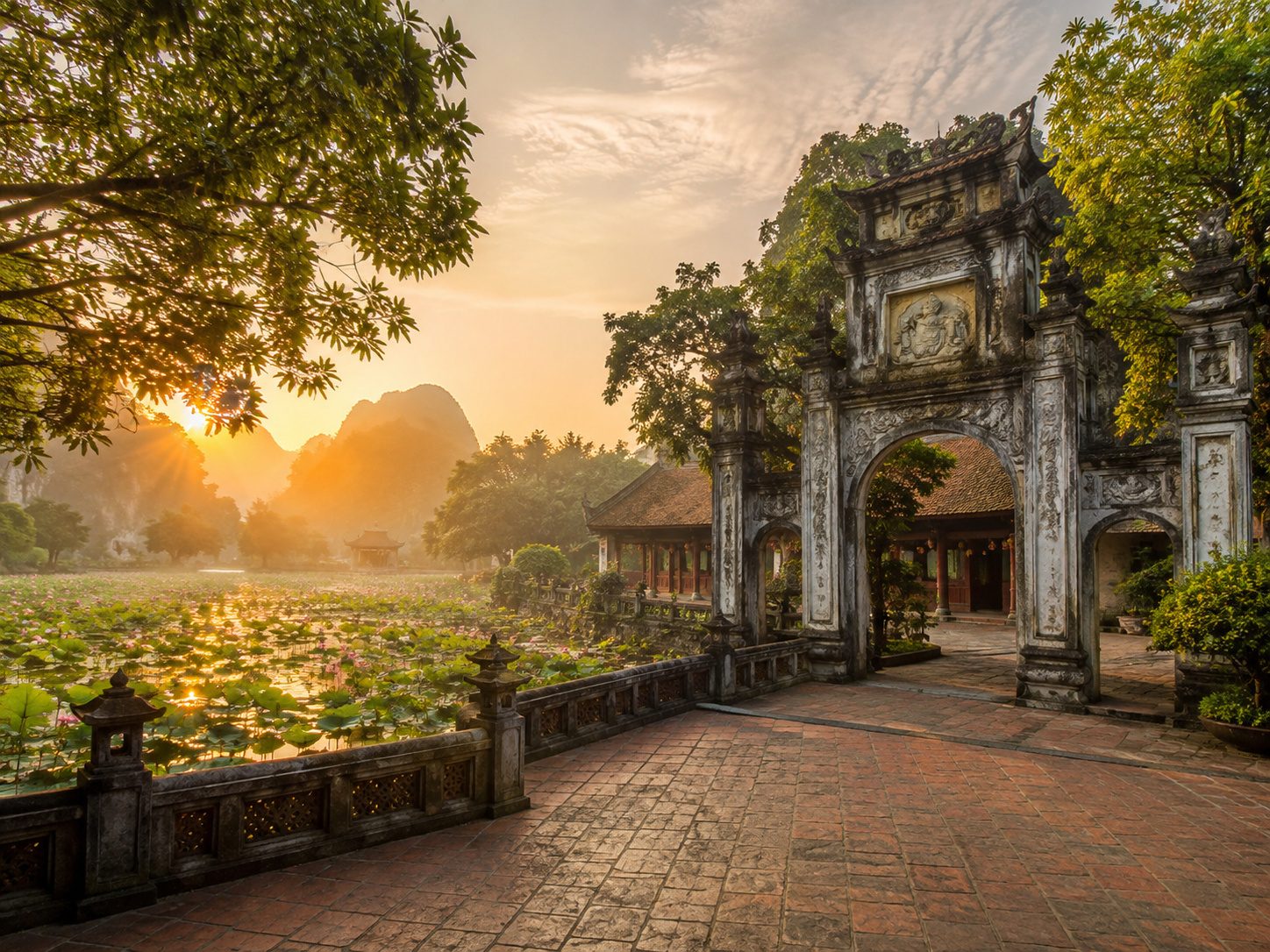
Hue is especially rewarding for travellers who want to understand Vietnam through culture, not only through landscapes. The Imperial City, royal tombs, Thien Mu Pagoda and the banks of the Perfume River create a setting where history is still visible in daily life. Architecture lovers will notice how royal planning, geomancy, gardens, water and decorative details work together in a style that is quiet rather than showy, but very memorable.
What makes Hue valuable is that its heritage is not just a background for photographs. With the right guide, a gate, a roof tile, a screen wall or a pathway inside a tomb can open a story about power, ceremony, family, art and the Vietnamese way of seeing the world. This is why Hue suits travellers who like listening, asking questions and giving a destination enough attention to reveal its deeper layers.
Visitors who prefer slower, quieter and more emotional travel
Hue does not impress through speed or noise. The city is often at its best when visitors allow time to walk slowly inside the Imperial City, sit longer in a riverside cafe, or stop in an old garden house after the rain. It suits travellers who do not want every day to be packed with too many stops, and who value silence, atmosphere and small details as much as famous monuments.
For couples, small groups or independent travellers, Hue can become a beautiful pause in a Central Vietnam journey. After the energy of Da Nang, Hoi An or the coast, Hue offers another tone: softer, deeper and more reflective. You do not need to do many activities to remember the city. A late afternoon near Truong Tien Bridge, a home-style meal, or a conversation about a traditional craft family can be enough to stay with you.
Travellers who mainly look for nightlife, large shopping areas or fast entertainment may find Hue too calm. This is not a weakness; it is part of the city’s character. When you understand this before arriving, Hue becomes easier to appreciate and easier to place correctly within a wider Vietnam itinerary.
Families and groups looking for gentle cultural experiences
Hue can also work very well for families if the itinerary is designed at the right pace. Children may not enjoy too much historical explanation, but they often respond well to visual and hands-on experiences: a boat ride on the Perfume River, the wide courtyards of the Imperial City, local food, simple royal stories, or a craft village where they can see how traditional objects are made. For families, Hue works best when culture is made tangible and the day is not overloaded.
When Hue deserves a place in your Vietnam itinerary
When your trip needs a deeper cultural stop
In a balanced Vietnam itinerary, Hue often plays the role of a cultural anchor in the central region. Hanoi gives travellers old-quarter life, northern memory and urban rhythm; Hoi An offers merchant houses, lanterns and a softer holiday mood; Hue opens the royal, ceremonial and historical side of the country. This is why Hue deserves a place in itineraries that want to go beyond surface sightseeing.
When you can stay at least one or two nights
Hue can be visited in a day, but that usually suits only travellers with very limited time. To feel the city properly, it is better to stay at least one night, and ideally two. One night gives you an evening by the river or in the city centre; two nights allow you to separate the Imperial City, royal tombs, pagodas, food and local experiences into calmer parts of the day.
A longer stay also makes the journey more comfortable, especially for older travellers or families with children. Many heritage sites in Hue involve walking, sometimes under sun or light rain, so an overloaded schedule can reduce the quality of the experience. With pauses between visits, travellers notice more: moss on the old walls, water around the tombs, incense inside a pagoda, or the discreet way local people speak and welcome guests.
If you want to combine Hue with Da Nang and Hoi An, Tradition Việt can help adjust the route order, travel time, private vehicle, guide and experiences according to your age, interests and energy level. A good itinerary does more than connect places; it gives each destination enough space to become a real memory.
When you want to avoid a generic itinerary
Hue suits travellers who want a Vietnam journey with more personality than a standard sightseeing route. Beyond the famous monuments, the city offers garden houses, local markets, small eateries, craft villages, riverside roads and stories that rarely appear in rushed tours. When designed privately, Hue can feel elegant for culture lovers, gentle for families, meaningful for older travellers, or more local for visitors who enjoy meeting people and understanding daily life.
This is where a tailored Hue travel guide becomes useful. Instead of forcing every traveller through the same sequence of sites, the itinerary can be adjusted around comfort, curiosity and timing. Some guests may want more royal history; others may prefer food, gardens, river views or a slower afternoon with fewer transfers. The best version of Hue is usually the one that matches the person travelling, not the one that tries to show everything at once.
FAQ
Is Hue suitable for first-time visitors to Vietnam?
Yes, especially if you want to understand Vietnam through history, culture and Central Vietnam. Hue works best when combined with places such as Hanoi, Hoi An or Da Nang.
Is Hue a good destination for families?
Yes, as long as the itinerary is not too heavy. A private car, shorter visits, food experiences and craft stops can make Hue more enjoyable for children.
Is Hue suitable for older travellers?
Very much so, if the programme includes enough rest time and avoids too much walking under strong sun. A good guide also makes the heritage easier to follow.
How many nights should I spend in Hue?
One night is the minimum, but two nights are better if you want to visit the Imperial City, royal tombs, Thien Mu Pagoda and enjoy local food without rushing.
Should Hue be combined with Hoi An?
Yes. Hue and Hoi An make a strong Central Vietnam combination: one offers royal history, the other offers old merchant houses, lantern streets and a more relaxed holiday atmosphere.
Send us your expected travel dates, number of travelers and main wishes to receive itinerary advice and a suitable quote from Tradition Việt. 📞 Hotline: (+84)967 04 88 91 / (+84)376 304 008 📧 Email: info@traditionviet.com Address: CT2A, Hanoi Homeland, Thuong Thanh Ward, Long Bien District, Hanoi.
Tradition Việt SEO EN · TVEN-EN-20260601-2