

A Hue guided tour becomes much more rewarding when travelers prepare properly in advance. Hue is not the kind of destination where you simply arrive, look around, and move on. The city has many outdoor spaces, layered history, sites spread across different areas, and small details that need time to hear. Without good preparation, travelers may easily become tired from heat, walk too much inside the Imperial City, or visit royal tombs without understanding how each one is different.
A good Hue visit needs a comfortable pace. A guide can help you understand the citadel, royal tombs, Thien Mu Pagoda, the Perfume River, cuisine, and local life, but the experience still depends on how you choose timing, clothing, transport, number of stops, and the group’s level of interest. With a few practical tips before departure, your Hue tour becomes lighter, easier to feel, and better able to keep the former capital’s quiet depth.
What to Prepare Before Joining a Hue Guided Tour
Preparing for a Hue tour is not only about booking tickets or choosing a sightseeing list. More importantly, travelers should understand the city’s character: many sites are large, weather can be strongly sunny or suddenly rainy, and places such as the Imperial City, Minh Mang Tomb, Tu Duc Tomb, Khai Dinh Tomb, and Thien Mu Pagoda are not all close to one another. A sensible itinerary helps you save energy for the most meaningful parts instead of losing it through poorly planned movement.
Choose the right time of day to avoid heat and travel fatigue
Hue has many outdoor attractions, so the time of day strongly affects traveler comfort. In hot seasons, it is better to prioritize the Imperial City or places requiring more walking in the morning, when the sun is not too harsh. The afternoon can be kept for royal tombs, Thien Mu Pagoda, the Perfume River, or places with shade and more natural rest. This division makes the trip easier, especially for families and older travelers.
If you only have one day in Hue, do not try to fit too many famous sites into the same schedule. The Imperial City needs time for walking, listening, and observing. Royal tombs also need quiet moments to feel their space. If you rush constantly between stops, Hue may be remembered as a long, tiring day rather than a cultural experience. It is better to choose fewer stops, listen more deeply, move more slowly, and include a local meal as a pause.
Wear clothing suited to heritage sites, weather, and walking
Clothing for a Hue tour should be comfortable, respectful, and suitable for the climate. You will pass through palaces, pagodas, royal tombs, wide courtyards, steps, tiled paths, and many outdoor areas. Easy walking shoes matter more than shoes chosen only for photos. Breathable clothing, a hat, sunglasses, sunscreen, and a small bottle of water will make the visit much lighter.
Share your cultural interests so the guide can focus the story
Hue can be told through many different angles. Some travelers enjoy Nguyen Dynasty history, some care about architecture, some want to understand Buddhism, while others prefer cuisine, garden houses, craft villages, or life along the Perfume River. Before the tour, if you explain what you want to hear more about, the guide can adjust the storytelling and focus points more effectively.
This is especially important for private tours. If the group includes a history lover, the Imperial City and royal tombs can be explained more deeply. If children are joining, the storytelling should be lighter, more visual, and include more lively stops. If the group does not want too much information, the guide can keep the stories concise and leave more time for observation, photos, meals, and rest.
You should also mention in advance if you do not want too much walking, cannot handle strong sun well, or need to avoid steps. Some tombs are spacious, some sites require crossing sunny courtyards, and some areas include steps or uneven paths. With this knowledge, the guide can arrange the order of visits more sensibly and avoid making the experience too demanding.
During the Hue Tour: How to Feel the Former Capital More Deeply
Once the tour begins, do not treat Hue as a checklist of places to complete. The city is beautiful in its pauses: in the way light falls on tiled roofs, in the ponds before royal tombs, in pagoda bells, in small meals, and in stories that are not loud. If you move with a slightly slower mindset, you will see that a Hue tour is not only about learning history, but about entering a layered cultural space.
Do not listen only for royal names and dates
Hue’s history is easier to remember when you listen for the relationship between people, space, and era. An emperor is not only a name in a timeline. A royal tomb is not only a resting place. A citadel gate is not only a photo stop. When the guide explains construction, location, aesthetics, rituals, and the life around them, the details inside the heritage sites become more meaningful.
Keep a rhythm between heritage, cuisine, and landscape
A common mistake in Hue is placing too many heritage sites back to back without rest. After the Imperial City, travelers may need a Hue-style lunch, a quiet café, or a gentle riverside moment before continuing to royal tombs. These pauses do not make the trip less deep; on the contrary, they give the information you have just heard time to settle.
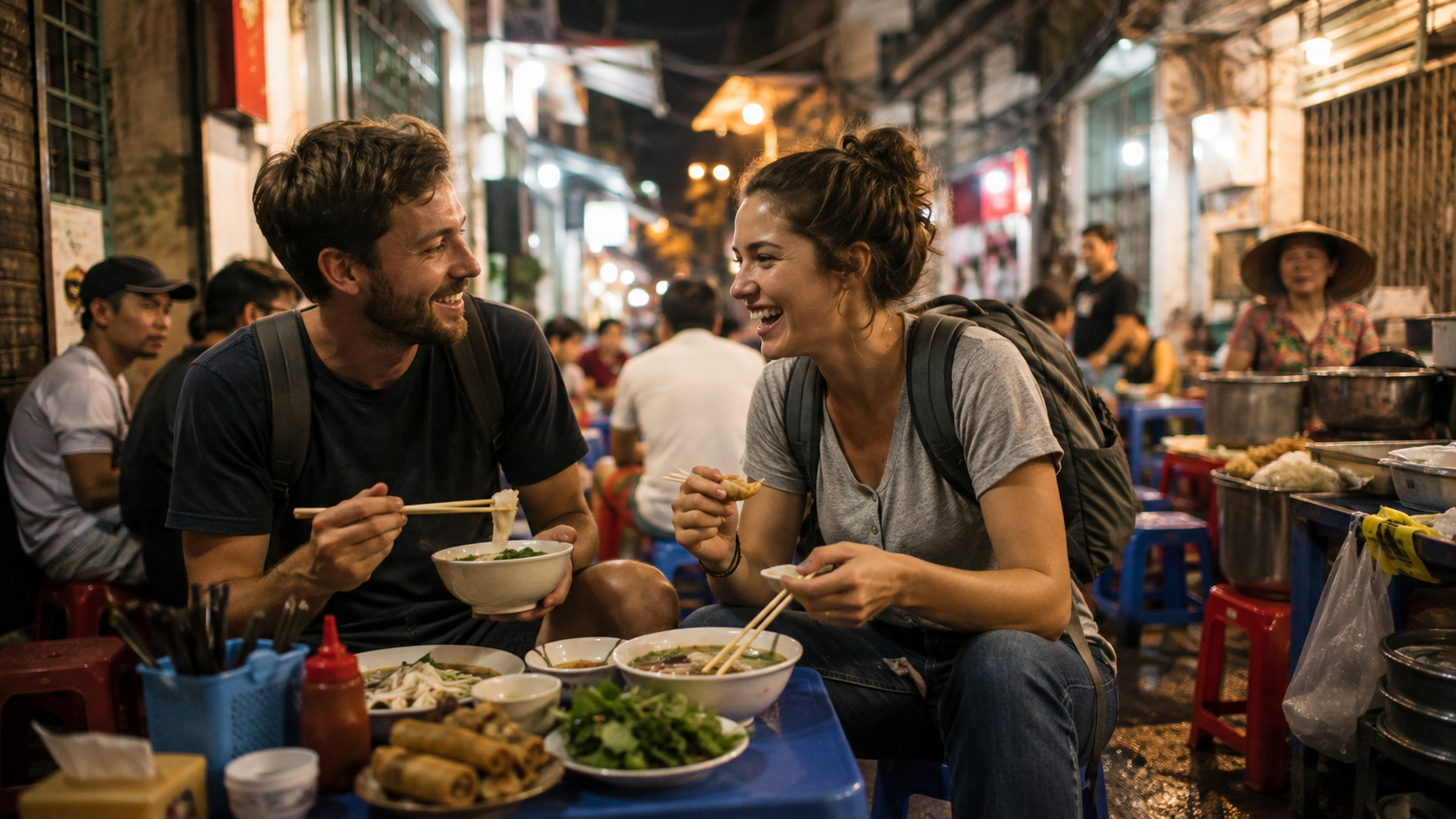
Cuisine is an excellent way to soften the Hue itinerary. Bun bo, mussel rice, banh beo, banh nam, banh loc, Hue sweet soups, or a home-style meal can help travelers understand the city through taste. If the tour includes only monuments, Hue can feel solemn but lack everyday life. When a meal is added at the right moment, the journey becomes more intimate.
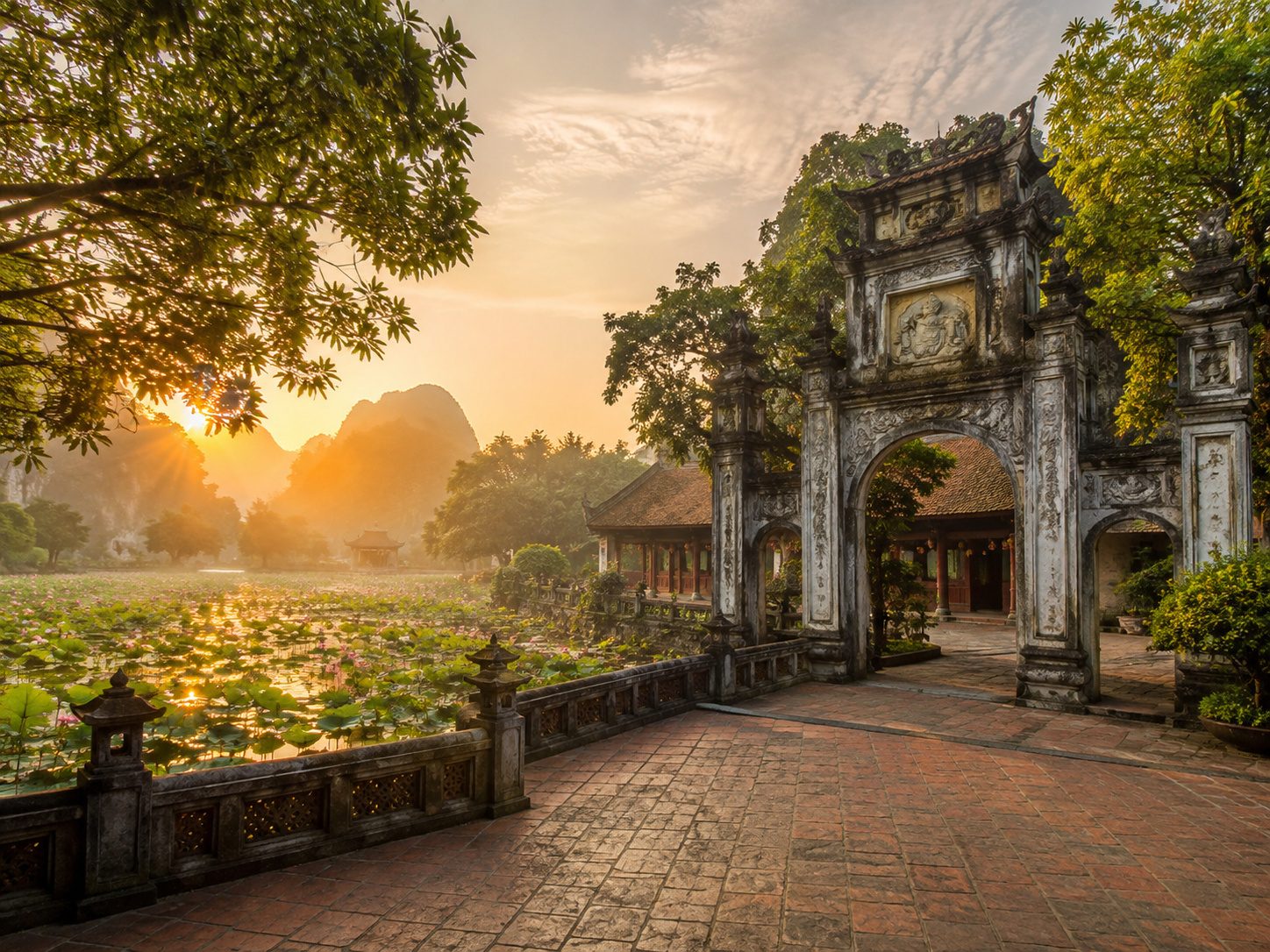
Landscape should also have a place in the itinerary. A moment by the Perfume River, an afternoon at Thien Mu Pagoda, or a quiet pause under trees inside a royal tomb area can help travelers feel Hue emotionally, not only intellectually. Let the guide know if you want time for scenery, because sometimes removing one small stop can make the whole day much lighter.
Tradition Việt can help you choose a suitable Hue tour through /en/hue-guided-tour/. If you are unsure whether to start with the Imperial City or royal tombs, choose a half-day or full-day tour, or combine Hue with cuisine and Central Vietnam, Talk to a Vietnam travel advisor so the itinerary is designed around season, energy, and the group’s real interests.
Ask small questions to open larger stories
When traveling with a guide, small questions often bring the most interesting answers. You can ask why Minh Mang Tomb has a different layout from Khai Dinh Tomb, why Thien Mu Pagoda stands beside the river, why Hue dishes are often small, or which former-capital habits local people still keep today. Questions like these turn the tour from a lecture into a conversation.
You do not need to ask academic questions. Simply be curious about what you are seeing: a roof motif, a screen wall, a lotus pond, a dish, or an old road. A good guide can use these details to open wider stories about architecture, geomancy, history, belief, or local life.
This way of asking also gives the journey your own imprint. The same Imperial City can feel different to an architecture lover, a food lover, a family traveler, or a solo guest. The best Hue tour is one that helps travelers understand the city in their own way, within a story flow that is clear and subtle.
FAQ
What should I prepare before a Hue guided tour?
Prepare easy walking shoes, breathable and respectful clothing, a hat, sunglasses, drinking water, sunscreen, and share your cultural interests and walking comfort with the guide in advance.
When is the best time to visit the Imperial City?
Morning is usually better in hot weather because the Imperial City is large and requires a fair amount of walking. Morning visits tend to feel more comfortable.
Should a Hue tour include many royal tombs?
Not if time is limited. Each tomb has its own story and atmosphere, so choosing one or two suitable tombs is better than rushing through too many.
Should I include food in a Hue tour?
Yes. Food softens the Hue itinerary and brings travelers closer to local life. Dishes such as bun bo, mussel rice, banh beo, banh nam, banh loc, and Hue sweet soup are worth trying.
Is a Hue tour suitable for older travelers?
Yes, if the itinerary is comfortable, avoids strong sun, includes rest time, keeps walking reasonable, and does not include too many outdoor stops.
What should I ask a Hue guide?
You can ask about the Nguyen Dynasty, Imperial City architecture, differences between royal tombs, Thien Mu Pagoda, the Perfume River, Hue cuisine, or local life today.
A Hue guided tour becomes deeper when travelers prepare well and move at the right pace. Do not turn Hue into a rush through monuments. Let the city open through stories, shade, tiled roofs, meals, and quiet riverside pauses. In that way, the trip carries not only knowledge, but also the distinctive feeling of the former capital.
To choose a Hue tour that fits your season, energy, length of stay, and cultural interests, Talk to a Vietnam travel advisor. Tradition Việt can help design a Hue itinerary that is clearly structured, gentle, and naturally connected with Da Nang, Hoi An, and your wider Vietnam journey.