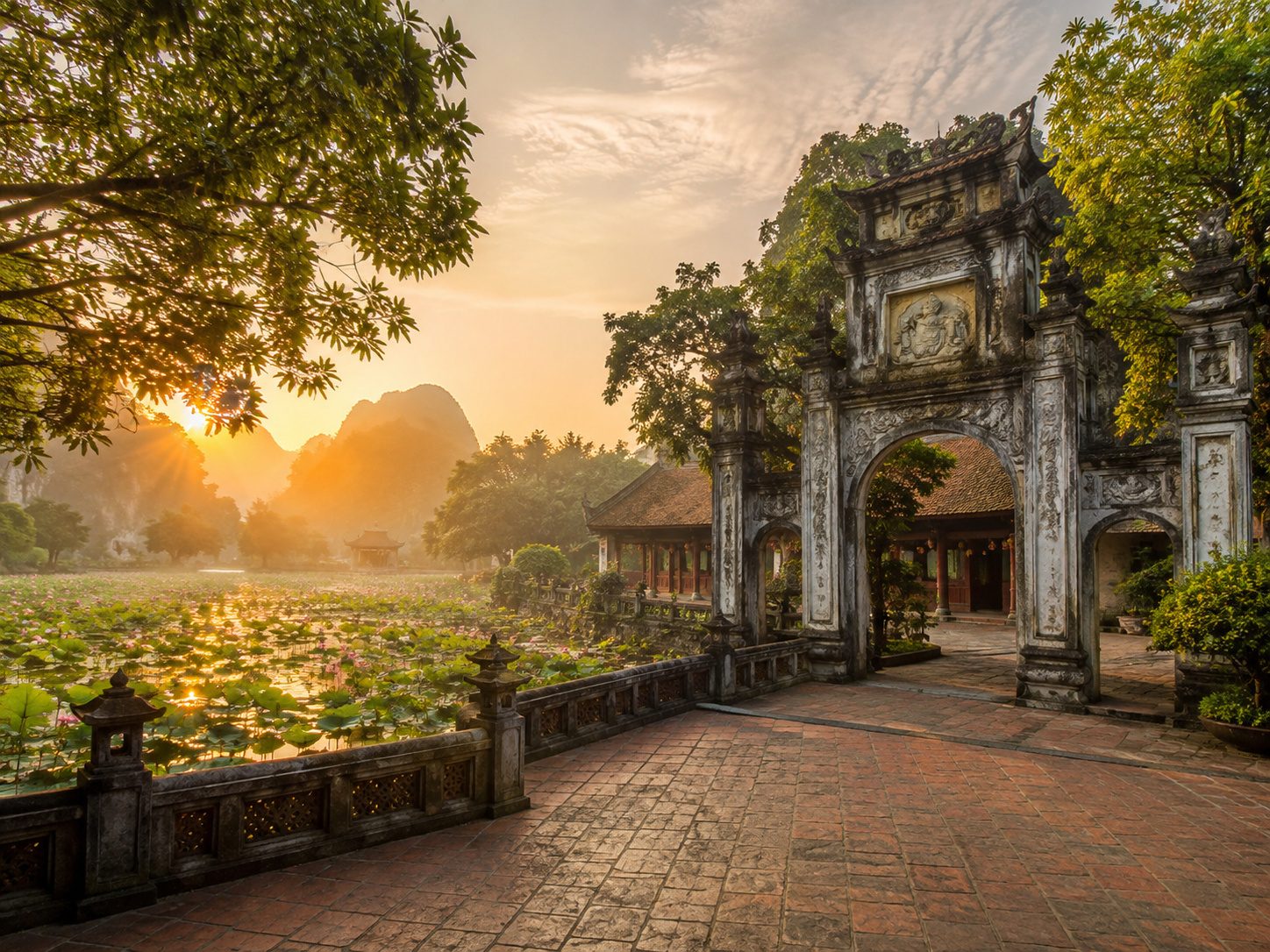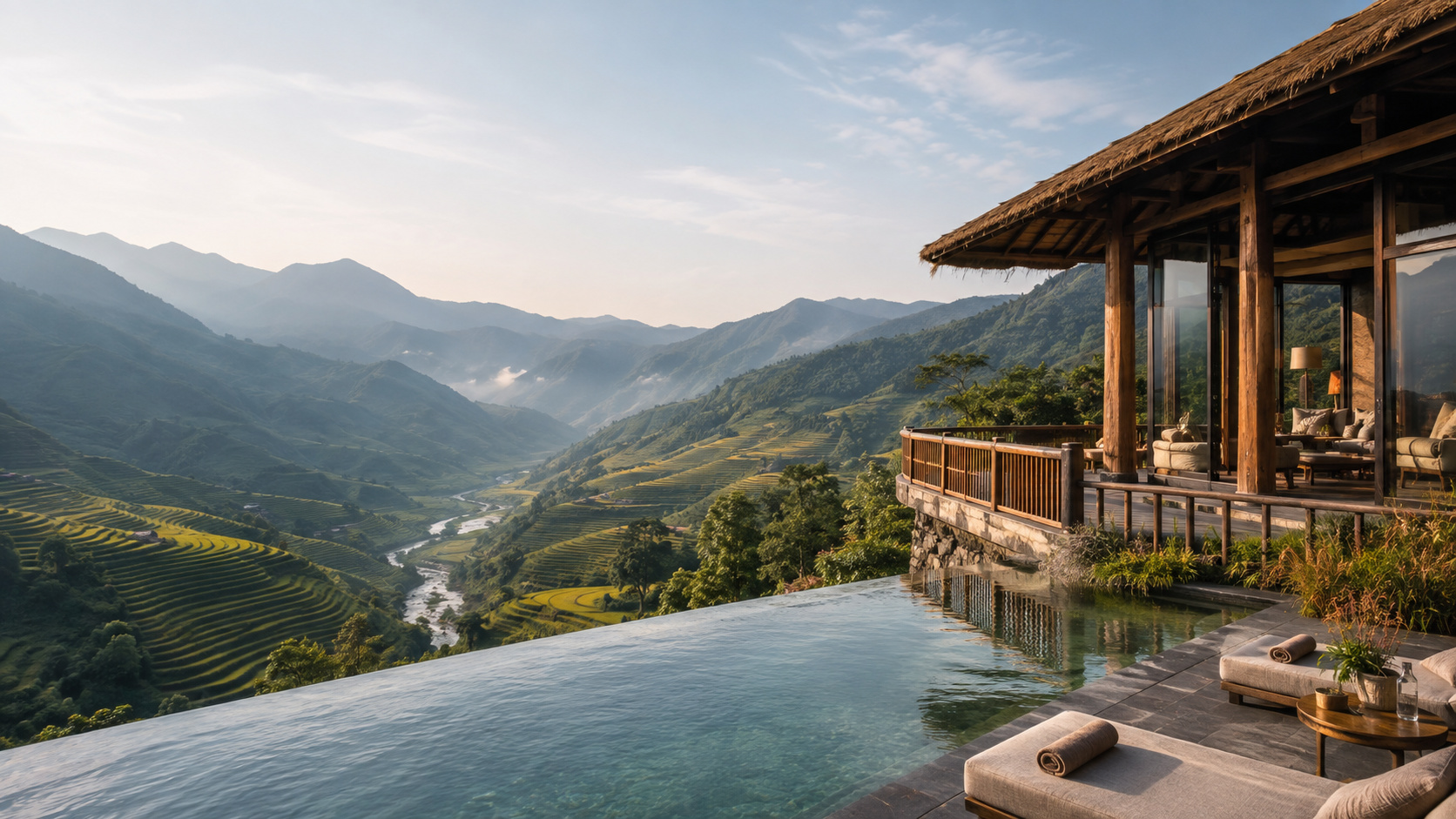


Hue is not a city to rush through. If travelers only visit the Imperial City, take a few photos at royal tombs, and leave, they may find Hue beautiful but slightly distant. This city needs to be opened through stories: why the citadel faces the Perfume River, why royal tombs sit among pine-covered hills, why Hue dishes are small yet refined, and why court music, ancient pagodas, garden houses, and a slower rhythm create a character unlike Hanoi, Hoi An, or Ho Chi Minh City.
A Hue guided tour helps travelers go deeper into these cultural layers. The guide does not only move you from one place to another, but helps organize the understanding: the Nguyen Dynasty, imperial architecture, Buddhist life, cuisine, craft villages, and urban memory along the river. When the stops are connected by a clear story, Hue is no longer a list of monuments. It becomes an experience with feeling and depth.
Why Explore Hue with a Guide?
Hue has many important heritage sites, but their value does not always appear immediately. A gate, an axis, a tiled roof, a lotus pond, or a screen wall all play a role in the way the old city shaped living space and power. When traveling alone, visitors may see beauty but miss the deeper meaning behind it. A guide gives the journey structure, emphasis, and continuity.
Understand the Imperial City through historical storytelling
The Imperial City is the most important stop for many Hue trips, but it should not be seen as a large sightseeing area with many gates and palaces. With a guide, travelers understand why the citadel was placed where it is, how the main axis works, how ceremonial spaces differ from living areas, and how each structure reflects the position of the Nguyen Dynasty in Vietnamese history.
A guided visit to the Imperial City also makes the experience less tiring because travelers do not need to guess which route to take first. The site is large, and many details are easy to miss when following only a map. A guide can choose a reasonable route based on weather, duration, and group energy, while stopping at the points that truly need explanation. As a result, the visit does not become only a long walk under the sun.
What is more valuable is how historical storytelling becomes softer. Instead of only hearing dates and royal names, travelers can understand palace life, rituals, the relationship between architecture and geomancy, and the changes that left today’s heritage partly preserved and partly lost. This way of telling makes the Imperial City feel closer rather than like a dry block of information.
Connect royal tombs, ancient pagodas, and the Perfume River
Hue is not only the Imperial City. Royal tombs such as Minh Mang, Tu Duc, and Khai Dinh open another view into the aesthetics, personality, and period of each emperor. Some tombs feel quiet among nature, some show East–West influences, and some feel more like a melancholy poem than a statement of power. When explained well, each tomb becomes distinct in the traveler’s eyes.
Thien Mu Pagoda, the Perfume River, and the roads around the city add a softer emotional layer to the itinerary. Hue is a place where religion, nature, and history are not completely separate. A boat ride, a stop by an old pagoda, or a quiet moment under trees can help travelers feel the city more slowly. A good guide knows how to place these stops so the trip includes not only knowledge, but also breathing space.
Avoid overpacked schedules and choose Hue’s right rhythm
Hue does not suit an itinerary that squeezes too many stops into one day. If the schedule is too dense, travelers may become tired before they can feel the city. A good tour should know how to prioritize: the Imperial City needs enough time, royal tombs should be chosen by interest, pagodas and the river should be placed at the right moment, and Hue cuisine deserves its own place in the day.
How to Choose the Right Hue Guided Tour for Your Vietnam Itinerary
A Hue tour should be chosen according to length of stay, season, energy level, and cultural interest. Some travelers only have half a day to understand the former capital at a general level. Others want a full day for heritage. Some prefer a slower plan with food, garden houses, craft villages, or an evening by the Perfume River. A good Hue tour is not necessarily the one with the most stops, but the one that allows the city to appear at the right pace.
Half-day, full-day, or deeper Hue experience?
A half-day tour suits travelers with limited time or those who only want the main highlights of Hue. The itinerary may focus on the Imperial City, one representative royal tomb, or Thien Mu Pagoda depending on hotel location and weather. This format should be compact and clear, without trying to add too many stops, because Hue needs time for listening and observing, not only taking photos.
A full-day tour gives a more balanced experience. Travelers can visit the Imperial City in the morning, pause for a Hue-style lunch, then spend the afternoon at royal tombs, a pagoda, or the Perfume River. With a good guide, one day is enough to see Hue through imperial power, spiritual life, landscape, and cuisine. This is often a suitable choice for first-time visitors to Hue within a Central Vietnam itinerary.
Tradition Việt can help you choose a suitable Hue tour through /en/hue-guided-tour/. If you are unsure whether to take a half-day tour, full-day tour, or combine Hue with Da Nang and Hoi An, Talk to a Vietnam travel advisor so the itinerary is built around trip length, season, companions, and level of cultural interest.
Combine Hue with cuisine, craft villages, and Central Vietnam
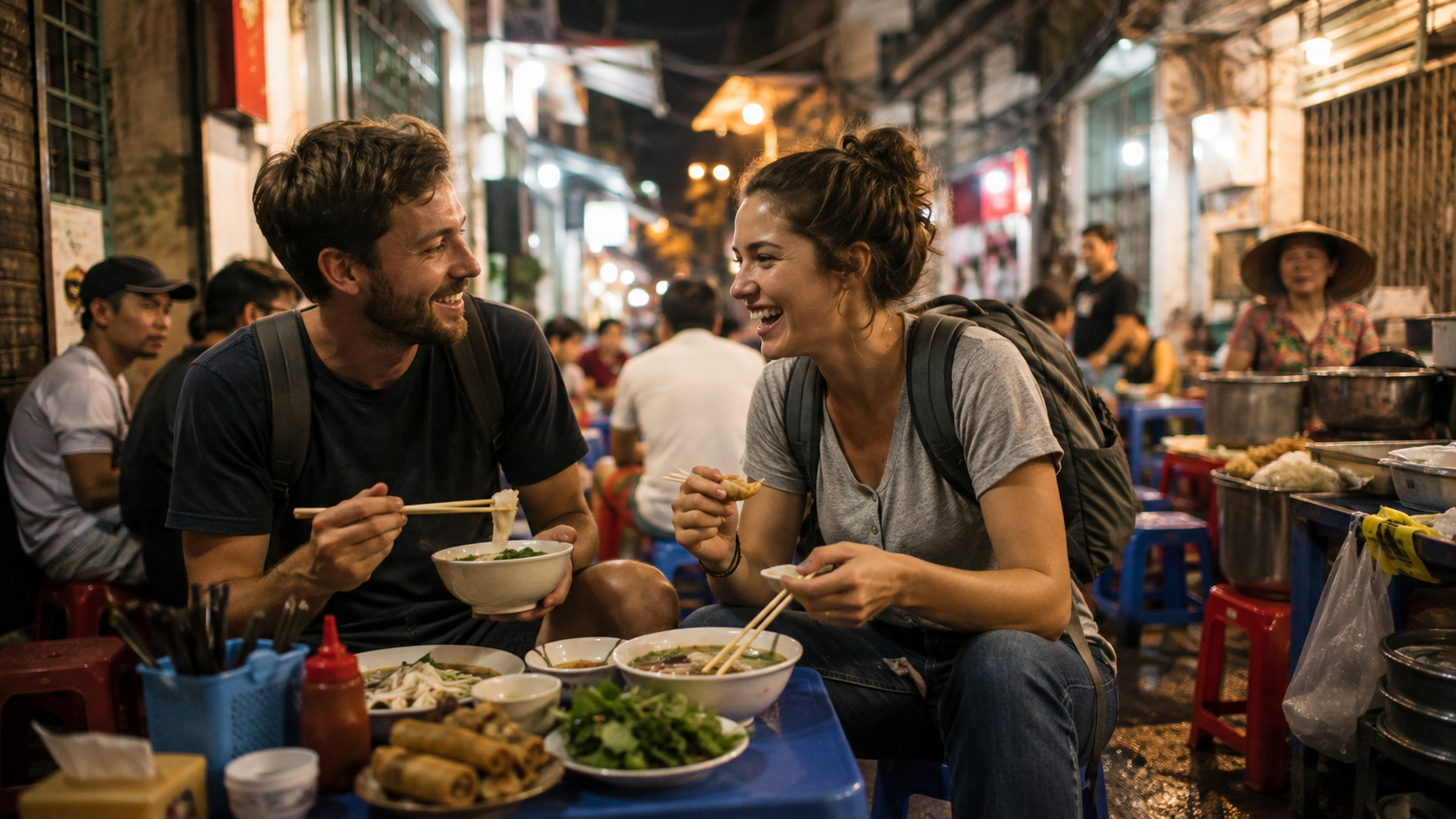
Hue should not be understood only through monuments. Cuisine is an important part of the city, from bun bo, mussel rice, banh beo, banh nam, banh loc, to Hue sweet soups and small meals with many layers of flavor. A tour can feel softer if, after the heritage stops, travelers have time to sit down, taste local dishes, and hear the story behind Hue’s eating style.
Beyond food, craft villages, garden houses, and areas outside the citadel add everyday texture to the journey. A stop at an incense village, an old garden house, or a local market can help travelers see that Hue is not only a former capital in books, but a city still living with its own memory.
When combining Hue with Da Nang and Hoi An, movement should be planned carefully. Hue can be the place for deeper history, Hoi An works well for old-town atmosphere and softer experiences, while Da Nang is convenient for beaches, airport access, and rest. If Hue is placed correctly in the Central Vietnam route, the trip gains cultural depth without becoming too heavy.
Who should choose a private Hue tour?
A private Hue tour is very suitable for families, older travelers, history lovers, guests who do not want to follow a large group pace, or anyone who needs flexibility according to weather. Hue has many outdoor sites, so sun, rain, and walking distances affect the experience significantly. With a private tour, the itinerary can be more flexible: stay longer in beautiful places, shorten stops that do not fit, change the order of visits, or add local food at the right moment.
Private tours also suit travelers who want deeper historical and cultural storytelling. Some are interested in the Nguyen Dynasty, some in architecture, some in Buddhism, and others in seeing Hue through food and slower daily life. When the guide understands these needs from the beginning, the storytelling becomes more focused and avoids feeling too general.
For children or older guests, a private tour controls the pace better. The group does not need to force every stop, and no one needs to stand too long under the sun. Hue is at its best when there is enough time to pause, look closely, and hear the right story. A customized itinerary helps travelers feel the city in a gentler yet deeper way.
FAQ
Who is a Hue guided tour suitable for?
A Hue guided tour is suitable for first-time visitors, history lovers, families, older travelers, and anyone who wants to understand the Imperial City, royal tombs, ancient pagodas, Perfume River, and former capital culture more deeply.
Should I choose a half-day or full-day Hue tour?
If time is limited, a half-day tour covers key highlights. If you want a more balanced experience, a full-day tour is better because it can combine the Imperial City, royal tombs, pagodas, cuisine, and rest time.
Should I hire a guide for the Imperial City?
Yes. The Imperial City has many layers of history, architecture, and ritual meaning. A guide helps travelers understand each area and avoid feeling like they are only walking through a large complex.
Is a Hue guided tour suitable for families?
Yes, if the itinerary is designed at a comfortable pace, includes rest time, avoids too many outdoor stops during strong sun, and chooses food suitable for children or older travelers.
Can Hue be combined with Hoi An and Da Nang?
Yes. Hue, Da Nang, and Hoi An are commonly combined in Central Vietnam itineraries, but the pace should be planned carefully to avoid too much movement.
When should I choose a private Hue tour?
Choose a private tour if you travel with family, older guests, have limited time, want deeper historical storytelling, or need flexibility according to weather and energy level.
A good Hue guided tour does not only take travelers through famous sites. It gives each citadel gate, royal tomb, pagoda roof, local dish, and river bend its own voice in the journey. When told at the right rhythm, Hue appears both solemn and intimate; both a former capital and a slow-living city filled with layers of memory.
To choose a Hue tour that fits your trip length, season, cultural interests, and companions, Talk to a Vietnam travel advisor. Tradition Việt can help build a Hue experience that is deep, gentle, and naturally connected with Central Vietnam and your wider Vietnam journey.