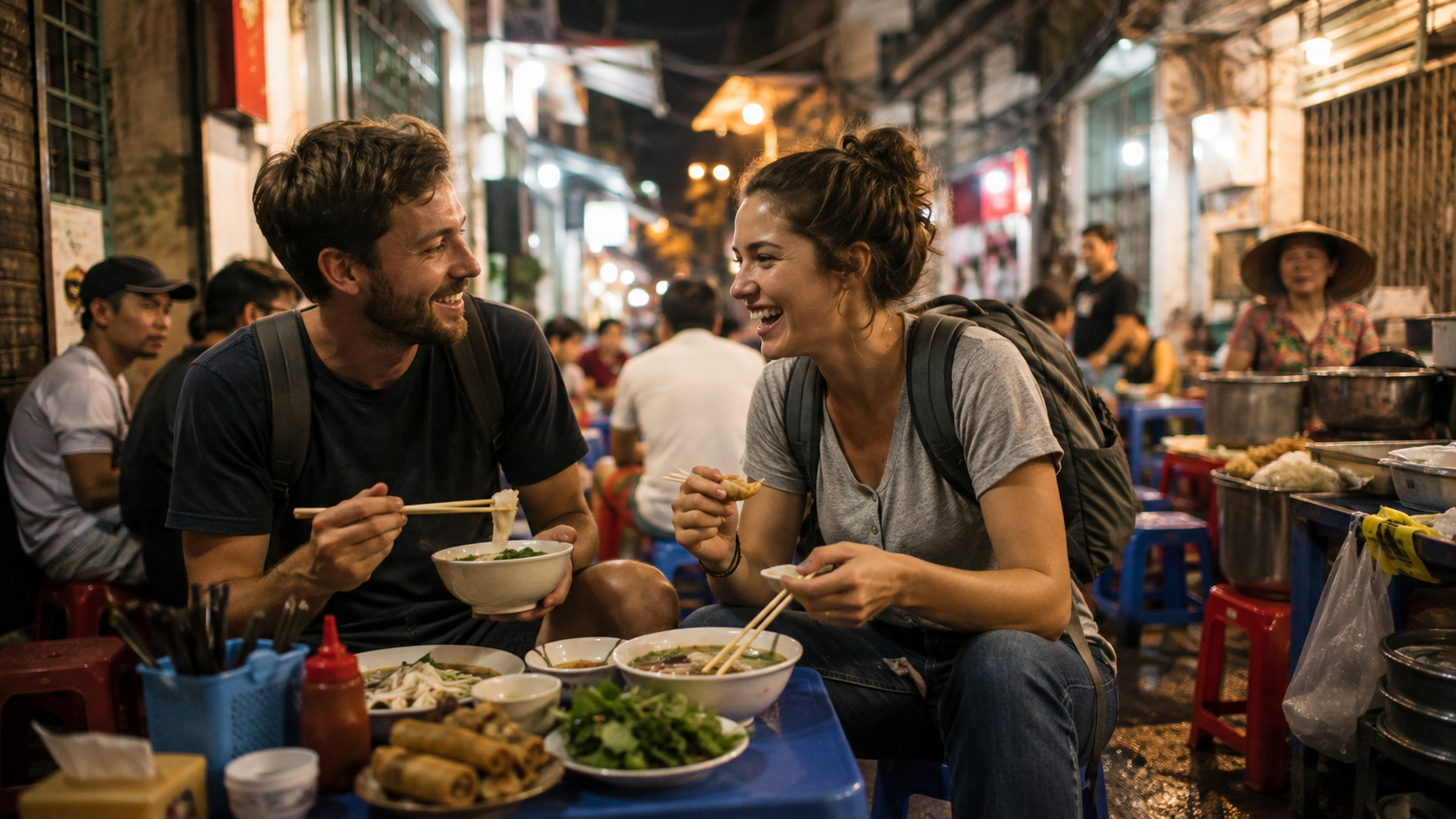


A Hanoi street food walk is not just a meal spread across several stops. It is a way of entering the city at walking speed. The Old Quarter speaks through steam, charcoal, broth, herbs, narrow lanes, plastic stools, morning vendors, evening crowds and cafés hidden above busy streets. Food here is not separate from architecture or daily life; it spills from doorways, settles on pavements and follows the habits of each hour. A good food walk should help travelers read that rhythm. It should not only say “try this dish,” but explain why people eat it, when they eat it, how to combine it and what the surrounding street tells you about Hanoi.
Walk with the city, not against it
Hanoi is dense, old and beautifully layered. A food walk works best when it accepts this density instead of rushing through it. The route should move with the street’s natural rhythm: a bowl here, a small bite there, a pause for coffee, a turn through a lane where vendors know the neighborhood better than any map. Travelers who expect a polished restaurant sequence may misunderstand the charm of the experience. The value is in movement, closeness and observation. You are not only tasting Hanoi. You are standing inside its daily choreography, where food, traffic, shopfronts, family businesses and local habits share the same narrow space.
Choose the right time of day
Timing changes the food walk completely. Morning routes can show breakfast culture, market energy and the first bowls of the day. Evening routes feel warmer and more social, with grilled food, busy lanes and a stronger sense of street life after work.
Do not choose only by availability. Think about your body clock, arrival fatigue and appetite. A late-night walk after a long flight may sound exciting but feel heavy in practice.
If you want a broad introduction, a Hanoi food tour guide can help you decide whether morning, afternoon or evening fits your route better.
Understand that “street food” is not random eating
A strong Hanoi street food walk should feel carefully selected. The guide should know why one vendor is chosen, what makes a dish meaningful and how to pace the stops. Random eating may still be fun, but it does not create the same cultural understanding.
The best walks include contrast: something hot and comforting, something fresh, something grilled, something sweet, perhaps a coffee or tea stop. This contrast keeps the experience balanced.
A good guide also helps travelers understand sauces, herbs and condiments. In Hanoi, small adjustments can change a dish dramatically. Knowing when to add lime, chili, vinegar, garlic or herbs makes the meal more interactive.
Let the Old Quarter become part of the meal
The Old Quarter is not only a backdrop. Its lanes, trade streets, old houses and dense shopfronts shape the way food is served and remembered. Eating in Hanoi often means noticing where the stall sits, who is around you and how the street itself becomes part of the table.
Protect comfort while staying open to surprise
A Hanoi street food walk should invite adventure without making travelers anxious. Some guests are excited by small stools and busy alleys; others need a little reassurance before trying unfamiliar dishes. The best guides understand both reactions. They explain ingredients, warn about spice, suggest how to sit or eat, and help guests feel included rather than tested. Travelers should also be honest about dietary needs, walking comfort and expectations. A food walk is more enjoyable when curiosity and comfort move together. It should stretch your senses, but not push you past what your body or schedule can handle.
Tell the guide about dietary limits early
Dietary needs should be communicated before the walk, not after the group arrives at the first stall. Pork, beef, seafood, fish sauce, peanuts, eggs or gluten may appear in dishes where travelers do not expect them. A guide needs time to adjust the route.
Vegetarian travelers should also ask carefully. Some dishes may look vegetable-based but use meat broth or fish sauce. A thoughtful guide can suggest alternatives without making the guest feel difficult.
Wear shoes for real walking
A food walk can involve more walking than expected. Short distances on a map may feel longer when crossing streets, stopping at stalls, climbing stairs to a café or standing in crowded lanes. Comfortable shoes make the experience easier.
Choose a guide who explains without over-talking
Food walks can be ruined by too much speech or too little context. The guide should explain enough to make each stop meaningful, then allow guests to taste, react and enjoy the street atmosphere.
A strong guide also reads the group. Some travelers want history, some want ingredients, some want restaurant recommendations and some simply want confidence eating local food. The guide should adapt naturally.
The right walk should feel like being led by someone who knows the city personally. For travelers comparing options, Hanoi food tour mistakes to avoid can help prevent choosing a route that is too rushed or too generic.
Also check whether the tour includes drinks, dessert, coffee or only main dishes. Small inclusions can change the final feeling of the walk.
Keep the rest of the day light
A Hanoi street food walk can be surprisingly filling. It is better not to schedule a heavy dinner, long transfer or formal tasting immediately afterward. Give the evening space to settle.
If the walk happens at the beginning of your Hanoi stay, it can also become a useful orientation. The guide may point out areas to revisit, cafés to try, markets to explore and dishes to look for later.
Travelers who want the walk to fit smoothly into a wider Hanoi plan can choose Hanoi food tour local support so timing, pickup and food preferences are arranged in advance.
A Hanoi street food walk works best when it is treated as a cultural walk with food at its center. The dishes matter, but the lanes, vendors, timing, guide and street rhythm matter just as much. Choose a route that respects the Old Quarter’s density, explains dishes clearly, handles dietary needs honestly and gives you time to observe the city between bites. Hanoi’s food is memorable because it feels close to daily life. When the walk is well guided, a bowl of noodles, a grilled dish, a sweet soup or a cup of coffee becomes more than something tasted. It becomes a way to understand the capital’s character.
Tradition Việt
Hotline: (+84) 967 04 88 91 / (+84) 376 304 008
Email: info@traditionviet.com
Adresse: CT2A Hanoi Homeland