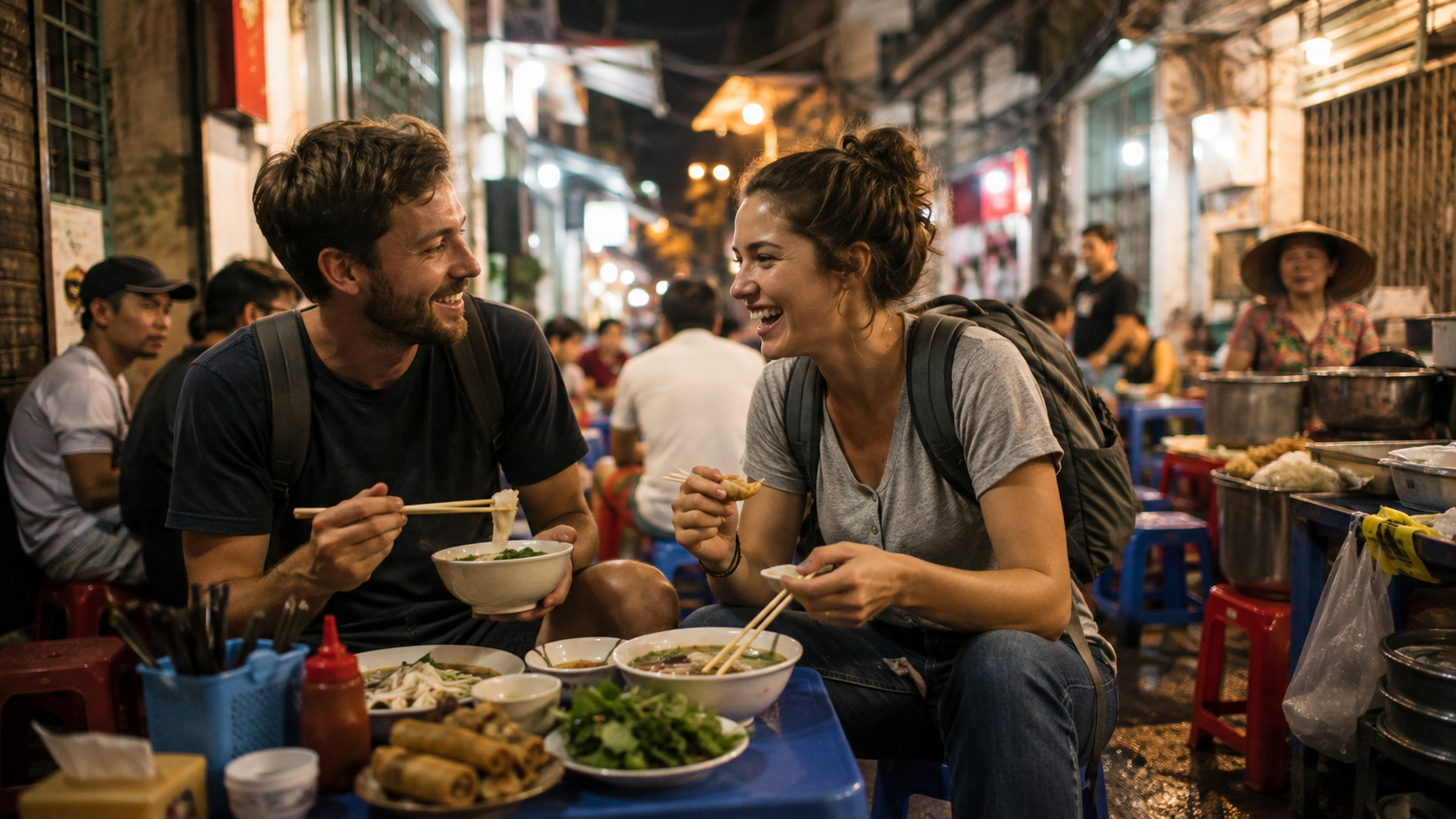


A Hanoi street food walk is not only about tasting famous dishes. It is a way to enter the capital through steam, charcoal, herbs, stools, old streets, breakfast habits, coffee shops and family-run counters. Hanoi food feels local because it belongs to daily rhythm. People eat quickly before work, pause for coffee, gather around noodles, share dipping sauces and return to places that have served the same dish for years. A good walk should help travellers observe this rhythm, not only collect plates. With the right timing and a curious guide, street food becomes one of the most direct introductions to Hanoi.
Begin with the right time of day
Hanoi changes from breakfast to evening. Morning food is precise, practical and deeply local. Bowls of noodles, steamed rolls, sticky rice and coffee start the day with purpose. Evening food is more social, smoky and leisurely. Grilled dishes, snacks, desserts, beer corners and late-night cafés create another atmosphere. A traveller should not ask only what to eat. They should ask when to walk. The hour shapes the dishes, the crowd, the temperature and the mood of the route.
Idea one: Try a breakfast-focused walk
Breakfast is one of the most local ways to experience Hanoi. A morning walk can include noodles, steamed rice rolls, sticky rice or coffee while the city is waking up.
A Hanoi food tour guide can help travellers compare morning and evening food rhythms before choosing a route.
Idea two: Save the evening for social flavors
Evening walks often feel more atmospheric. Grills, snacks, desserts and street-side drinks create a warmer social mood.
Idea three: Do not eat a full meal beforehand
A street food walk works best with appetite. Eat lightly before the route, especially if several tastings are included.
Walk for context, not only for dishes
A dish becomes more meaningful when the traveller understands where it belongs. A guide can explain why a stall is busy at a certain hour, how dipping sauce should be used, why herbs are served on the side, or why some places specialize in only one dish. Hanoi’s old streets also carry craft, trade and family history. Food is one part of that street culture. A stronger walk connects flavor with place, so travellers leave with practical confidence and cultural memory.
Idea four: Ask why each stop is chosen
A good food walk should not feel random. Each stop should reveal something: technique, neighborhood habit, ingredient, family specialty or local timing.
Idea five: Try dishes beyond the famous three
Phở, bánh mì and bún chả are important, but Hanoi has much more. Bánh cuốn, bún riêu, chả cá, sticky rice, desserts and coffee can add depth.
A Hanoi street food experience guide can help travellers avoid choosing only the most familiar dishes.
Idea six: Watch how locals eat before copying
Observe sauces, herbs, chopsticks, shared plates and seating habits. Street food has etiquette, even when it feels casual.
Use drinks and pauses to slow the walk
A Hanoi food walk should not be nonstop eating. Coffee, tea, fresh drinks or a short sit-down can give the palate and body a break. These pauses are part of the experience. They also make space for stories: old cafés, egg coffee, sidewalk culture, family businesses or how Hanoians use small moments of the day. Without pauses, the walk can become too dense. With pauses, it feels more local and more human.
Idea seven: Include one coffee stop
Hanoi coffee culture deserves time. A coffee stop can help travellers understand how the city slows down inside its own intensity.
Idea eight: Let the guide manage portions
Small portions are important. A food walk should leave travellers satisfied, not exhausted. The guide should balance tasting size and variety.
Idea nine: Wear comfortable shoes
Old Quarter walking involves uneven pavements, narrow lanes, crossings and frequent stops. Shoes matter more than style.
Idea ten: Carry cash and keep valuables secure
Many local food stops are simple. Small cash and practical awareness make the walk smoother.
Keep the route personal and flexible
Food preferences vary. Some travellers want adventurous dishes. Others prefer gentle introductions. Some have allergies, vegetarian needs or concerns about spice. A good Hanoi street food walk should respond to these details before it begins. It should also leave room for curiosity. If the group loves one stop, the guide may slow down. If a dish is too heavy, the route can adjust. Flexibility makes the experience feel local rather than scripted.
Idea eleven: Share dietary limits before booking
Mention allergies, vegetarian preferences, seafood restrictions, pork avoidance, spice concerns or children’s needs early. This protects both safety and enjoyment.
Idea twelve: Choose a private walk if you want control
A private food walk allows better pacing, dish selection and conversation. Shared walks can be lively, but private guiding is useful for families, couples or food-focused travellers.
A Hanoi food itinerary guide can help decide how much time the walk needs inside a wider Hanoi stay.
Idea thirteen: Do not photograph people too closely without permission
Food stalls are workplaces. Be respectful when taking photos of vendors, customers and kitchens.
Idea fourteen: Leave room for a favorite return
A good food walk often creates one dish travellers want again. Keep another free meal in Hanoi so you can return independently.
Idea fifteen: Ask for local support before choosing the route
For a food walk adapted to appetite, timing, dietary needs and hotel location, book a Hanoi food tour with local support can help shape the experience before arrival.
A Hanoi street food walk becomes more local when travellers treat it as a lesson in city rhythm. Choose the right time of day, go beyond famous dishes, observe etiquette, include coffee, respect portions and share dietary needs early. Hanoi’s food culture is generous because it lives on the street: in morning bowls, old counters, sidewalk stools, family recipes and quiet pauses between bites. With a good guide and an open appetite, the walk becomes more than dinner. It becomes a way to understand the capital through taste.
Tradition Việt
Hotline: (+84) 967 04 88 91 / (+84) 376 304 008
Email: info@traditionviet.com
Adresse: CT2A Hanoi Homeland