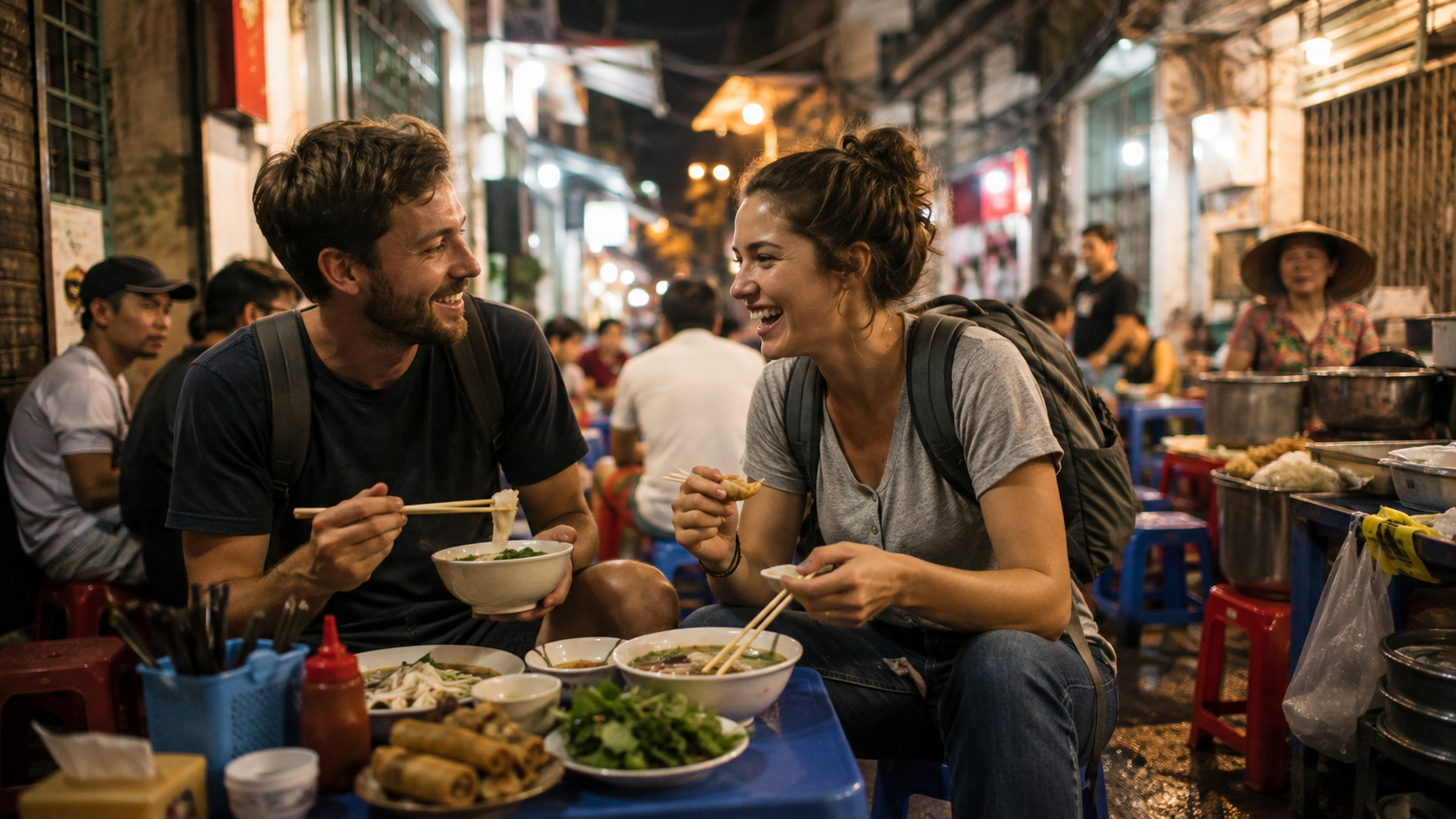


A Hanoi street food walk is not only a way to eat. It is a way to understand the capital through steam, broth, charcoal, herbs, narrow lanes, tiny stools and old neighborhood habits. Hanoi’s food culture feels intimate because it is woven into the street. Breakfast can happen beside a doorway, coffee above a busy lane, noodles in a family-run shop and snacks under a sign that visitors might never notice without help. The most authentic experience does not come from chasing the rarest dish. It comes from walking with good timing, a knowledgeable guide and enough openness to let the city explain itself through food.
Follow the street’s timing
Hanoi food is strongly connected to time of day. Some dishes belong naturally to morning, others to lunch, late afternoon or evening. A street food walk becomes more authentic when it respects this rhythm instead of forcing everything into a tourist schedule. The city is not a buffet available in the same way at every hour. Vendors open, peak and close according to local habits. A good food walk understands these patterns. It lets travellers eat with the city rather than simply consume dishes inside it.
Mistake one: choosing the wrong time for the food you want
If travellers want breakfast culture, they should not book only an evening walk. If they want grilled food, drinks and night atmosphere, morning will not give the same feeling. Timing should match the desired food mood.
A Hanoi food tour guide can help travellers decide whether morning, afternoon or evening fits better.
The best moment is not always the most convenient moment. Food has its own clock.
Mistake two: eating too much before the walk
A street food walk needs appetite. Travellers who eat a heavy lunch before an evening route may lose the pleasure of tasting. Keep the earlier meal light.
Mistake three: expecting restaurant-style comfort everywhere
Street food in Hanoi often involves small stools, shared spaces, quick service and narrow lanes. This is part of the charm. Travellers should not expect every stop to feel like a polished restaurant.
Comfort still matters, but authenticity comes with closeness to the street.
The guide can help explain how to sit, order, pay and move without feeling awkward.
A more relaxed attitude makes the experience warmer.
Let the guide reveal what the eyes miss
Hanoi street food can be confusing without a guide. Many places do not look special from the outside. The best vendors may be hidden in a lane, known for one dish or busy at a certain hour. A guide helps travellers understand what is being eaten, how to combine herbs and sauces, why a dish belongs to Hanoi and what habits surround it. This guidance turns eating into cultural reading. Without it, travellers may still eat well, but they may miss the meaning.
Mistake four: judging a stall by appearance alone
A simple stall can serve an excellent dish. A modest doorway may hold decades of family habit. Hanoi food should not be judged only by décor.
Mistake five: not asking about ingredients
Travellers should ask what is in each dish, especially if they have allergies or dietary limits. Fish sauce, pork broth, peanuts, shrimp or eggs may appear unexpectedly.
The guide should be able to explain ingredients clearly and suggest alternatives where possible.
For practical preparation, Hanoi food walk tips can help travellers avoid common comfort and expectation issues.
Mistake six: skipping sauces and herbs
Sauces and herbs are not decoration. They change the dish. Hanoi food often depends on balance: sour, salty, sweet, fresh, spicy, warm and aromatic.
A good guide should show how locals adjust flavor without overwhelming the original dish.
Mistake seven: moving too quickly between stops
A rushed walk turns food into sampling. A better route gives time to taste, listen, walk and notice the neighborhood.
Mistake eight: ignoring coffee culture
Coffee is part of Hanoi’s food identity. A coffee stop can slow the walk and reveal another layer of local life.
Egg coffee, iced coffee or a quiet café above the street can become one of the most memorable parts of the route.
Keep authenticity human, not extreme
Authenticity does not mean discomfort for its own sake. A good Hanoi street food walk should feel local, but also safe, guided and respectful. Travellers do not need to eat the strangest dish or chase hidden places at any cost. The most authentic experience may be a familiar dish explained properly, a vendor who has served the same neighborhood for years, or a simple bowl eaten at the right hour. Authenticity is not a performance. It is a closer relationship with how the city actually eats.
Mistake nine: confusing “local” with risky
Local food should still be chosen sensibly. Busy places, fresh preparation and trusted guidance matter. A guide can help travellers enjoy street food without careless choices.
Mistake ten: turning the walk into a photo hunt
Photos are natural, but the meal should not disappear behind the camera. Watch how people eat, listen to the street and taste slowly.
Mistake eleven: not leaving the rest of the evening open
A food walk can be filling and full of impressions. Do not schedule a heavy dinner or complicated plan afterward.
Mistake twelve: booking without considering your Hanoi stay
A food walk near the beginning of the trip can help travellers gain confidence for later meals. It can also become a soft introduction to the Old Quarter.
For smoother placement, Hanoi food tour local support can help match route, timing and dietary needs.
A Hanoi street food walk becomes more authentic when travellers follow the city’s timing, listen to the guide and let the street stay alive. Avoid choosing the wrong hour, arriving too full, judging by appearance, skipping sauces, moving too quickly or turning the walk into a photo hunt. Hanoi food is intimate because it belongs to daily life. The bowls, grills, cafés and small stools are not staged for visitors alone. When the walk is guided with care, travellers do not only taste Hanoi. They begin to understand how the capital eats, pauses and remembers.
Tradition Việt
Hotline: (+84) 967 04 88 91 / (+84) 376 304 008
Email: info@traditionviet.com
Adresse: CT2A Hanoi Homeland