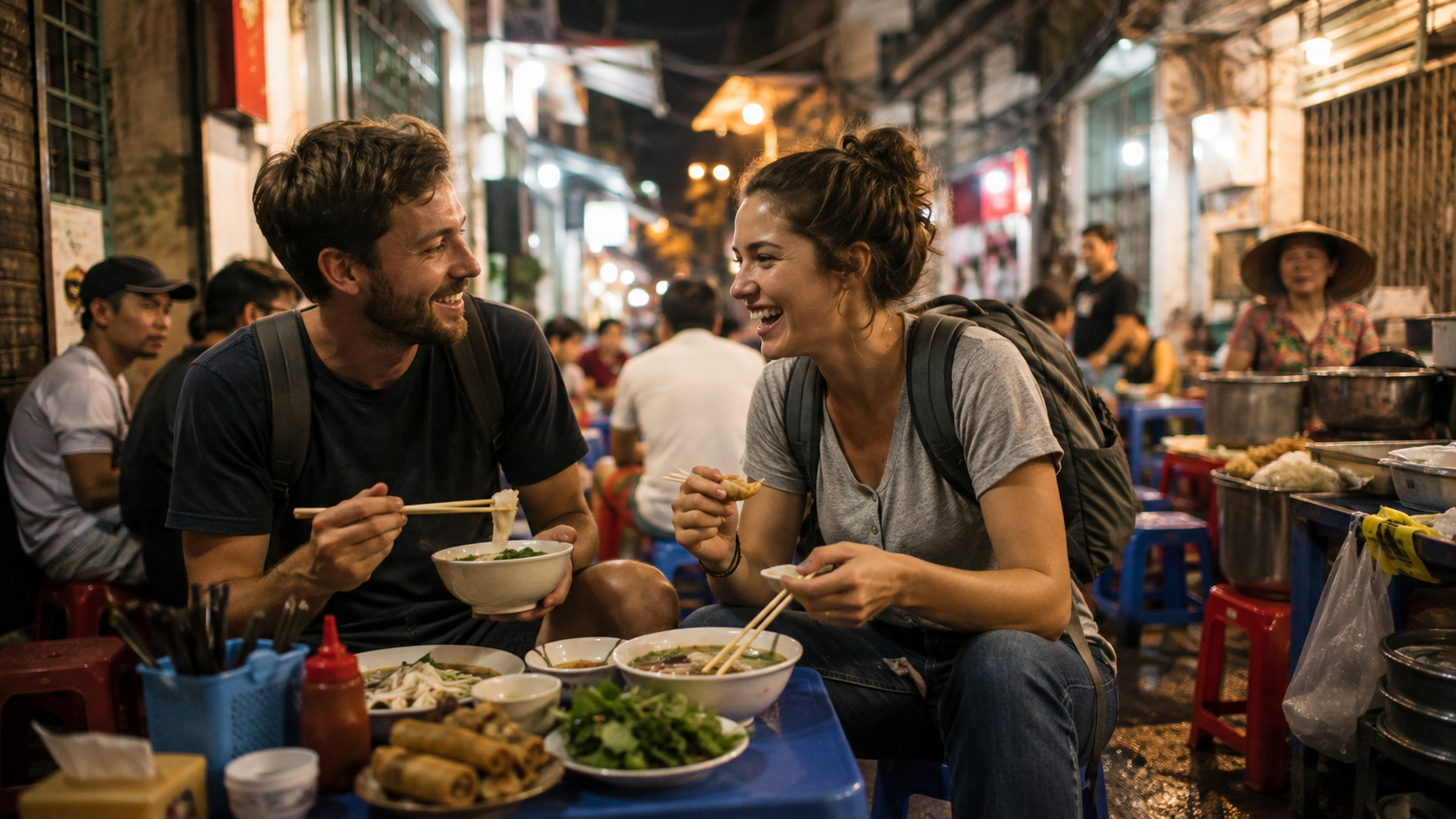


Hanoi Old Quarter is one of the rare places in Vietnam where daily life, history, street food, trade, architecture, and local rhythm all meet within a compact maze of old streets. For many travelers, this is the first real encounter with Hanoi: scooters passing close to tiny plastic stools, the scent of grilled pork drifting from a narrow alley, old houses leaning over shopfronts, and vendors moving through streets that have been busy for centuries.
This hanoi old quarter guide is designed for travelers who want more than a quick walk around Hoan Kiem Lake. It helps you understand what the area is, how to explore it without feeling overwhelmed, where to slow down, what to notice, and how to shape your visit into a meaningful part of a wider Vietnam journey with Tradition Việt.
Understanding Hanoi Old Quarter Before You Walk In
The Old Quarter is not a single monument or a neatly organized tourist zone. It is a living neighborhood where families, cafes, temples, street vendors, boutique hotels, craft shops, and local markets share the same tight streets. That is what makes it fascinating, but also what makes it confusing for first-time visitors. A good visit begins with the right expectation: do not treat the Old Quarter like a museum where everything is explained at the entrance. Treat it as a layered district where the best discoveries often happen between planned stops.
Why the Old Quarter matters in Hanoi
Hanoi Old Quarter grew around trade. Many streets were historically linked to specific crafts or products, and some street names still preserve that memory today. Even when the old trade has changed, the feeling of commerce remains strong: metal goods, fabrics, herbal medicine, food stalls, souvenirs, coffee shops, small temples, and family-run stores all sit close together. This density gives the area a character that newer districts cannot copy.
For travelers, the Old Quarter is often the easiest place to feel Hanoi’s personality in a short time. You can move from a quiet temple courtyard to a crowded noodle shop in only a few minutes. You can see colonial-era buildings, old tube houses, lakeside promenades, and hidden alleys without needing long transfers. This makes the district ideal for the first day of a Hanoi itinerary, especially after arriving from an international flight.
Still, the value of the Old Quarter is not only visual. It teaches you how Hanoi works: people eat early, shops open directly onto the pavement, traffic follows a rhythm that looks chaotic before it becomes readable, and conversations often happen at street level. Once you understand this, the rest of Hanoi becomes easier to approach.
What kind of traveler will enjoy this area most
The Old Quarter suits travelers who like atmosphere, street life, food, walking, photography, and small discoveries. If you enjoy polished boulevards, wide sidewalks, quiet luxury, and fixed schedules, the district may feel intense at first. But if you are curious and patient, it can become one of the most memorable parts of your Vietnam trip.
It is also a strong choice for travelers who want convenience. Many hotels, cafes, travel offices, restaurants, and cultural sites are within walking distance. From here, it is easy to connect to Hoan Kiem Lake, the French Quarter, the Temple of Literature, West Lake, or onward day trips. For a first visit, staying near or close to the Old Quarter usually makes logistics simpler.
The best way to experience the Old Quarter
The best way to visit is on foot, but not by trying to see every street. Choose a few anchors: Hoan Kiem Lake, Dong Xuan Market, a traditional coffee stop, one or two temples, and a food street that matches your comfort level. Then leave space between those anchors for wandering. The Old Quarter rewards travelers who look up at old balconies, pause at small shrines, and allow small detours to happen naturally.
Practical Hanoi Old Quarter Guide for Planning Your Visit
A good Old Quarter visit depends less on a strict checklist and more on timing, pacing, and knowing when to step away from the busiest corners. The district changes throughout the day. Early morning feels local and practical, late afternoon brings more street energy, and evening becomes brighter, louder, and more social. Travelers who plan with this flow in mind usually enjoy the area more than those who try to cover everything in one rushed walk.
When to go and how long to spend
Morning is one of the most rewarding times to explore. Around Hoan Kiem Lake, locals walk, stretch, drink coffee, and begin the day before traffic becomes heavier. Food stalls are active, markets feel authentic, and the light is softer for photography. This is a good time for travelers who want the Old Quarter at its most local rather than its most crowded.
Late afternoon and evening bring another kind of charm. Shops are busier, cafes fill up, and the streets become more animated. This is a better time for travelers who want street food, nightlife, or the weekend walking street atmosphere around Hoan Kiem Lake. If your schedule allows, visit twice: once in the morning and once after sunset. The contrast helps you understand the district more fully.
What to see, taste, and notice
Start with Hoan Kiem Lake, because it gives the Old Quarter a clear orientation point. From there, walk into the smaller streets instead of staying only on the lakefront. Look for old shop houses, narrow facades, hanging signs, temple gates, fresh fruit vendors, and the way daily life spills onto the pavement. These small details are often more meaningful than rushing from one attraction to another.
Common mistakes to avoid
The most common mistake is trying to “finish” the Old Quarter in one fixed route. The district is too layered for that approach, and rushing can turn it into a stressful walk through traffic. Another mistake is ignoring timing. Midday heat, narrow pavements, and heavy traffic can make the same street feel much harder than it does in the morning or evening.
Travelers should also avoid choosing restaurants only by bright signs or central locations. Some excellent places look modest, while some tourist-facing restaurants feel less memorable. It helps to mix one or two planned food stops with spontaneous discoveries. If you are unsure where to begin, Talk to a Vietnam travel advisor before your trip so your Hanoi time matches your pace, interests, and comfort level.
Food is central to the experience, but it works best when it is chosen with a little care. Depending on your comfort level, you can try pho, bun cha, banh mi, egg coffee, fresh spring rolls, or grilled street snacks. A guided food walk can be useful if you want help choosing reliable places and understanding what you are eating. For travelers planning a wider Hanoi stay, Tradition Việt can connect this Old Quarter visit with deeper city experiences through /en/hanoi-tours/.
FAQ
Is Hanoi Old Quarter worth visiting?
Yes. Hanoi Old Quarter is one of the most important areas for understanding the city’s daily life, food culture, trade history, and street atmosphere. It is especially valuable for first-time visitors to Vietnam.
How long should I spend in Hanoi Old Quarter?
Most travelers should spend at least half a day there. A full day is better if you want to combine walking, cafes, markets, street food, Hoan Kiem Lake, and a slower evening experience.
Is it better to visit the Old Quarter alone or with a guide?
You can visit alone, especially if you enjoy wandering. A guide is helpful if you want deeper cultural context, better food choices, smoother navigation, and less stress with traffic or timing.
Where should I stay in Hanoi for easy access to the Old Quarter?
Staying in or near the Old Quarter is convenient for first-time visitors. It gives easy access to Hoan Kiem Lake, restaurants, cafes, shops, and many Hanoi tour meeting points.
Is Hanoi Old Quarter safe for tourists?
The area is generally safe for tourists, but normal travel awareness is still important. Watch your belongings in crowded places, cross streets carefully, and avoid carrying valuables loosely.
Can Hanoi Old Quarter be part of a longer Vietnam itinerary?
Absolutely. It works well as the opening chapter of a Vietnam trip before traveling to Ninh Binh, Ha Long Bay, Sapa, Hue, Hoi An, or Ho Chi Minh City.
Hanoi Old Quarter is not a place to simply tick off. It is a district to enter slowly, with enough curiosity to notice how old streets continue to serve modern life. The best visit balances structure and freedom: a few meaningful stops, enough time for coffee and food, and space to follow the sound, smell, or street corner that catches your attention. For travelers planning Vietnam with care, this small area can become the doorway into a much richer understanding of Hanoi.
To shape your Hanoi stay around real experiences rather than a rushed checklist, Talk to a Vietnam travel advisor and connect your Old Quarter visit with a thoughtful city tour, food walk, or wider Northern Vietnam itinerary.
TVEN-EN-20260512-1