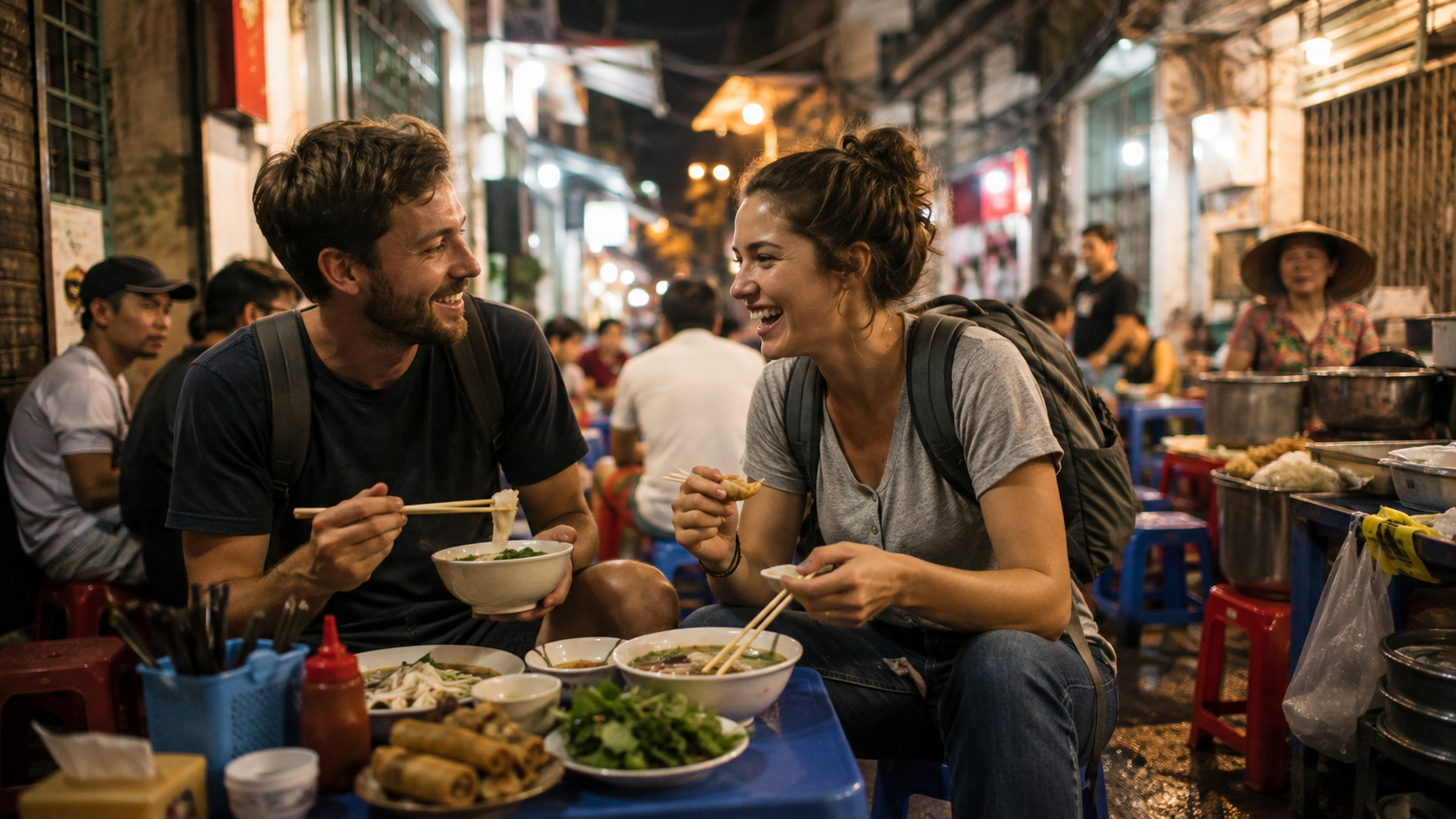


A good Hanoi food tour itinerary is not about eating as many dishes as possible in a short time. What matters more is that each stop has a clear role: a first dish to open the palate, a main dish to understand the capital’s flavor, a lighter bite to change texture, a coffee stop to rest, and enough walking to see the city living around you. If the route is too packed, travelers can become full too quickly, tired from movement, and less able to appreciate each dish.
The ideal length for a Hanoi food tour depends on the traveler. First-time visitors to Vietnam often need an approachable route, clear explanations, and a moderate pace. Food lovers may want to go deeper into markets, alley eateries, or seasonal dishes. Families need timing that is not too late, suitable seating, and easy-to-try food. When the itinerary is designed around group energy, the food tour becomes a natural culinary journey rather than a race between dishes.
How long should a Hanoi food tour take?
A Hanoi food tour can last a few hours or half a day, depending on the experience goal. A short evening route is enough for travelers to meet the Old Quarter, try several signature dishes, and end with coffee or dessert. A longer route can include a market, family-run eateries, seasonal food, and deeper stories about local eating habits. However, longer is not always better. Food needs pauses so the palate does not become overloaded and travelers stay interested at every stop.
A short tour suits new arrivals or busy itineraries
For travelers with limited time in Hanoi, a short food tour of a few hours is a practical choice. The route should focus on a walkable area such as the Old Quarter and choose representative dishes without becoming too heavy. A small bowl of pho, a portion of bun cha, a few spring rolls, a dessert, and a coffee can be enough to open the basic food picture of the city. The key is not to turn a short tour into continuous eating.
A short tour also works well for travelers who have just arrived in Hanoi after a long flight. The body may still be tired, the palate is not familiar yet, and visitors need time to adapt to the city’s pace. A moderate route makes the first evening more comfortable: some familiar flavors, some new ones, gentle walking, and someone explaining how to eat. After the tour, travelers often feel more confident entering local eateries during the following days.
For groups with a busy sightseeing schedule, a short tour should be placed in the early evening instead of too late. Travelers can eat enough, feel the Old Quarter atmosphere, and still have time to rest. If the tour is extended to too many stops after a long walking day, the food experience can quickly become tiring. A short route with the right dishes is better than a long one without rhythm.
A half-day tour suits deeper food exploration
A half-day tour suits travelers who want to see Hanoi cuisine as part of daily life, not only as a list of famous dishes. The itinerary may begin at a market, continue to a breakfast shop, visit a single-dish eatery, stop for coffee, and end with a light or seasonal dish. With more time, the guide can explain ingredients, eating style, shop stories, and differences between versions of a dish.
Avoid adding too many dishes to one route
A common mistake in food itinerary planning is trying to include too many dishes in one session. Travelers may feel excited when a list has seven, eight, or ten stops, but in reality appetite and attention have limits. When every dish is tasted too quickly, the experience becomes diluted. Travelers remember that they ate a lot, but may struggle to remember which dish truly stood out.
A food tour should be structured like an extended meal: main dish, supporting bite, palate change, drink, and ending point. If every dish is heavy or all dishes share the same soup-based character, the route lacks balance. If the itinerary includes only famous names without stories, it becomes a checklist. A good route chooses fewer stops with clearer purpose, giving each dish its own space in memory.
Sample Hanoi food tour itinerary ideas by travel style
A Hanoi food tour itinerary should begin with a question: do travelers want an introduction, a deeper route, or a very gentle experience? Each type of trip needs a different structure. First-time visitors need an easy-to-understand route. Food lovers need markets, local eateries, and stories. Families need convenient stops. Travelers with dietary needs need a carefully prepared route. When each part has the right role, the food journey flows better and does not repeat flavors.
Evening Old Quarter itinerary for first-time visitors
An evening itinerary in the Old Quarter can begin with an approachable main dish, then move to grilled food or rolls, before ending with dessert and coffee. This order helps travelers move from familiar flavors toward more distinctive details of Hanoi. The Old Quarter works well because stops are close together, the atmosphere is lively, and travelers can eat while seeing the city light up.
The evening route should keep walking moderate. It is not ideal to choose eateries too far apart or require travelers to cross crowded areas repeatedly. A good tour gives people time to sit, listen, taste, and observe. For first-time visitors, details such as how dipping sauce is mixed, how herbs are eaten, how to order, or why a shop sells only one dish can be just as important as the dish itself.
Morning market itinerary for food lovers
For food lovers, a morning market is a rich starting point. Travelers can see noodles, rice cakes, herbs, spices, meat, fish, dry goods, and breakfast vendors working quickly during the first hours of the day. This shows that Hanoi food does not simply appear on the table; it begins with ingredients, buying habits, and how local people prepare daily meals.
After the market, the itinerary can continue to a long-running breakfast shop or a single-dish eatery. The guide should help travelers understand why that dish suits the morning, how the broth or seasoning is built, what role herbs and condiments play, and how Hanoians choose eateries by habit. These explanations give the food more depth than simply saying it is “delicious” or “famous.”
A coffee stop after the market and main dish helps slow the route. This is the moment for travelers to ask more, remember what they have tasted, and observe the city as the morning becomes fuller. If time remains, the tour can include a seasonal dish or a light bite in a small alley. Talk to a Vietnam travel advisor if you want a Hanoi food tour itinerary designed with more depth, better taste matching, and less generic routing.
Gentle itinerary for families or flexible groups
For families, the itinerary should be shorter, with fewer stops and easier seating. Dishes should be approachable, not too spicy, not overly strong in fermented flavors, and adjustable if children or older travelers are not familiar with the taste. A family route can include one main dish, one lighter bite, one drink stop, and one dessert instead of trying to visit too many eateries in one session.
Frequently asked questions about Hanoi food tour itinerary
How long should a Hanoi food tour last?
For first-time visitors, a few hours is usually enough to try representative dishes without feeling too full. Food lovers can choose a half-day tour to include markets, local eateries, and deeper food stories.
Should I take a food tour in the evening?
Yes. The Old Quarter is excellent in the evening because many eateries are open, the atmosphere is lively, and the weather is often more comfortable. Still, the route should not include too many dishes.
Is a morning market tour suitable for first-time visitors?
It can be suitable if travelers enjoy observing local life. However, first-time visitors who want an easier introduction may prefer an evening Old Quarter route.
What itinerary works best for families?
Families should choose a shorter tour, easy-to-eat dishes, convenient seating, and not-too-late timing. Children’s ages and food needs should be shared in advance.
Is a private tour necessary?
A private tour is useful for groups with children, older travelers, vegetarians, allergies, or those who prefer a slower pace. It also allows easier adjustment of dishes and timing.
Should a food tour include many dishes?
Not too many. Too many dishes can tire the palate and dilute the experience. A carefully selected route with fewer stops is often more memorable.
A memorable Hanoi food tour itinerary needs rhythm: enough dishes to show variety, enough pauses to feel the city, and enough stories to understand why food matters here. The Old Quarter at night, a morning market, alley eateries, seasonal dishes, or a final coffee can all become highlights when placed well. When the length and route are suitable, Hanoi cuisine opens as a close, unhurried, and richly sensory journey.
Tradition Việt can help design a Hanoi food tour itinerary according to length of stay, taste, group age, dietary needs, and other destinations in your Vietnam itinerary. Talk to a Vietnam travel advisor to create a food route that is delicious, safe, and truly Hanoian.
TVEN-EN-20260511-4