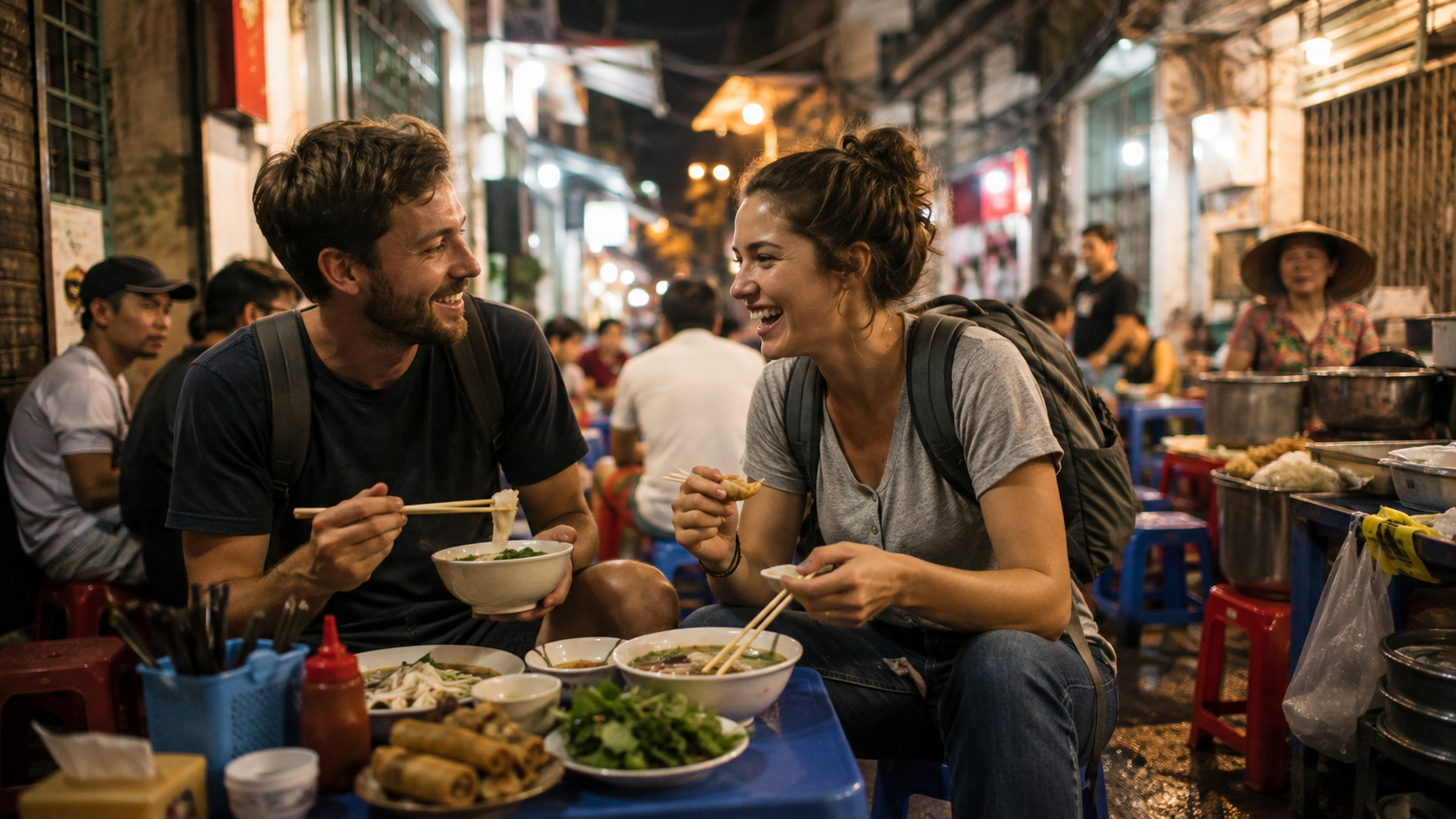


A Hanoi food tour can be one of the most memorable experiences in a Vietnam trip, but it can also become confusing if travelers choose dishes from a long list or move by instinct without understanding the local eating rhythm. Hanoi has small eateries, low stools, specific opening hours, dishes linked to morning or evening, cold or hot weather, and dipping sauces that often need explanation before tasting.
The most important Hanoi food tour experience tip is not to turn the journey into a race between dishes. Eating well in Hanoi depends on the right time, the right shop, the right eating method, and the right pace for the group. A well-arranged food route includes an opening dish, a main dish, a rest stop, a palate change, and stories behind each flavor. When common mistakes are avoided, travelers feel Hanoi more naturally, more closely, and much more deliciously.
Practical tips for a better Hanoi food tour experience
Hanoi cuisine is attractive because it stays close to daily life. Many dishes are not presented in a fancy way, but they require some understanding of timing, ordering, dipping, and eating style. Travelers should come with an open mind, but they do not need to try everything in one session. A good tour keeps curiosity alive without tiring the palate, allowing travelers to eat while observing the city moving around them.
Start with approachable dishes before stronger flavors
For newcomers to Hanoi, it is better to begin with approachable dishes such as pho, bun cha, rice rolls, spring rolls, or egg coffee. These foods are distinctive enough to introduce Northern Vietnamese flavor, but not too challenging. After travelers become familiar with broth, herbs, dipping sauce, and eating in small local shops, it becomes easier to try stronger flavors or dishes with more unfamiliar eating methods.
Keep the pace moderate so each dish can be remembered
A very common mistake is eating too quickly and adding too many dishes to one route. When travelers move from pho to bun cha, then spring rolls, sweet soup, coffee, and several small bites without enough pause, the palate becomes overloaded. The next dish arrives before the previous one has made an impression, turning the journey into dense consumption rather than a meaningful experience.
A food tour should include natural pauses. This may be a short walk through the Old Quarter, a coffee stop to sit down, a moment to hear the guide explain a shop, or a lighter dish that changes the flavor after a main course. These pauses do not slow the tour in a useless way. They help travelers remember each taste more clearly and avoid becoming too full too soon.
Choose eateries by timing, not only reputation
In Hanoi, some eateries are best in the morning, some are busiest at lunch, and some dishes feel better in the evening. If travelers choose a place only because it is famous, without considering opening hours, crowds, weather, or route order, the experience may not meet expectations. A bowl of pho in the morning feels different from forcing pho at the end of a tour when everyone is already full. A busy bun cha shop at peak time can be exciting, but it may also be too noisy for a family with young children.
A shop’s reputation is a useful hint, but it should not be the only criterion. Travelers should also consider cleanliness, taste suitability, seating, crowd level, ability to serve the group, and distance between stops. A small place that is less promoted but chosen at the right time, clean, and well placed in the route can sometimes create a better experience than a famous address with a long wait.
A local guide can choose eateries according to real conditions. If it rains, an indoor stop may be needed. If older travelers are in the group, very low stools or crowded shops should be avoided. In hot weather, the route should include lighter dishes and cooler rest points. Talk to a Vietnam travel advisor if you want your Hanoi food tour chosen according to real timing, real taste, and the actual energy of your group.
Common mistakes to avoid on a Hanoi food tour
Many Hanoi food experiences do not disappoint because the food is poor, but because travelers prepare in the wrong way. Some try to eat too many dishes in one session. Some hesitate to mention allergies, vegetarian needs, or spice limits. Others follow online lists independently but arrive at the wrong time, face heavy crowds, or do not know how to order. Avoiding these mistakes keeps the food journey lighter, safer, and exciting until the end.
Not sharing dietary needs or taste limits in advance
This is one of the most important mistakes to avoid when traveling with family, children, vegetarians, people with allergies, or anyone unfamiliar with fermented sauces, herbs, offal, spicy food, or raw ingredients. Hanoi cuisine often uses broths, fish sauce, fermented shrimp paste, fresh herbs, peanuts, dried seafood, or seasonings that may not be obvious from the dish name. Without advance notice, the guide or eatery may find it difficult to adjust on the spot.
Sharing dietary limits does not make the experience less local. On the contrary, it helps the route become smarter. Vegetarians may need to avoid meat-based broth. Travelers allergic to seafood should check sauces and secondary ingredients. Children may need less spicy food, easier seating, and more approachable dishes. When information is clear from the beginning, the tour can keep Hanoi flavor while becoming much safer.
Travelers should also be honest about how adventurous they want to be. Not everyone needs to eat unusual dishes to have a good food tour. A suitable journey can begin with familiar dishes, add one gentle new experience, and end with coffee or something sweet. Comfort matters more than proving that you can eat many things or the strangest things.
Chasing famous lists and missing the real experience
Lists of famous dishes can be helpful, but if travelers follow them mechanically, they may miss the subtle part of Hanoi cuisine. A tour that tries to include pho, bun cha, rice rolls, spring rolls, egg coffee, and sweet soup may sound complete. But if the stops are not arranged by route, timing, and appetite, the experience becomes fragmented. Hanoi is not only delicious because of dish names. It is delicious because of how food belongs to street life.
Exploring alone without understanding ordering, eating style, and timing
Exploring Hanoi food independently can be very enjoyable, especially for travelers who like freedom. However, many local eateries do not have clear English menus, the space is small, vendors are busy, and ordering sometimes depends on habits familiar to Vietnamese customers. Without knowing how to order, travelers may choose the wrong portion, miss important condiments, or feel confused during busy hours.
Eating style is also part of the experience. Some dishes need mixed dipping sauce, fresh herbs, garlic vinegar, careful dipping, or eating while still hot. If travelers eat only by guessing, they may still enjoy the dish, but they may not taste it at its best. A good guide does not make the experience rigid. They simply help travelers understand small details in a natural way.
Timing matters even more. A rice roll shop may be best in the morning when rolls are made continuously. A bun cha eatery may suit lunchtime. An Old Quarter evening route creates another feeling when lights are on and more shops are open. When timing is understood, travelers taste Hanoi more accurately instead of only passing through places marked on a map.
Frequently asked questions about Hanoi food tour experience
What is the most common mistake on a Hanoi food tour?
The most common mistake is trying to eat too many dishes in one session. This makes travelers full too quickly, blurs flavors, and can cause fatigue before the tour ends.
Should I mention allergies or vegetarian needs before the tour?
Yes. Many Hanoi dishes include broths, sauces, or secondary ingredients made with meat, fish, seafood, peanuts, or fermented products. Advance notice makes the route safer.
Can I explore Hanoi food using online lists?
Yes, if you already know Hanoi and enjoy independent discovery. For first-time visitors, a guide helps choose the right time, right eatery, right dish, and avoids confusion when ordering.
Is a food tour suitable for travelers who do not eat spicy food?
Yes. Hanoi cuisine is not always spicy, but travelers should mention their preference so unsuitable dishes or sauces can be avoided.
What is the best time for a Hanoi food tour?
Evening in the Old Quarter suits lively atmosphere and many open eateries. Morning works well for pho, rice rolls, local markets, and Hanoi’s real daily rhythm.
Is a private Hanoi food tour useful?
A private tour is very useful for families, dietary needs, slower pacing, or travelers who want deeper access to less common local eateries.
A memorable Hanoi food tour needs curiosity, but it also needs selection. Travelers do not need to eat everything, follow every famous list, or try very unfamiliar dishes before they are ready. With the right route, right timing, right dishes, and a moderate pace, Hanoi opens through broth aroma, small-shop sounds, the final coffee cup, and the stories behind each table.
Tradition Việt can help design a Hanoi food tour based on practical experience, taste, dietary needs, group age, length of stay, and other destinations in your Vietnam itinerary. Talk to a Vietnam travel advisor to avoid common mistakes and create a food journey that is delicious, safe, and truly Hanoian.
TVEN-EN-20260511-5