
Guided tours in Vietnam can help travellers understand the country with more confidence. A guide can explain food habits in Hanoi, imperial memory in Hue, old-town trade in Hoi An, river life in the Mekong Delta, mountain villages in the north or the fast rhythm of Ho Chi Minh City. But a guided route should not be finalized too quickly. The right questions before booking can prevent a trip from becoming rushed, generic or poorly matched to the traveller. A guided tour is not only about what places are included. It is about who explains them, when they are visited, how the day moves and whether the route fits the whole journey.
Ask what the guide will help you understand
The first question is not “Where will we go?” but “What will this guide help me understand?” Vietnam’s destinations often look beautiful on the surface, but the meaning sits deeper. A market, temple, old house, craft village, food stall or river route becomes more rewarding when someone explains how it belongs to daily life. A good guided tour gives structure and interpretation. It should not turn travellers into passive followers. It should help them ask better questions and notice details they would miss alone.
Question one: What is the purpose of this guided day?
Every guided day should have a purpose. Is it orientation, food discovery, heritage explanation, countryside access, soft adventure or family support? If the purpose is unclear, the tour may be unfocused.
A Vietnam tours guide can help travellers compare guided experiences by purpose instead of only destination names.
Question two: Who is the guide and what do they know well?
Guide quality changes everything. Some guides are best for food and neighborhoods. Others are stronger in history, nature, family travel, photography or local culture.
Ask about guide style, language comfort and whether the guide can adapt to your interests.
A good guide should connect information to lived experience. Dates and facts are useful, but they should not be the whole conversation.
Travellers should feel that the guide can make the place readable.
Question three: Where should I not use a guide?
Not every hour needs guiding. Some places are better with independent time: a beach afternoon, free shopping, coffee, hotel rest or wandering inside a familiar area. Guided support is most valuable where context, access, safety or timing matters.
Ask how the day will feel on the ground
Itinerary descriptions can be misleading if travellers do not imagine the day physically. A guided tour may include walking distance, heat, traffic, boat movement, stairs, waiting time, lunch timing and early departure. Before finalizing the route, ask how the day will feel from hotel pickup to return. This prevents surprises and helps choose the right pace. A strong guided day should leave travellers informed and satisfied, not exhausted and over-managed.
Question four: How much walking is involved?
Walking distance matters for families, older guests and travellers with limited mobility. Ask how long the walking sections are and whether breaks are included.
Question five: How many stops are too many?
A long stop list may look valuable, but too many places can weaken depth. Ask which stops are essential and which are optional.
A guided route should have rhythm: explanation, movement, rest, meal and observation.
For deeper customization, Vietnam private tour ideas can help travellers shape days around real interest and pace.
Question six: What happens if weather changes?
Weather can affect walking tours, cruises, mountain routes and countryside days. Ask whether there is flexibility or an alternative plan.
A guide who can adapt calmly is often more valuable than a rigid schedule.
Ask whether the route fits your travel style
Guided tours in Vietnam should not all feel the same. A couple, family, backpacker, premium traveller, solo visitor and returning guest may need different pacing and explanation. The final route should reflect personality. Some travellers want depth and conversation. Others want light orientation and more independent time. Some want food and markets; others want heritage, nature or comfort. The best guided plan is not the one with the most services. It is the one that uses guidance where it improves the journey.
Question seven: Is this route private, shared or small-group?
Format changes the experience. Private tours offer flexibility, shared tours offer value and social energy, while small-group routes can balance both. Choose according to comfort, budget and desired interaction.
Question eight: Are meals part of the guided experience?
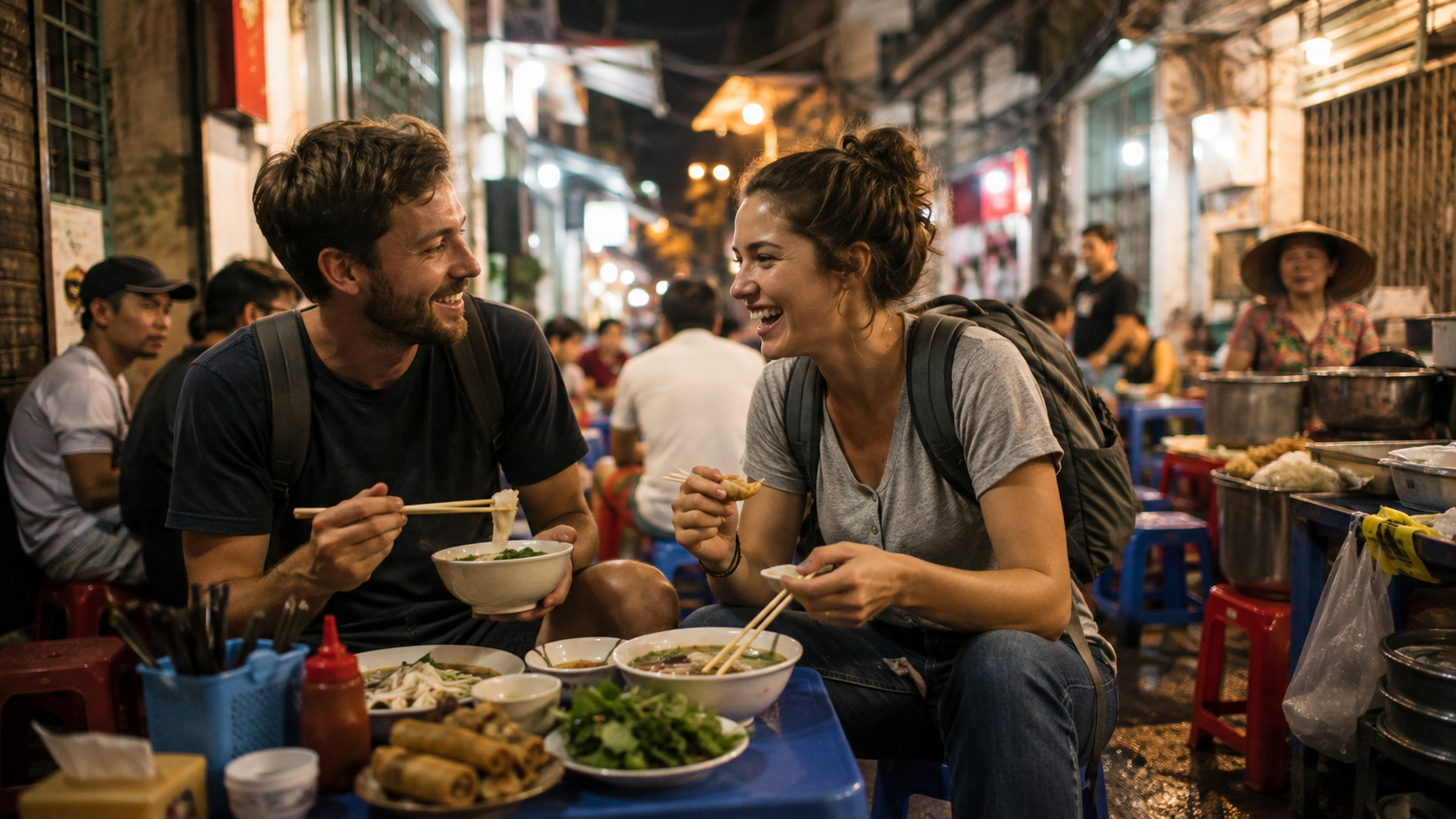
Meals can be cultural anchors, not just refueling stops. Ask whether food is included, where meals happen and whether dietary needs can be handled.
A guided food moment may be especially useful in Hanoi, Ho Chi Minh City, Hue, Hoi An or the Mekong Delta.
For food-led planning, Vietnam food tours can add sensory depth to the broader guided route.
Question nine: Does the tour leave enough free time?
A guided route without free time can feel heavy. Travellers need space to rest, shop, revisit a place, sit in a café or process what they have seen.
Question ten: Who supports me before and during the trip?
Good guided travel includes communication before arrival, clear pickup details, contact during the trip and help if plans change.
For full planning, plan Vietnam tours with local support can help connect guide quality, route timing and traveller style before confirmation.
Guided tours in Vietnam become stronger when travellers ask better questions before finalizing the route. Ask what the guide will help you understand, how the day will feel, whether the pace fits your body and how the tour connects to the wider journey. Vietnam has many layers: food, history, landscapes, craft, river life, cities and local habits. A thoughtful guide can make these layers clearer. But guidance should be used with purpose. When the right questions are answered early, the final route feels more personal, balanced and meaningful.
Tradition Việt
Hotline: (+84) 967 04 88 91 / (+84) 376 304 008
Email: info@traditionviet.com
Adresse: CT2A Hanoi Homeland