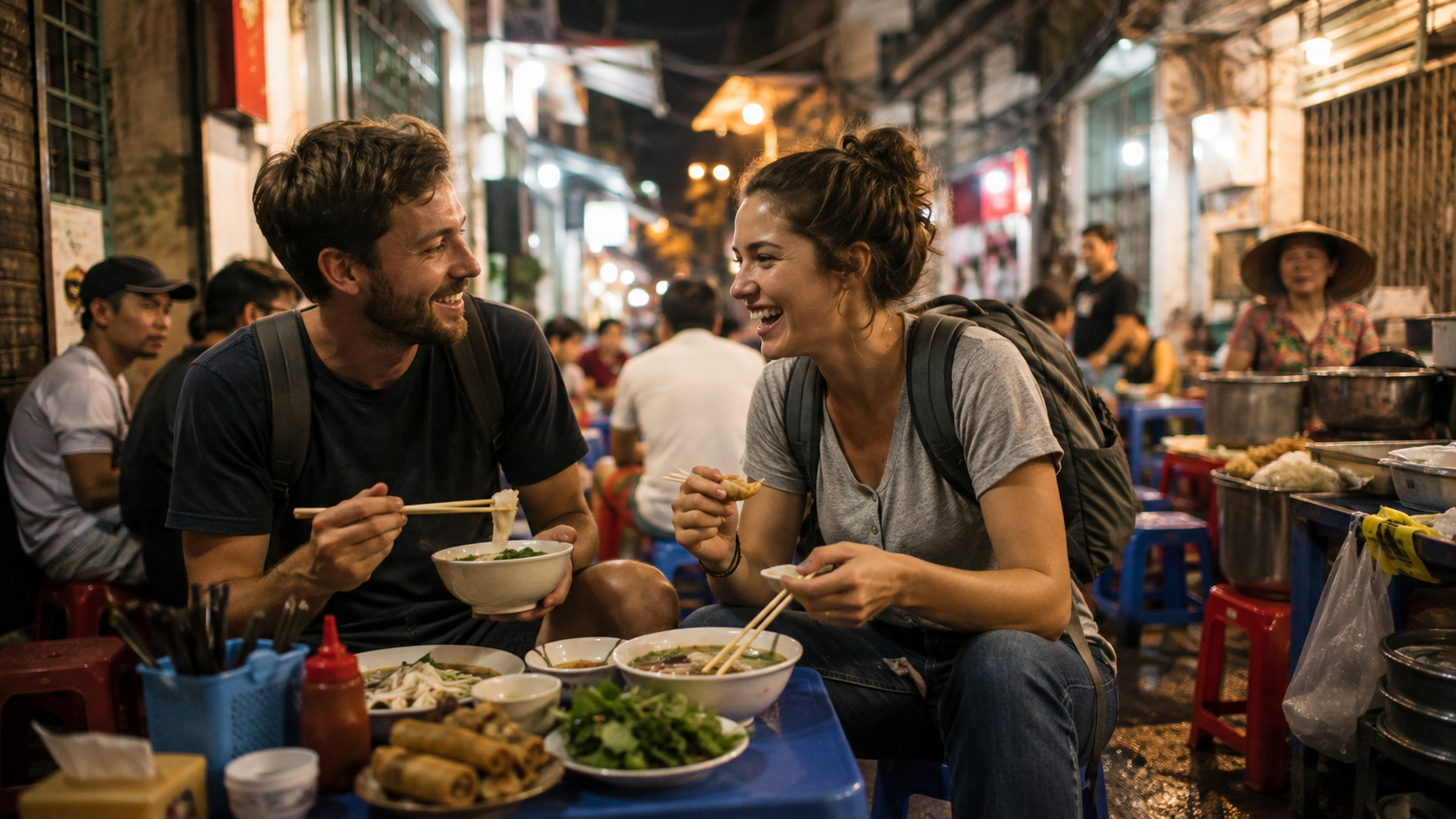


A complete guide to Vietnam should help travellers adapt the journey to their own pace, not push them toward one fixed route. Vietnam can be fast or slow, active or restful, budget-friendly or premium, food-focused or beach-led. The same country can feel very different depending on how many regions are included, how often hotels change, where guides are used and how much free time remains. A good trip respects the traveller’s body as well as their curiosity. These fourteen tips help shape Vietnam into a route that feels vivid, coherent and comfortable rather than simply full.
Start with pace before choosing every destination
The first planning decision should be pace. Some travellers enjoy early starts, dense days and multiple regions. Others need slower mornings, more hotel time and fewer transfers. Families, couples, older travellers, first-time visitors and backpackers each need different rhythm. Vietnam’s variety can tempt travellers into overbuilding the itinerary. Starting with pace prevents this. Once the desired rhythm is clear, destinations become easier to choose. The route can then support the traveller rather than exhausting them.
Tip one: name your preferred travel rhythm
Before booking, decide whether the trip should be relaxed, balanced or active. This simple choice guides hotel nights, tours, transfers and free time.
A travel to Vietnam guide can help travellers connect pace with route structure.
Tip two is to choose destinations that support that rhythm. Tip three is to remove places that only add pressure.
A realistic route feels better than an impressive but tiring list.
Build the itinerary in regional chapters
Vietnam is easier to understand in chapters: northern culture and scenery, central heritage and coast, southern city life and river routes, island or beach rest. A complete guide should help travellers decide which chapters matter most. A 10-day trip may need only two main chapters. A 2-week trip can include more range. A longer route can move more slowly through the country. Thinking in chapters protects the itinerary from becoming random. Each region should have a role in the story.
Tip four: avoid mixing regions without enough time
North, central and south Vietnam can fit in one route, but not if each region receives only a rushed glance. Count transfers honestly.
A 10-day Vietnam itinerary guide can help shorter trips stay realistic.
Tip five: use two-week routes for deeper contrast
With two weeks, travellers can combine more regions while still protecting some longer stays. The key is not to add every possible stop.
A 2-week Vietnam itinerary guide can help compare route order, transfers and pacing.
Tip six: give each chapter a clear purpose
A northern chapter may be food, Old Quarter and Halong Bay. A central chapter may be Hue and Hoi An heritage. A southern chapter may be Saigon energy and Mekong Delta life.
Adapt daily structure to real travel energy
Daily rhythm matters as much as destination choice. A beautiful itinerary can fail if it places heavy tours after tiring transfers, ignores heat or leaves no time to rest. Travellers should imagine each day from morning to evening. Where is lunch? How much walking is involved? Is there a long drive? Is the hotel change necessary? When is there space to do nothing? These questions make the trip more human. Vietnam rewards attention, and attention needs energy.
Tip seven: make transfer days lighter
After flights, road trips or cruise transfers, plan softer activities. A simple dinner, short walk or free evening may be enough.
Tip eight is to place major guided experiences after rest. Tip nine is to keep at least one flexible half-day.
These pauses protect the whole route.
They also allow travellers to follow unexpected interests.
Tip ten: use food as part of pacing
Food can energize or overload a day. Street food walks, markets and cooking classes should be placed when travellers have appetite and attention.
A Vietnam food tours guide can help turn meals into meaningful travel moments.
Choose support according to complexity
Not every traveller needs a fully managed trip, but local support can improve complex routes. It helps with realistic timing, guide choice, hotel location, transfers, seasonal logic and adaptation when plans change. Support is especially useful for first-time travellers, families, multi-region itineraries, visa-sensitive trips and premium journeys. The right support should make the trip clearer without removing freedom.
Tip eleven: use guides where explanation matters
Guides are most valuable in food routes, heritage sites, local villages, river areas and first-day orientation.
Tip twelve: protect independent time
A complete Vietnam trip should still leave room for wandering, coffee, shopping, beach time and personal discovery.
Tip thirteen: review season by region
Vietnam’s length means weather differs by area. Match the route to the season rather than relying on one national answer.
Tip fourteen: request a plan built around your pace
A tailored Vietnam itinerary proposal can translate pace, budget and interests into a route before bookings are locked.
A complete guide to Vietnam should not make the country feel complicated. It should make choices clearer. Start with pace, organize the route in regional chapters, count transfer days honestly, place food and guided experiences where they can be enjoyed, and protect free time. Vietnam offers remarkable range, but range needs rhythm. When the trip is adapted to the traveller’s real energy, the country feels less like a checklist and more like a journey with memory, contrast and room to breathe.
Tradition Việt
Hotline: (+84) 967 04 88 91 / (+84) 376 304 008
Email: info@traditionviet.com
Adresse: CT2A Hanoi Homeland