

Booking a Hanoi food tour is not only about choosing a few famous dishes and following a list. The city has many layers of flavor, many eating times, and many types of eateries. Some dishes are best in the morning, some suit the evening, some shops are busiest at lunch, and some small alley eateries require someone who knows how to find them. Without direction, travelers may eat a lot but still miss the real feeling of Hanoi.
Local support helps the food tour become safer, more flavorful, and better suited to each group. Families need a lighter route and approachable dishes. Food lovers may want markets, long-running shops, and stories behind the food. Vegetarians, travelers with allergies, or people who avoid spicy food need careful ingredient checking. When these details are prepared in advance, the food journey is no longer a matter of luck. It becomes a close way to enter Hanoi’s daily life.
Why book a Hanoi food tour with local support?
Hanoi can be explored independently through taste, but going alone does not always create the best experience. Many local eateries do not have clear English menus, opening hours follow local habits, seating can be small, and ordering sometimes depends on what Vietnamese regulars already know. A guide who understands food helps travelers choose a logical route, avoid overloading the meal, know what to try first, and understand which dishes need preparation.
The route is chosen according to taste and group energy
A good food tour should begin with the travelers, not the dish list. If the group includes children, the route should have fewer stops, easier seating, and food that is not too strong. If the group loves food, the route can go deeper into markets, alley eateries, seasonal dishes, or shops that open only during short hours. If travelers have just arrived after a long flight, the tour should stay light, include rest stops, and avoid ending too late.
With careful advice, each stop has a clearer role. The first dish opens the palate, the main dish shows a signature flavor, a lighter bite changes the feeling, a coffee stop gives time to rest, and a sweet ending softens the route. This arrangement helps travelers avoid becoming full too early, repeating flavors, or feeling that they are only eating to complete a list. A route that matches group energy keeps everyone interested until the end.
A guide helps you understand food, not only taste it
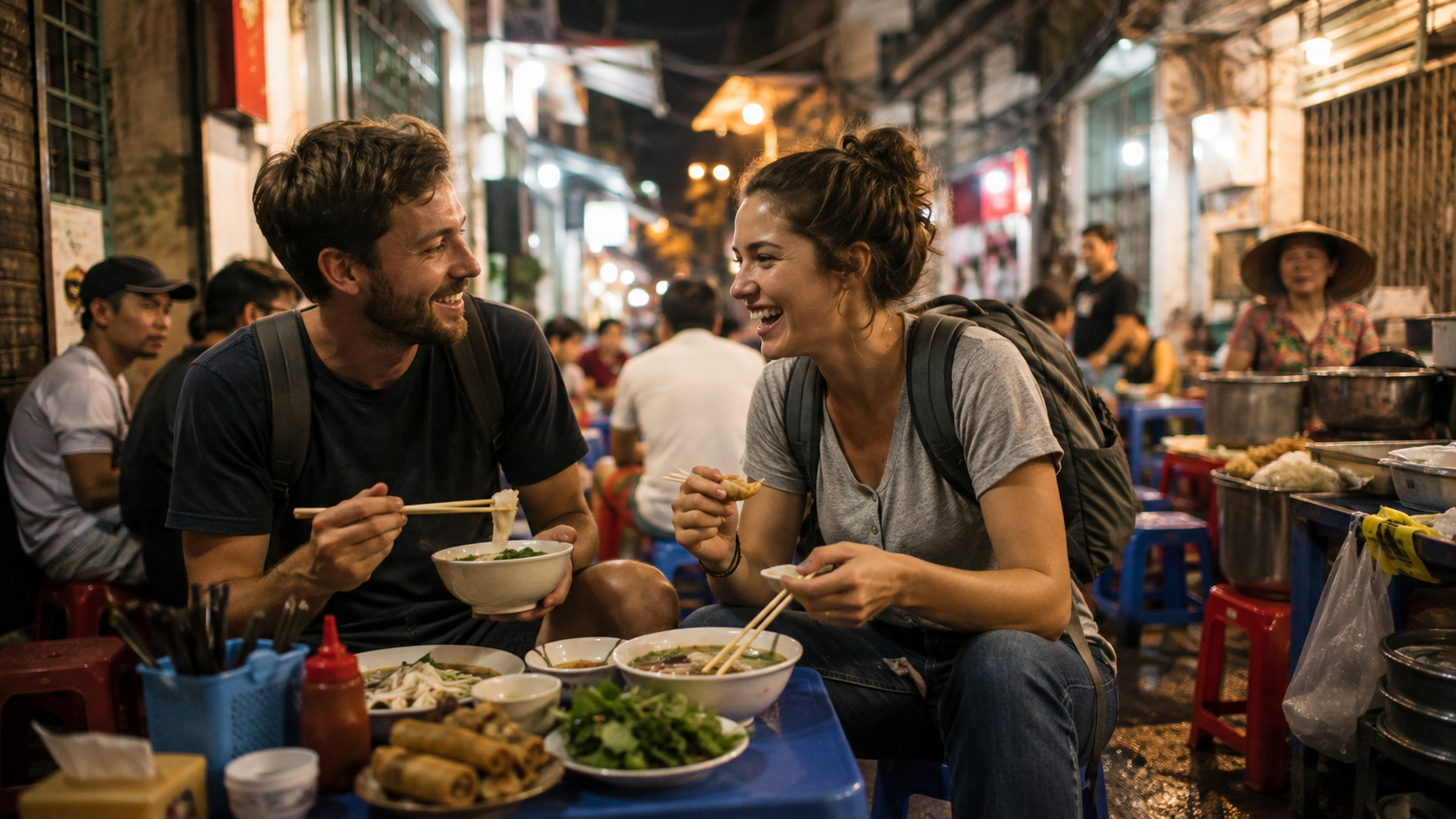
The major difference of a locally supported tour is the story behind the food. Travelers do not only know that a dish is pho, bun cha, or rice rolls. They learn when it is usually eaten, why dipping sauce matters, how herbs are used, why a shop sells only one dish, and how Hanoians choose eateries by habit. These small details give food much more depth.
A good guide also helps travelers enter local eating spaces more naturally. They know how to order, where to sit, which dishes should be eaten hot, what can be adjusted, and when to avoid overly crowded hours. For first-time visitors to Hanoi, this support reduces confusion, especially in small, busy eateries with limited English signage.
More importantly, the guide should not turn the experience into a dry lecture. The best food tours bring stories in just the right amount: a little about ingredients, a little about eating habits, a little about the neighborhood, and a few details that show travelers they are eating inside a city with memory. Then each dish no longer feels like a separate stop, but part of a lively journey.
Private tours suit travelers who need flexibility
Private tours are especially suitable for groups with special needs in taste, timing, or movement pace. Families can go more slowly, rest more often, and choose easier dishes. Vegetarians or travelers with allergies can have the route checked in advance. Couples can choose a more private route, fewer crowds, and a coffee or sweet stop that fits their style. Food lovers can spend more time at markets, long-running shops, or less common dishes.
How to book the right Hanoi food tour for you
Before booking, travelers should be clear about what kind of experience they want. Some only need an Old Quarter evening to meet signature dishes. Some want a morning market, vendors, and ingredient stories. Some need a gentle family route or a customized tour because of vegetarian needs, spice limits, or allergies. When the goal is clear, the advisor can choose the right time, area, and experience level.
Share dietary needs and taste limits in advance
The most important information when booking a food tour is dietary needs. Travelers should mention vegetarians, seafood avoidance, peanut allergies, no fermented shrimp paste, no spicy food, no offal, or food suitable for young children. Hanoi cuisine uses broths, fish sauce, herbs, seasonings, and secondary ingredients; many components cannot be guessed accurately from the dish name.
Choose group tour or private tour according to the trip goal
Group tours can suit solo travelers, adaptable couples, or visitors who want a compact experience at a softer cost. The advantage is that the route is ready, easy to book, and usually includes popular dishes. However, group tours are often less flexible in pace, taste, timing, and dish changes. If the group has specific dietary needs, children, or older travelers, a group tour may not be the most comfortable option.
Private tours are better when travelers want the route designed around real needs. Timing can be softer, the number of stops can be adjusted, dishes can be chosen by taste, and the guide can spend more time explaining. With Hanoi food, this flexibility is valuable because not every eatery suits every group, and not every dish should be eaten at every time.
When choosing between group and private tours, do not look only at price. Consider group age, dietary needs, walking level, time of day, and trip purpose. If the goal is only to try several famous dishes, a group tour may be enough. If travelers want something safer, deeper, or more personal, a private tour will make the experience smoother. Talk to a Vietnam travel advisor if you want to book a Hanoi food tour that matches taste, pace, and avoids generic routing.
Check inclusions and tour duration carefully
Before confirming, travelers should ask about duration, number of stops, amount of food, drinks, guide, transport if any, meeting point, ending point, and change policy if it rains or an eatery is closed. These details help avoid misunderstandings, especially when the Hanoi itinerary also includes sightseeing, flights, trains, or other activities on the same day.
A food tour should also include a suitable amount of food. More is not always better. If a tour lists too many stops in a short time, travelers should ask whether there is enough time to sit, listen, and rest. A route with fewer stops but better rhythm often brings a stronger experience than a long program that leaves everyone too full and tired.
For groups with special requirements, check whether dishes can be adjusted, eateries can be changed, or the route can be shortened. Families with children may need to finish earlier. Older travelers may need less walking. Vegetarians need a separate route to avoid meat broth or fish-based sauces. When these conditions are agreed in advance, the tour feels more natural and has fewer surprises.
Frequently asked questions about booking a Hanoi Food Tour
Should I book a Hanoi food tour in advance?
Yes, especially for weekends, peak seasons, families, private guiding, or dietary needs such as vegetarian food, allergies, or no spicy food.
Is a private food tour worth it?
Yes, if travelers want flexible pacing, dishes matched to taste, less crowded routing, or special support for children, older travelers, and dietary needs.
What should I mention before booking?
Share the number of travelers, ages, length of stay, preferred time, walking level, food restrictions, allergies, vegetarian needs, or any taste limits.
Is a Hanoi food tour suitable for vegetarians?
It can be suitable with advance preparation. Some dishes use meat broth, fish sauce, or fermented shrimp paste, so the route should be selected carefully.
Should I choose a morning or evening food tour?
Morning suits markets, pho, rice rolls, and local daily rhythm. Evening suits the Old Quarter, grilled dishes, coffee, sweets, and a livelier atmosphere.
Are drinks included in a food tour?
It depends on the program. Travelers should ask about drinking water, coffee, signature drinks, and extra costs before booking.
Booking a Hanoi food tour properly helps travelers eat better, understand the city more deeply, and avoid confusion common on a first independent visit. With local support, each stop is chosen according to timing, taste, safety, and the story behind the dish. Hanoi then appears not only through famous food names, but through habits, aromas, street rhythm, and small everyday tables.
Tradition Việt can help book a Hanoi food tour according to taste, length of stay, group age, dietary needs, privacy level, and other destinations in your Vietnam itinerary. Talk to a Vietnam travel advisor to create a food journey that is compact, safe, flexible, and truly Hanoian.
TVEN-EN-20260511-6 | Tradition Việt SEO Content