

Small mistakes that reduce travel comfort
Changing hotels too often in a short trip
Many Vietnam itineraries lose comfort because of one small planning error: changing hotels too often. On paper, adding another city may look simple. In real travel, every move means luggage, waiting time, airport or pier transfers and the need to settle in again. When this happens too frequently, travelers struggle to keep enough energy for the destination itself. Fewer stops with longer stays often create a deeper and less tiring journey.
Outdoor days must be planned through the eyes of real travelers, not only by the number of hours written on a schedule. Walking in an old town, taking a boat trip, climbing steps or visiting heritage sites can all be affected by heat, rain and humidity. If the day has no flexibility, the group may feel forced to continue simply because it is written in the plan. A better approach places active visits in cooler hours and saves indoor moments or longer meals for difficult weather.
Planning outdoor days without flexibility
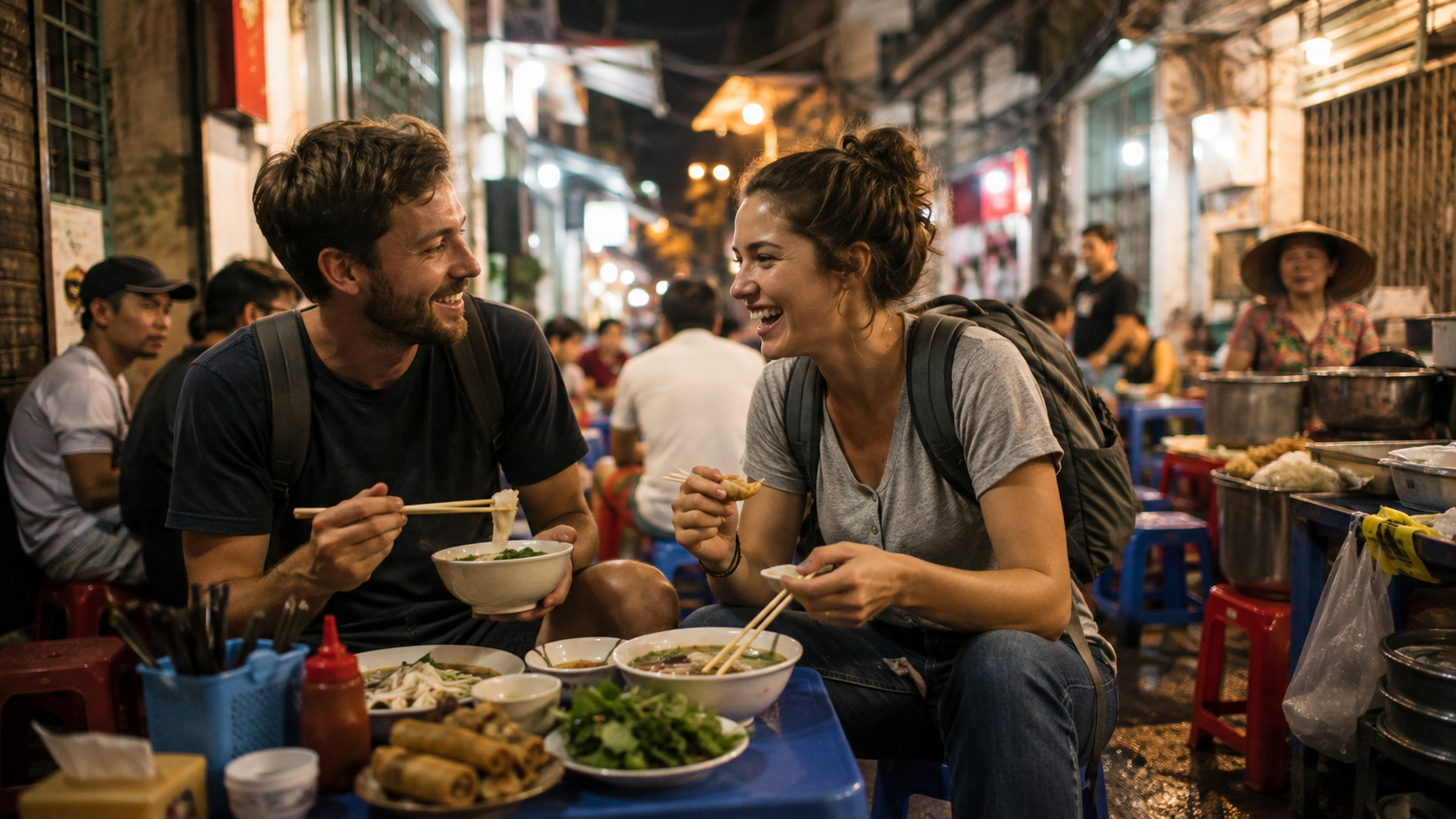
Meals and pauses are often pushed to the end of the planning list, although they keep a journey humane. A day may include beautiful landscapes, but if lunch is too late, the drive is long and there is no proper stop, the memory becomes fatigue. In Vietnam, meals are also cultural experiences: northern home-style food, delicate Hue dishes, seafood by the coast or fruit in the Mekong Delta. When food is treated as part of the journey, travelers rest, taste and understand more.
One practical fix is to group destinations by region instead of by wish list. In the North, Hanoi, Ninh Binh and Ha Long Bay form a natural route. In Central Vietnam, Hue, Da Nang and Hoi An can combine heritage, river life and the sea. Regional grouping reduces heavy transfer days, controls cost and gives the journey a more coherent story. Travelers remember places by feeling, not only by names.
Forgetting meals and pauses between travel legs
Weather should not be background information; it should be planning data. The rainy season can still work if the itinerary includes indoor options and avoids overloading outdoor days. Hotter months need earlier starts, reliable private transport and conveniently located hotels. High season calls for earlier reservations to protect quality. When weather is part of the plan from the beginning, the journey becomes less dependent on luck.
A planner who understands real routes will see risks that maps cannot show. Some distances look short but take time because of traffic. Some places are beautiful but unpleasant at the busiest hour. Some restaurants need reservations, especially for larger groups. These details do not make the itinerary more complicated. They make it smoother, reduce waiting and allow travelers to save energy for the experiences that matter.
Soft CTA: Share your expected travel dates, travel style and main wishes with Tradition Việt. Our local team can suggest a route that feels comfortable, meaningful and realistic.
How to fix your itinerary before departure
Group destinations by region, not by wish list
Before departure, the itinerary should be read like a story. Which day is the emotional highlight, which day needs rest, which day can flex if rain arrives, and which experience should remain private or unhurried? If every day is equally heavy, the journey loses both drama and calm. A good Vietnam itinerary rises and falls naturally: discovery on one day, softness on another, and sometimes one excellent meal is enough to make an evening memorable.
Many Vietnam itineraries lose comfort because of one small planning error: changing hotels too often. On paper, adding another city may look simple. In real travel, every move means luggage, waiting time, airport or pier transfers and the need to settle in again. When this happens too frequently, travelers struggle to keep enough energy for the destination itself. Fewer stops with longer stays often create a deeper and less tiring journey.
Use weather as planning data
Outdoor days must be planned through the eyes of real travelers, not only by the number of hours written on a schedule. Walking in an old town, taking a boat trip, climbing steps or visiting heritage sites can all be affected by heat, rain and humidity. If the day has no flexibility, the group may feel forced to continue simply because it is written in the plan. A better approach places active visits in cooler hours and saves indoor moments or longer meals for difficult weather.
Meals and pauses are often pushed to the end of the planning list, although they keep a journey humane. A day may include beautiful landscapes, but if lunch is too late, the drive is long and there is no proper stop, the memory becomes fatigue. In Vietnam, meals are also cultural experiences: northern home-style food, delicate Hue dishes, seafood by the coast or fruit in the Mekong Delta. When food is treated as part of the journey, travelers rest, taste and understand more.
Work with planners who understand real travel routes
One practical fix is to group destinations by region instead of by wish list. In the North, Hanoi, Ninh Binh and Ha Long Bay form a natural route. In Central Vietnam, Hue, Da Nang and Hoi An can combine heritage, river life and the sea. Regional grouping reduces heavy transfer days, controls cost and gives the journey a more coherent story. Travelers remember places by feeling, not only by names.
Weather should not be background information; it should be planning data. The rainy season can still work if the itinerary includes indoor options and avoids overloading outdoor days. Hotter months need earlier starts, reliable private transport and conveniently located hotels. High season calls for earlier reservations to protect quality. When weather is part of the plan from the beginning, the journey becomes less dependent on luck.
Frequently asked questions
How many days are ideal for a Vietnam itinerary?
For a multi-region journey, 10 to 14 days is often comfortable. A shorter trip can work well when focused on one or two regions.
Should I visit North, Central and South Vietnam in one trip?
Yes, if you have enough time and the itinerary includes rest. For shorter journeys, prioritizing the most meaningful regions is usually better.
Is a tailor-made itinerary suitable for families?
Yes. It can adjust hotels, transfers, meal timing and daily pace around children, seniors or mixed-age groups.
When should I request a custom quote?
As early as possible once you know your dates, group size and main wishes. Early planning helps protect better choices.
Start shaping your Vietnam journey
Send us your expected travel dates, number of travelers and main wishes to receive itinerary advice and a suitable quote from Tradition Việt.
Hotline: (+84)967 04 88 91 / (+84)376 304 008
Email: info@traditionviet.com
Address: CT2A, Hanoi Homeland, Thuong Thanh Ward, Long Bien District, Hanoi.