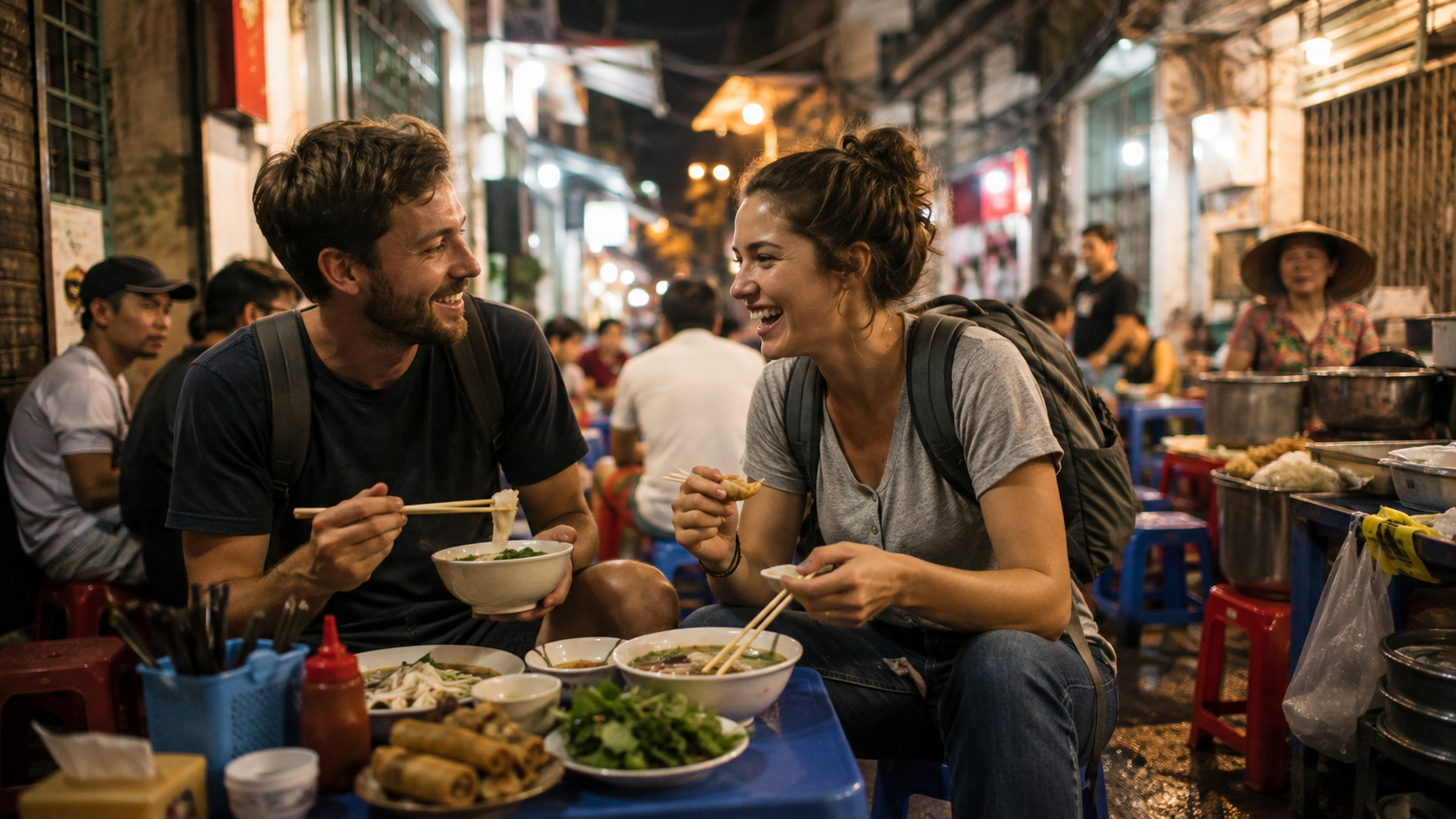

Vietnamese cuisine tours can be some of the richest journeys in the country because food is everywhere: in markets, family kitchens, old streets, river towns, coastal seafood tables and breakfast stalls. But a food tour becomes more valuable when it is structured, not simply abundant. Travellers should understand regional flavor, meal timing, guide support, market context and appetite rhythm. Eating more is not always experiencing more. A strong cuisine route helps travellers understand how Vietnamese food connects to place, season, family and daily life. These fourteen tips help turn meals into memory rather than just consumption.
Follow regional flavor instead of chasing famous dishes only
Vietnamese food changes from north to central to south. Hanoi often feels delicate, balanced and herb-driven. Central Vietnam can be more intense, aromatic and historically layered. Southern food can feel generous, tropical and river-influenced. A cuisine tour that only repeats famous dishes may miss this regional richness. Travellers should use the route to taste contrast. Each destination should add a new food perspective, not simply another version of what they already tried.
Tip one: give each region a food role
Hanoi can introduce breakfast culture and old-quarter street food. Hue can reveal refined central flavors. Hoi An can combine markets, herbs and noodles. Ho Chi Minh City can show southern diversity and late-night energy.
A Vietnam food tours guide can help travellers place food experiences inside a wider itinerary.
Tip two: avoid repeating the same format in every city
Do not book a generic street food walk everywhere. Mix formats: one guided street walk, one market visit, one cooking class, one seafood meal and one countryside lunch.
Use guides to understand what you are eating
Food guidance is valuable because Vietnamese cuisine has many small details: dipping sauces, herbs, textures, breakfast timing, shared plates, regional names and local habits. A guide can explain why a dish belongs to a place, how to eat it and what to notice. This is especially useful at the beginning of a trip. Once travellers understand the basics, independent meals become more confident. Food tours should teach as well as feed.
Tip three: take a guided food walk early
An early food walk helps travellers learn how to order, sit, season, share and choose places more confidently for the rest of the trip.
A Vietnam food immersive example can show how local stories and food can work together.
Tip four: ask why each stop is chosen
A strong guide should explain the purpose of every stop. It may reveal technique, family history, regional identity or daily habit.
Tip five: learn the sauces and herbs
Sauces and herbs are not decorations. They change the balance of many Vietnamese dishes. Ask how locals use them.
This small lesson can improve many later meals.
Tip six: keep dietary needs clear
Mention allergies, vegetarian preferences, seafood restrictions, pork avoidance or spice concerns before booking. A good food route should adapt safely.
Protect appetite and timing
Food tours fail when travellers are too tired, too full or too rushed. A large tasting after a long transfer may feel heavy. A cooking class without appetite may feel wasted. A seafood dinner after a beach day can be perfect. A market visit in the morning may feel more alive than one placed too late. Food experiences should be timed like important activities. Appetite is part of itinerary design.
Tip seven: do not schedule major food tours after arrival fatigue
A soft first dinner may be better than a dense tasting route after a long flight. Save the deeper food walk for when the body is ready.
Tip eight: leave free meals for discovery
Not every meal should be arranged. Open meals allow travellers to return to favorites or follow local recommendations.
A Vietnam food practical tips guide can help match walking, meal timing and comfort.
Tip nine: use breakfast as a real experience
Vietnamese breakfast culture is powerful. Noodles, rice rolls, sticky rice and coffee can reveal local life before the tourist day begins.
Tip ten: avoid oversized tasting lists
Too many dishes can blur together. Fewer dishes with better explanation may be more memorable.
Connect food with landscape and local life
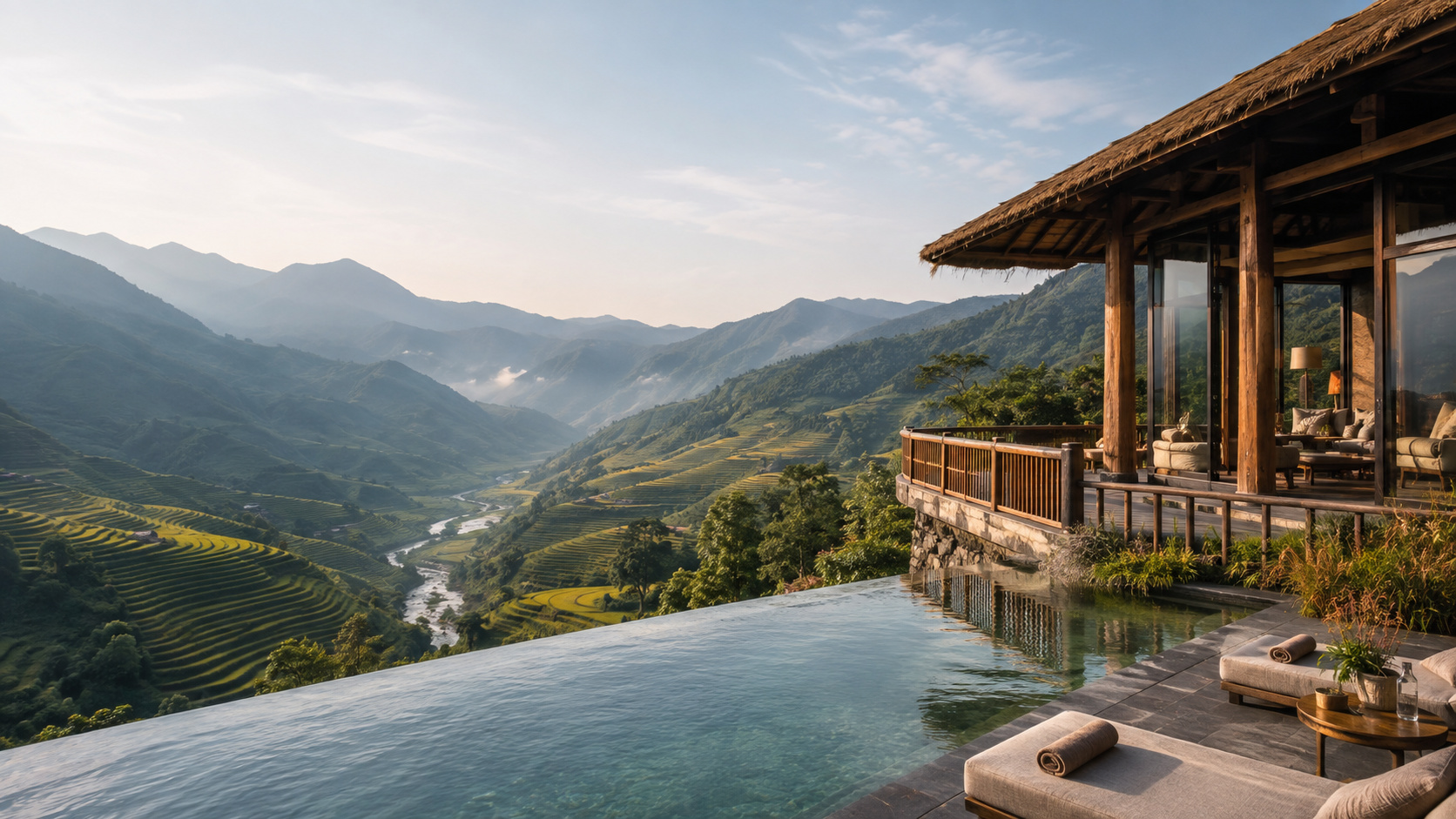
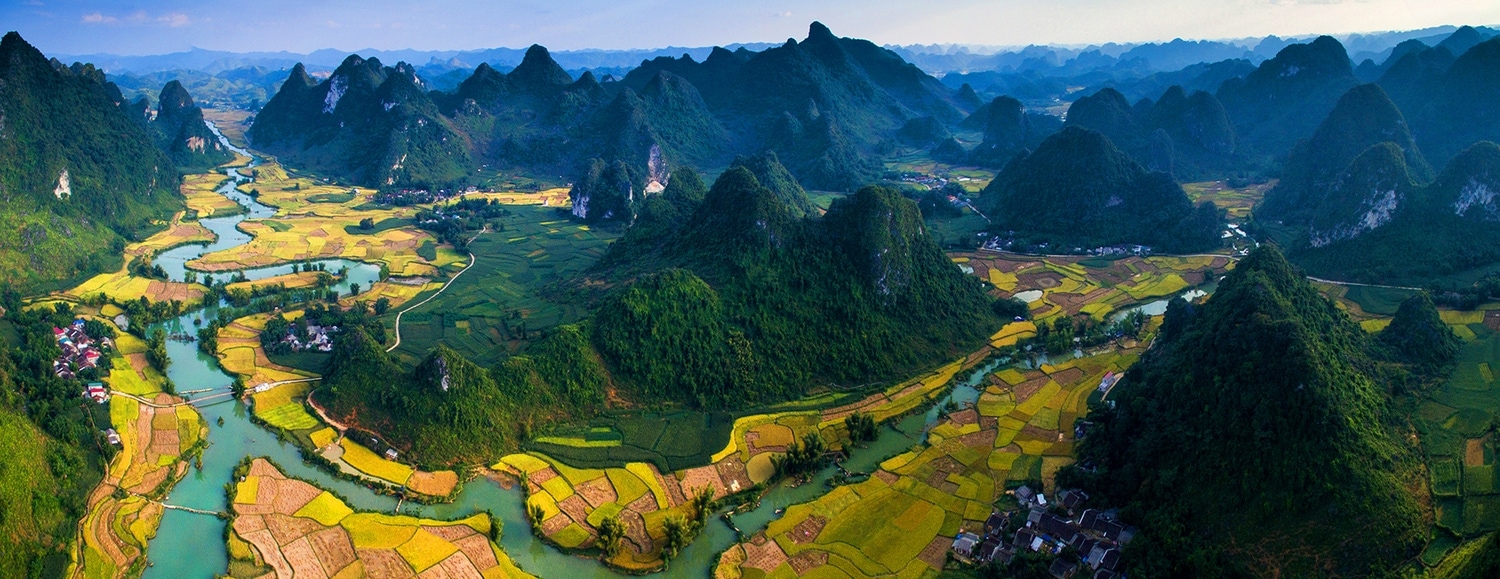
Food becomes deeper when travellers see where ingredients, habits and communities come from. A Mekong Delta meal, coastal seafood dinner, countryside lunch or market-to-kitchen cooking class can connect food to place. Vietnamese cuisine is not only urban street food. It is also rivers, farms, herbs, rice fields, fishing villages and family kitchens. A valuable food route makes these connections visible.
Tip eleven: include one market or ingredient experience
Markets reveal herbs, fruit, noodles, seafood, rice products and daily shopping habits. They help travellers understand the meal before eating it.
Tip twelve: add one rural or coastal meal
A countryside lunch, river meal or seafood dinner can show how landscape shapes flavor.
Tip thirteen: keep fine dining in balance
Fine dining can be excellent, but it should not replace local food completely. Vietnam’s food culture lives at many levels.
Tip fourteen: request a route built around your food style
A tailored Vietnam cuisine tour proposal can align regional dishes, guides, markets, timing and dietary needs.
Vietnamese cuisine tours give more value when travellers follow regional flavor, use guides for explanation, protect appetite and connect food with landscape. Eat with curiosity, not only hunger. Ask about herbs, sauces, family recipes, markets and timing. Leave space for independent meals and return to favorite dishes. Vietnam’s cuisine is generous because it belongs to daily life. When the route respects that life, every meal becomes part of the country’s story.
Tradition Việt
Hotline: (+84) 967 04 88 91 / (+84) 376 304 008
Email: info@traditionviet.com
Adresse: CT2A Hanoi Homeland