
Small group trips in Vietnam can be one of the most rewarding ways to travel when the group rhythm is handled well. They offer the warmth of shared discovery without the heaviness of a large tour: a few people around a market table, a guide who can answer real questions, a vehicle that moves more easily, and enough social energy to make the journey feel alive. But small groups also need careful design. If the pace is wrong, if personalities are ignored, or if the itinerary is too tight, the group can feel more tiring than helpful. A better trip begins by understanding that group rhythm is not automatic. It must be planned.
Choose the group format before choosing the route
A small group is not just a smaller bus. It is a different travel format. The group size affects meals, timing, questions, guide attention, hotel check-ins, walking speed and the emotional tone of each day. Travellers often choose small-group travel because they want both connection and comfort, but they do not always check how the group actually operates. A strong small-group trip should feel flexible enough to breathe, yet structured enough to avoid confusion. Before comparing destinations, compare the travel style. Ask whether the group is active, cultural, family-friendly, premium, budget-conscious or mixed.
Mistake one: assuming all small groups feel the same
A group of six travellers can feel very different from a group of sixteen. The difference appears during meals, transfers, bathroom stops, market visits and guided explanations. Smaller groups usually allow more questions and smoother movement, while larger small groups may still feel organized but less personal.
When reviewing Vietnam small group tours, look for the real maximum group size, not only the phrase “small group.” The wording sounds friendly, but the number decides the experience.
Mistake two: ignoring personality mix
Even when the itinerary is good, group rhythm depends on people. A fast-moving adventure group and a slower culture-focused group should not follow the same pace.
Let the guide hold the group together
The guide is especially important in a small group. In a private tour, the guide follows one party. In a large group, the guide often manages logistics first. In a small group, the guide must do both: explain Vietnam well and keep the group’s shared rhythm healthy. They need to read who is tired, who is curious, who needs more context, who walks slowly, who wants photos and when the group needs a pause. A good guide keeps the day human. A weak guide lets small tensions grow.
Mistake three: choosing by itinerary only
The itinerary may list Hanoi, Halong Bay, Hoi An or the Mekong Delta, but the guide decides how those places become memorable. A guide who only recites facts will not create the same experience as one who can explain food, history, etiquette and local life.
This matters because small-group travellers often want conversation. They do not only want transportation.
A good guide also protects the quieter travellers in the group. They make space for questions without letting one voice dominate the whole day.
For booking preparation, small group trip advice can help travellers check guide style and group design before confirming.
Mistake four: planning too many shared meals
Shared meals can be warm, but not every meal should be a group meal. Travellers need some independent time to eat what they want, rest, or spend a quieter evening.
Mistake five: letting transfers become group fatigue
Transfers can become the most tiring part of a small-group trip. If the vehicle is uncomfortable, if stops are poorly timed, or if the day has too much movement, the group mood can drop quickly.
A better route places transfer days carefully. It avoids heavy sightseeing immediately after long movement.
It also includes clear communication: departure time, drive length, rest stops and what to expect on arrival.
Travellers comparing comfort levels can review small group tour pacing before choosing between budget, comfort and premium versions.
Protect shared energy with enough private space
Small group travel works best when shared experience and personal space are balanced. Travellers may enjoy meeting others, but they still need time to rest, shop, call family, walk alone or sit quietly. Vietnam is full of strong impressions: street food, traffic, markets, temples, rivers, old towns, boats and mountain paths. If every moment is communal, even a friendly group can become too much. The best itinerary creates moments of togetherness and moments of release. This makes group energy last longer.
Mistake six: filling every evening
Evenings should not always be programmed. After a day of guided movement, many travellers need a quieter dinner, a simple walk or time at the hotel. Free evenings help the group reset.
Mistake seven: choosing hotels only for the group rate
A hotel with a good group rate may still weaken the trip if it is far from restaurants, old streets or useful transport. Location matters because free time becomes more valuable when travellers can actually use it.
Mistake eight: ignoring different walking speeds
Small groups often include different walking styles. Some travellers move quickly; others stop for photos, questions or rest. A guide should manage this gently so nobody feels pushed or held back.
Mistake nine: not checking optional activities
Optional activities should be clear. If some travellers want a cooking class, spa, cycling route or food walk while others prefer rest, the itinerary should allow choice without pressure.
A flexible Vietnam group travel proposal can help match shared route design with enough personal breathing room.
Mistake ten: expecting perfect harmony every day
Even good groups have uneven moments. Weather, traffic, tiredness and different expectations can affect mood. A strong itinerary has enough space to absorb this.
Mistake eleven: not setting expectations before departure
Travellers should know group size, physical level, meal style, hotel category, transport type and daily rhythm before joining.
Mistake twelve: choosing a route with no emotional arc
The trip should build naturally: arrival orientation, cultural depth, scenic contrast, rest and closure. Without an arc, the group may feel like it is moving from one product to another.
Mistake thirteen: missing local food confidence
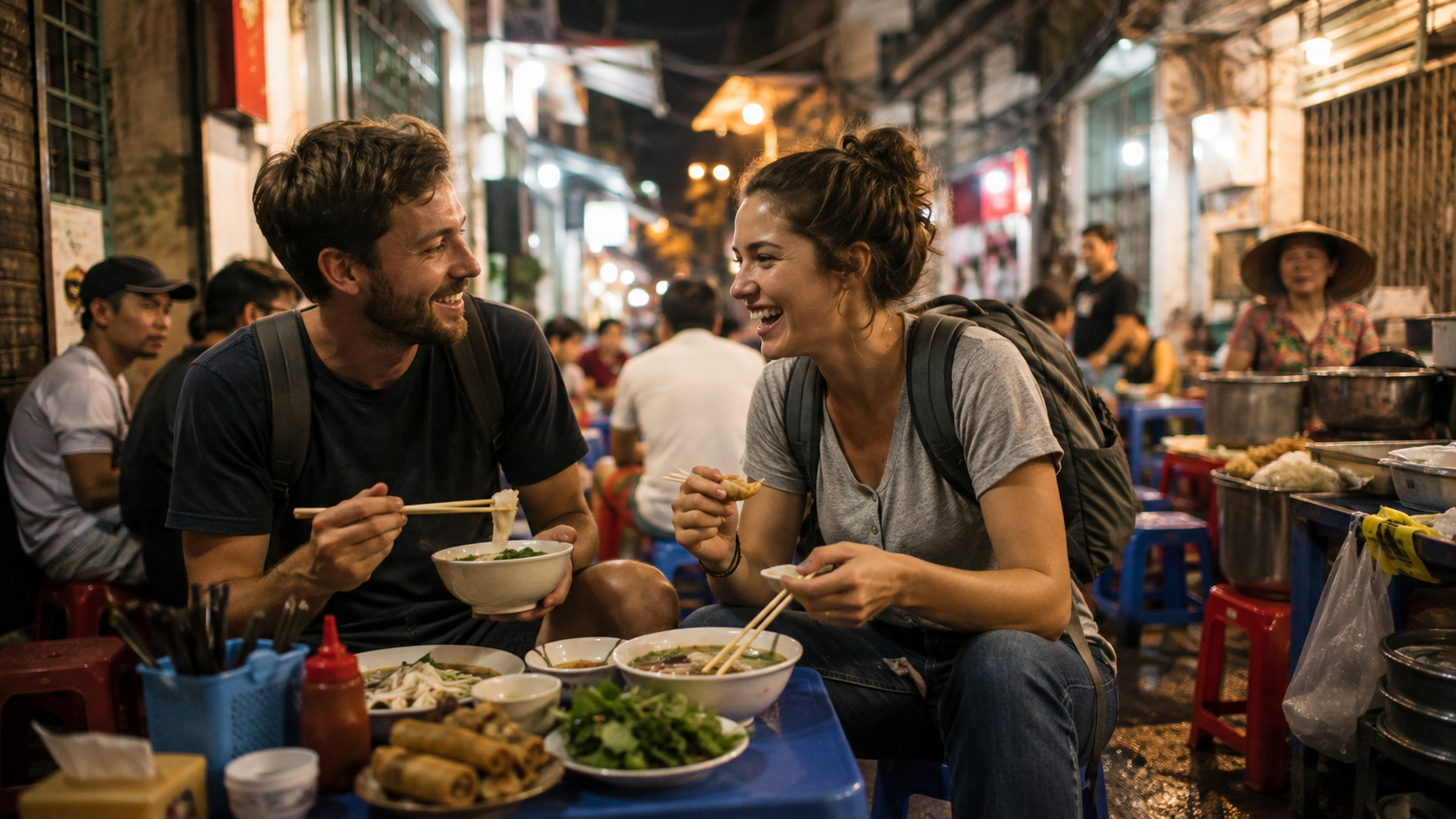
A small group is ideal for food discovery because the guide can explain dishes and adjust comfort. Avoid routes that make every meal bland and generic.
Mistake fourteen: overloading photo stops
Photo stops are useful, but a group trip should not become a sequence of quick exits and reboards. Let important places breathe.
Mistake fifteen: forgetting why small group travel was chosen
The format should offer connection, clarity and smoother movement. If the itinerary feels rigid, crowded or impersonal, it has lost its purpose.
Small group trips in Vietnam become better when travellers treat group rhythm as part of the design. Avoid choosing only by destination list, ignoring group size, overfilling shared meals, weakening transfers or removing personal space. Vietnam offers many moments that work beautifully in a small group: food walks, old-town evenings, boat routes, countryside visits and guided heritage days. But these moments need a guide who can hold the mood and a route that allows people to breathe. When shared energy and private space are balanced, small group travel feels warm, efficient and deeply memorable.
Tradition Việt
Hotline: (+84) 967 04 88 91 / (+84) 376 304 008
Email: info@traditionviet.com
Adresse: CT2A Hanoi Homeland