

Saigon city tours are most enjoyable when travellers stop expecting the city to behave like a quiet heritage town. Saigon moves quickly. It eats loudly, works early, drinks coffee everywhere, remembers history in heavy spaces and reinvents itself through towers, markets, alleys and young creative energy. The city is not always elegant in the traditional sense, but it is full of life. A good tour should not simply make Saigon neat for visitors. It should help them enjoy its movement without feeling lost. The mistakes to avoid are usually mistakes of expectation: rushing, judging too quickly, staying only on the surface or missing the food and street rhythm that make the city unforgettable.
Enter Saigon through energy, not control
Saigon rewards travellers who can accept movement. Traffic, heat, street noise and quick service are part of the atmosphere. A city tour should provide structure, but it should not remove all spontaneity. The guide’s role is to make the city readable while still letting its energy remain. This means choosing a route with contrast: a historical stop, a market or street area, a coffee break, a food moment and perhaps a quieter cultural site. When the tour is too controlled, Saigon becomes a set of disconnected landmarks. When it is guided with sensitivity, the city becomes a living introduction to southern Vietnam.
Mistake one: trying to see Saigon too quickly
A rushed city tour may cover several names, but it rarely lets travellers feel the city. Saigon needs pauses: coffee, market time, short walks, a local meal or a moment to stand still and watch the street.
Let food, coffee and markets carry the city’s personality
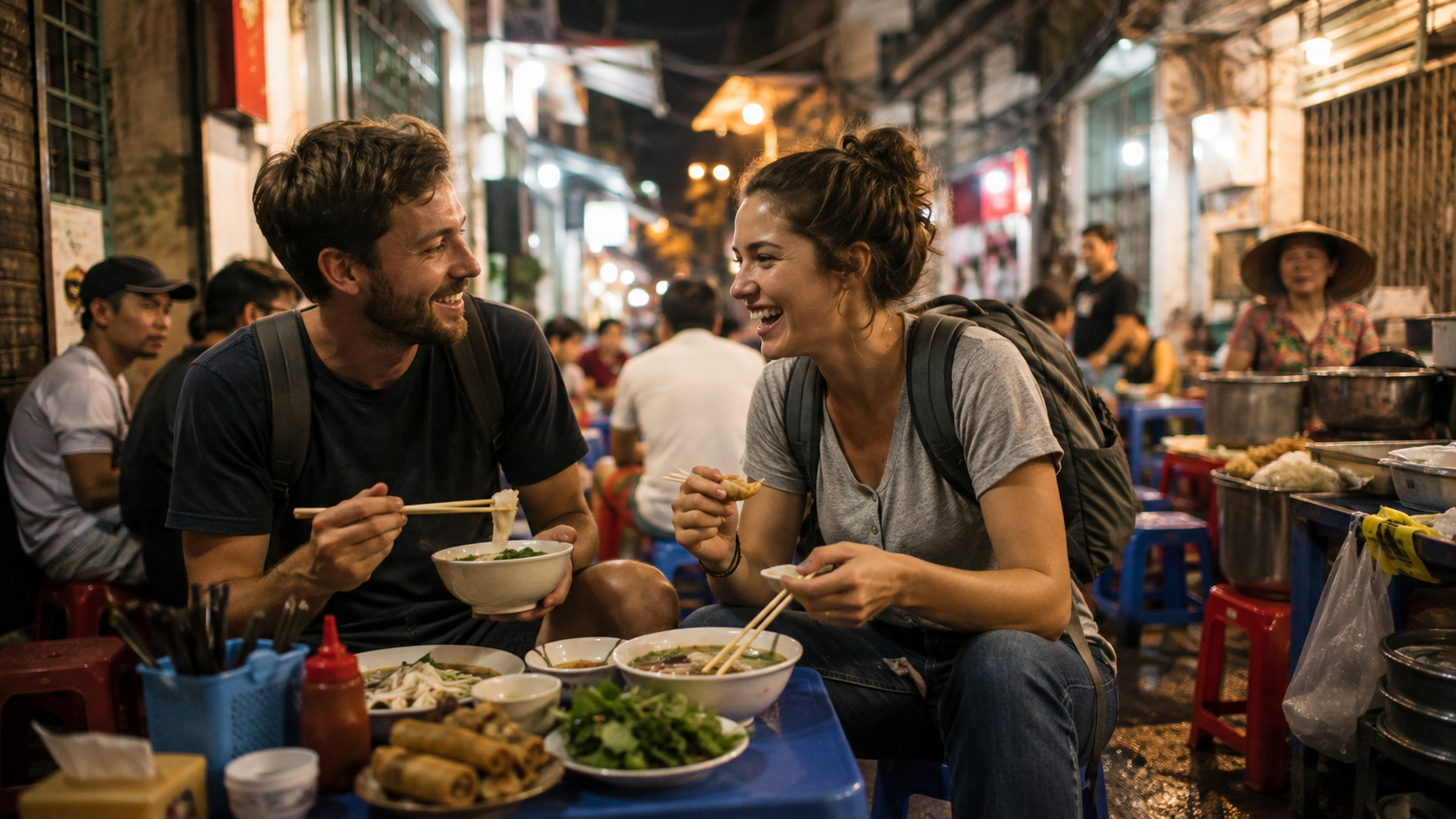
Food and coffee are not optional extras in Saigon. They are part of the city’s social language. A morning can begin with noodles or broken rice, an afternoon can slow down over iced coffee, and an evening can open into grilled food, seafood, snacks or lively local restaurants. Markets show another side of the city: bargaining, ingredients, household habits, flowers, textiles and fast exchanges between sellers and regular customers. A Saigon tour that ignores food and markets may still be informative, but it will miss the city’s warmth. The traveller may learn facts without feeling the place.
Mistake two: eating only after the tour ends
If food is left outside the tour completely, the city may feel less intimate. A good route can include a snack, coffee stop or meal that explains southern taste and local rhythm.
Saigon’s food culture is generous and practical. The guide can help travellers understand what to order, how to eat it and why certain dishes belong to certain times of day.
For a more food-centered route, a Saigon food tour can help turn eating into a deeper city experience.
Mistake three: avoiding markets because they seem busy
Markets can feel intense, but they reveal the city clearly. A guide can help travellers move respectfully, understand products, avoid blocking vendors and notice local habits.
A market is not only a shopping place. It is a living map of food, family needs, small trade and daily timing.
Travellers should not expect markets to feel polished. Their value is in movement and density.
A short, well-guided market stop can teach more about Saigon’s everyday life than a long drive between landmarks.
Mistake four: skipping coffee culture
Coffee is one of the easiest ways to slow down in Saigon. A café stop gives the tour a pause and lets travellers see how locals rest, work, talk or watch the street.
Choose a route that respects history without freezing the city
Saigon carries difficult and important history, but it is also a modern, growing, everyday city. A good tour should respect historical memory without trapping the whole experience in the past. Travellers need context for museums, colonial-era buildings and wartime sites, but they also need to see how the city lives now. This balance makes the tour more honest. Saigon is not only something that happened before; it is something still happening. The strongest city tours connect memory, architecture, trade, food, migration and contemporary energy in one readable route.
Mistake five: choosing only photo stops
Photo stops can be enjoyable, but they should not replace understanding. A building, monument or street corner needs context. Why is it here? What changed around it? How do locals relate to it now?
Travellers comparing broader city options can use Saigon tours guide to think beyond surface sightseeing.
Mistake six: not placing Saigon within the southern route
Saigon often connects with the Mekong Delta, Cu Chi area, southern beaches or onward flights. The city tour should fit the wider southern plan. If the next day is a long excursion, the Saigon tour should not be too late or too heavy.
A good planner can help decide whether Saigon should be an arrival orientation, a food-led evening, a history-focused morning or a final urban chapter before departure.
For travellers who want this placed smoothly, Saigon tours with local support can connect the city day with the rest of the itinerary.
Saigon city tours become much better when travellers accept the city’s energy instead of trying to control it completely. Avoid rushing, ignoring food, avoiding markets, skipping coffee culture, choosing only photo stops or treating Saigon as separate from the southern journey. The city is layered, warm, fast and human. It speaks through meals, streets, commerce, memory, architecture and small pauses in the middle of movement. A good tour should help travellers enjoy that complexity without feeling overwhelmed. When guided well, Saigon does not need to be softened. It simply needs to be understood in its own rhythm.
Tradition Việt
Hotline: (+84) 967 04 88 91 / (+84) 376 304 008
Email: info@traditionviet.com
Adresse: CT2A Hanoi Homeland