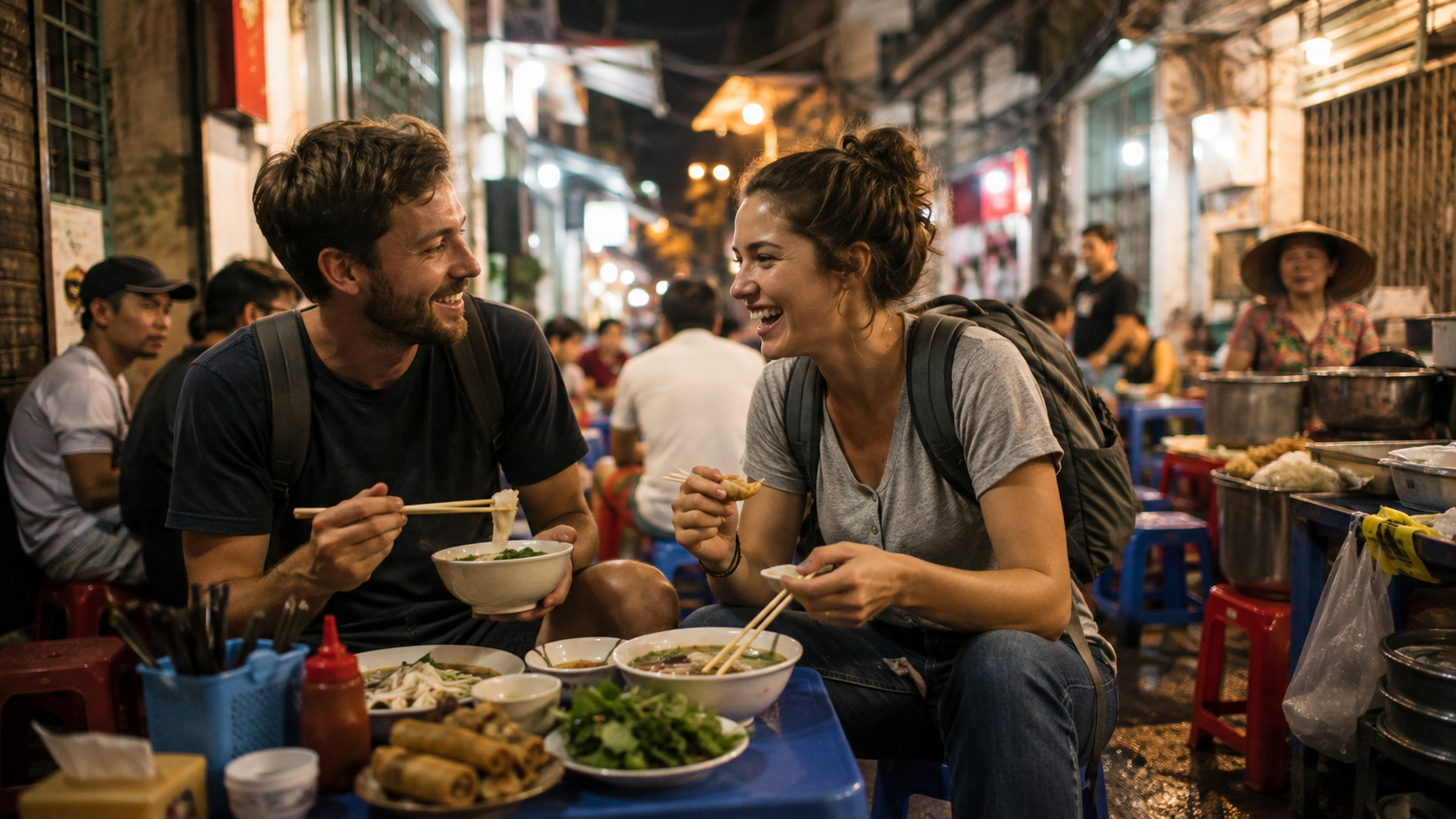


Guided tours in Hanoi can change the way travellers read the city. Without context, Hanoi may first appear as noise, traffic, narrow streets, lakes, temples, cafés and old houses pressed closely together. With the right guide, those same details begin to form a story. The Old Quarter becomes a map of trades and family businesses. Food becomes a regional language. A temple visit becomes a conversation about education, memory and respect. A lake walk becomes a softer way to understand local rhythm. The common mistake is treating a guided tour as simple sightseeing. In Hanoi, good guiding is orientation, interpretation and cultural translation at the same time.
Prepare for Hanoi as a layered city
Hanoi is not a city to rush through mechanically. It has political history, colonial traces, ancient streets, village memory, food culture, lakes, museums, cafés and daily rituals that change through the day. A guided tour should help travellers move through these layers without flattening them. Before booking, decide which Hanoi you want to understand: the food city, the old city, the historic capital, the craft-and-market city or the slower local-neighborhood city. The best tour is not always the longest one. It is the one that gives the right door into Hanoi’s character.
Mistake one: choosing only by famous stops
A tour that lists many famous places may still feel shallow. Hanoi’s value often lies between the landmarks: the way a street works, how a vendor serves breakfast, why a family business occupies a narrow house, or how a quiet temple changes the pace of the day.
Travellers should look for a route that connects places, not just collects them. A Hanoi Old Quarter guide can be useful because the Old Quarter needs explanation, not only walking.
Famous stops matter, but the guide should explain why they matter. Otherwise, the day becomes a movement between photo points.
Mistake two: booking the wrong time of day
Hanoi feels different in the morning, afternoon and evening. Morning walks can reveal breakfast culture, markets and lakeside exercise. Afternoon tours may work better for museums and heritage spaces. Evening routes can be ideal for street food and old-quarter atmosphere.
Mistake three: ignoring walking comfort
Guided tours in Hanoi often involve walking, standing, crossing streets and moving through crowded areas. Comfortable shoes and realistic expectations matter. Travellers who dislike long walks should choose a softer route.
Heat, humidity and traffic can affect energy. A good itinerary includes pauses, shade or seated explanations.
Families and older guests should ask about walking distance before booking. A guide can adjust only if the need is known in advance.
The tour should invite travellers into Hanoi, not push them until the city feels exhausting.
Let the guide turn movement into meaning
The guide is the difference between seeing Hanoi and understanding it. A strong guide knows when to explain history, when to introduce food, when to help with traffic, when to pause for coffee and when to leave travellers alone with the atmosphere. Hanoi rewards this kind of sensitive guiding because the city’s details are small and dense. The best explanation may happen beside a bowl of noodles, outside a communal house, near a market stall or on a quiet street away from the crowd. Travellers should choose guides who can make the city feel human.
Mistake four: accepting a scripted tour
A scripted tour may cover basic information, but Hanoi deserves a guide who can respond to curiosity. Travellers may ask about food, housing, history, religion, education, family life or modern changes. A good guide should be able to connect these topics naturally.
Mistake five: separating food from culture
Food is not a side activity in Hanoi. It is one of the clearest ways to understand the city. A guided food experience can reveal neighborhood habits, timing, ingredients and local confidence.
Even if the tour is not mainly about food, a well-chosen snack, coffee stop or local meal can deepen the day. Hanoi is easier to feel when taste becomes part of the route.
Travellers interested in this angle can explore a Hanoi food tour as either a dedicated experience or a complement to a cultural walk.
Mistake six: choosing a tour with no breathing space
Hanoi can be intense. A tour that moves too quickly may make the city feel chaotic. The route should include moments to sit, observe and let the guide explain.
A coffee stop is not wasted time. In Hanoi, coffee culture is part of the city’s rhythm.
A slower pace also helps travellers notice architecture, street life and small local interactions.
Good guiding does not mean constant movement. It means knowing when stillness teaches more than another stop.
Match the Hanoi tour to the rest of the trip
A Hanoi guided tour should fit the larger Vietnam itinerary. If Hanoi is your first stop, the tour should orient you gently. If it is the cultural center of your journey, the tour can go deeper into history, literature, craft or food. If you will later visit Halong Bay, Ninh Binh or mountain regions, the Hanoi tour can prepare you to understand northern Vietnam more broadly. The mistake is booking the tour in isolation. Hanoi often functions as the gateway to the north, so the guided experience should help the rest of the journey become clearer.
Mistake seven: placing the tour immediately after arrival
After a long flight, a heavy walking tour may not be the best first activity. A soft evening food walk or a short orientation may work better than a full historical route.
Mistake eight: not considering nearby day trips
Hanoi is also a base for day excursions. If you plan Ninh Binh, Halong Bay from Hanoi, craft villages or countryside routes, the city tour should not duplicate the same themes too heavily.
A balanced plan may use one Hanoi day for old streets and food, then another day outside the city for landscape or craft.
For this wider structure, Vietnam day trips from Hanoi can help connect city touring with nearby excursions.
Mistake nine: forgetting local etiquette
Temples, pagodas, memorial sites and private-like community spaces should be visited respectfully. Travellers should dress modestly when needed, speak quietly and follow the guide’s instructions.
Mistake ten: expecting Hanoi to be polished
Hanoi is not always smooth or polished. Its beauty often lies in lived texture: old walls, busy sidewalks, family shops, motorbikes, street kitchens and sudden quiet courtyards. Travellers who expect everything to be arranged like a museum may miss the city’s real charm.
Mistake eleven: not asking questions
A guide becomes more useful when travellers ask questions. Hanoi has many layers, and the guide can adjust explanation when interest is clear.
Mistake twelve: refusing local support for a complex schedule
If the Hanoi stay is short, local support can help place the guided tour at the right time. This is especially useful when the route also includes Halong Bay, Sapa, Ninh Binh or domestic flights.
Travellers who want a smoother program can use Hanoi local tour support to match guide style, timing and route purpose.
Guided tours in Hanoi are most rewarding when they reveal the city’s layers rather than rush through its names. Avoid choosing only by famous stops, booking the wrong time, ignoring walking comfort, separating food from culture or accepting a purely scripted route. Hanoi needs a guide who can read the city and read the traveller. With the right pacing, the capital becomes less overwhelming and more intimate. Streets, food, temples, cafés, lakes and old houses begin to speak together. A good guided tour does not simply show Hanoi. It helps travellers enter its rhythm.
Tradition Việt
Hotline: (+84) 967 04 88 91 / (+84) 376 304 008
Email: info@traditionviet.com
Adresse: CT2A Hanoi Homeland