
A complete guide to Vietnam should not begin with a perfect list of places. It should begin with a simple truth: Vietnam is easier to enjoy when travelers understand how the country moves. The north, central region and south differ in climate, food, history, rhythm and landscape. Cities may feel intense at first, but become rewarding when approached slowly. Food is everywhere, yet it asks for curiosity and care. Distances look manageable on a screen, but transfers require energy. The most common mistakes happen when travelers plan from imagination alone. A better trip begins by preparing for Vietnam as it is: layered, generous, practical, lively and beautifully varied.
Prepare for the real shape of the country
Vietnam’s shape creates both beauty and planning challenges. The country invites long north-south journeys, but it also demands careful sequencing. A traveler may want mountains, bays, old towns, beaches, cities and river landscapes in one trip. That is possible, but only when time is respected. The first preparation mistake is treating Vietnam as small because domestic flights and highways exist. Movement still takes time, and each region deserves attention. A good guide should help travelers decide what belongs in the itinerary and what should wait for another visit. Leaving something out is not failure. It is often the reason the chosen route works well.
Mistake one: planning only from famous names
Famous names are useful starting points, but they should not control the whole itinerary. Hanoi, Halong Bay, Hue, Hoi An, Ho Chi Minh City, the Mekong Delta, Sapa and Phu Quoc all offer different values. The traveler should decide which values matter most.
If culture is the focus, the route may lean toward Hanoi, Hue and Hoi An. If rest matters, beach time should be protected. If nature matters, the north or river regions may need more space.
A practical Vietnam tours guide can help travelers move from attraction names to route logic.
Mistake two: confusing distance with travel effort
A short domestic flight may still consume half a day. A scenic drive may become tiring if placed after several active days. A cruise transfer may be part of the experience, but it still affects energy.
Good planning counts the whole movement, not only the transport duration.
Travelers should also notice hotel changes. Every checkout has a cost: packing, waiting, moving, settling in again.
This is why a complete Vietnam plan should include rest days, or at least lighter days after movement.
Mistake three: ignoring documents until the last moment
Documents should be checked early. Passport validity, visa or e-visa needs, entry conditions, travel insurance, domestic flight names and hotel booking details should all be consistent.
This is especially important for travelers crossing multiple regions or joining prepaid tours. One small document mistake can affect the whole route.
For pre-trip organization, Vietnam safety and document tips can help travelers prepare more calmly.
Learn how to travel inside Vietnamese daily life
A complete Vietnam guide must include behavior, not only logistics. Vietnam becomes easier when travelers understand street rhythm, food culture, bargaining manners, temple etiquette, traffic crossing, weather flexibility and the importance of local timing. These details are not small. They decide whether the traveler feels confused or comfortable. The goal is not to become an expert before arrival. The goal is to arrive with enough awareness to be respectful and adaptable. Vietnam is welcoming, but it is not designed only around visitors. The smoother trip happens when travelers learn to move inside local daily life with curiosity and patience.
Mistake four: fearing local food too much
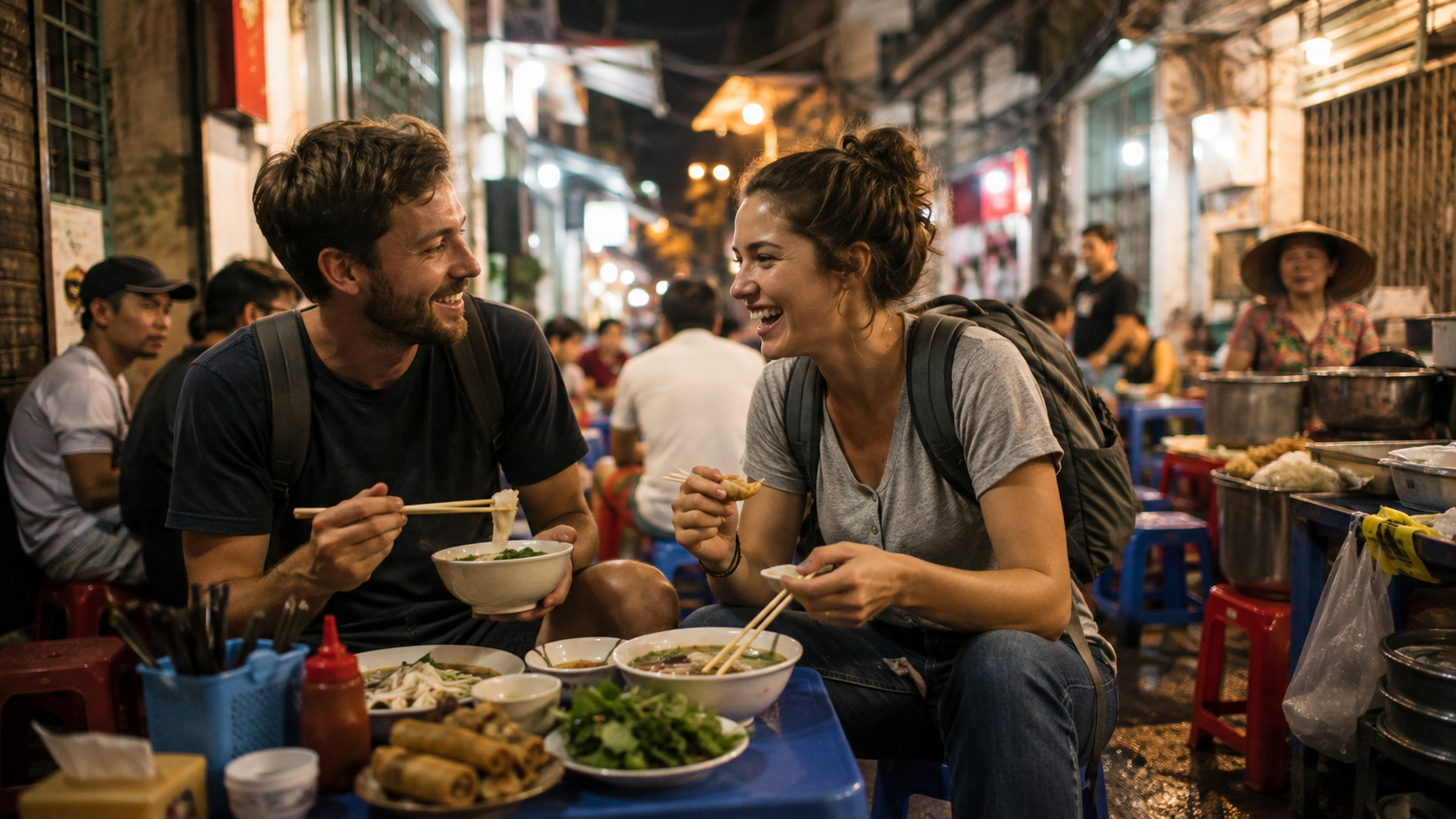
Food is one of the strongest ways to understand Vietnam. Travelers who avoid local food entirely may miss the warmth and variety of the country. Caution is sensible, but fear can make the journey narrower than necessary.
Mistake five: expecting one climate for the whole trip
Weather varies by region and season. A route crossing north, central and south Vietnam may include different temperatures, rain patterns and beach conditions. Pack and plan accordingly.
Check the region, not only the month. A beach plan, trek or cruise should be timed with more care than a general city stay.
Travelers preparing longer routes can review Vietnam travel planning essentials before fixing dates.
Mistake six: moving through cities too quickly
Vietnamese cities can feel overwhelming at first. Hanoi and Ho Chi Minh City are full of movement, sound and layered street life. Some travelers rush through them to reach landscapes, but cities often hold the best food, history and cultural energy.
Give the first city enough time. A guided walk, food experience or slow morning can turn confusion into understanding.
Cities also help travelers adjust. They provide services, transport, hotels and orientation before more remote regions.
A strong Vietnam journey usually uses cities as cultural foundations, not only arrival points.
Mistake seven: not preparing money and communication basics
Travelers should prepare basic payment habits, local cash, cards, emergency contact, mobile data and address screenshots. These simple things reduce stress.
Vietnam is easy to travel in many ways, but small practical gaps can create friction. Having the hotel address, guide contact and offline map available can save time.
Money preparation also helps with markets, taxis, small food stalls and countryside stops where card payment may not be practical.
For budget and cost awareness, Vietnam travel cost guide can support early planning.
Mistake eight: forgetting that support can be selective
Travelers do not need a guide every hour. But they may need support at key points: arrival, multi-region route design, remote transfers, family logistics, dietary needs or cultural experiences.
Selective support keeps freedom while reducing weak spots.
A complete guide should help travelers decide when to be independent and when to ask for help.
This balance often creates the best Vietnam experience.
A complete guide to Vietnam is useful only when it prepares travelers for the country’s real rhythm. Avoid planning only from famous names, underestimating transfers, leaving documents too late, fearing local food, ignoring regional weather and rushing through cities. Vietnam is not difficult when approached with respect, but it is too varied for careless planning. The best journey combines preparation with openness. It gives structure to movement, leaves space for daily life and uses local support where it truly adds value. With that balance, Vietnam becomes easier to enter and much harder to forget.
Tradition Việt
Hotline: (+84) 967 04 88 91 / (+84) 376 304 008
Email: info@traditionviet.com
Adresse: CT2A Hanoi Homeland