

Guided tours in Hanoi can help visitors understand the city’s history, architecture, food and local life within limited time. However, a programme described as guided does not automatically suit every group. Its value depends on the tour format, the guide’s expertise, the itinerary pace and the services actually included. The nine practical checks below cover group size, language, content, pickup arrangements, transport, meals, pricing and support before departure. When each point is confirmed clearly, travellers can distinguish a tour that creates meaningful context from a fixed schedule containing many stops but little time to observe. The best guided experience should make Hanoi easier to understand while preserving enough flexibility for questions, rest and the interests of the people taking part.
Define the Tour Format and Guiding Quality
The first three sections focus on tour format, guide quality and the way the programme reflects the travellers’ interests. Private tours, small-group departures and larger shared tours offer different levels of flexibility, interaction and cost. The guide also needs appropriate knowledge, clear communication and the ability to adjust the pace. The itinerary should then show the real time available at each place rather than only a long destination list. When these factors are checked in advance, travellers can choose the right level of support and avoid a programme that moves too quickly, offers generic commentary or leaves no room for questions. A well-designed tour should connect places through one understandable story instead of treating every stop as an isolated attraction.
Compare Private, Small-Group and Shared Tours
The first check is the tour type that matches the group’s size and expectations. A private arrangement usually allows more control over pickup, walking pace, breaks and interpretation, making it useful for families, older travellers or visitors with a specialised interest. The cost per person can be higher, particularly for one or two guests. A private tour planning overview can help clarify where personal flexibility creates practical value. Travellers should ask whether the vehicle, guide and tickets are genuinely private, and whether reasonable adjustments can be made during the day. The label alone does not prove that the programme can respond to the group.
A small-group tour may balance social contact, price and guide interaction when the maximum number of participants is stated clearly. It can suit solo travellers, couples and visitors who enjoy meeting other guests but do not want the scale of a coach group. The group should check the usual ages, language, walking pace and procedure when participants have different interests or mobility levels. Reviewing small-group travel considerations can help travellers compare real operating conditions rather than relying on the phrase “small group.” A limit of eight people creates a different experience from a tour that uses the same label for twenty guests.
A larger shared tour normally offers a lower headline price but follows fixed timing, several pickups and less flexibility. It may still work well for visitors seeking a general introduction and comfortable with a common pace. Travellers should examine whether compulsory shopping stops are included, how much time is spent collecting guests and whether commentary can be heard clearly. They should also ask what happens when one participant arrives late or needs additional assistance. The lowest price may provide poor value when a large part of the day is consumed by waiting or unrelated stops. The format should therefore be compared through usable sightseeing time, not only the amount shown on the booking page.
Check the Guide’s Expertise and Communication Style
The second check is the guide’s knowledge, working language and communication style. A suitable guide does more than repeat facts about the Imperial Citadel, Temple of Literature, Old Quarter or museums. They connect historical context with present-day life and adjust the depth to the group. Ask about route experience, language fluency, familiarity with children or older travellers and any specialist knowledge in food, architecture, religion or war history. A Hanoi Old Quarter guide can help travellers identify topics they may want to explore more deeply. A short pre-tour conversation often reveals whether the guide’s style matches the group.
Match the Itinerary to the Purpose of the Visit
The third check is whether every stop supports one coherent purpose. A historical day might connect the Imperial Citadel, Temple of Literature and selected old-city spaces, while a local-life tour needs more time in markets, neighbourhoods, food venues or craft communities. When too many themes are combined, the guide has little opportunity to develop a meaningful story and travellers move continuously without understanding the relationship between places. The group should choose one primary purpose and one or two supporting elements. Each stop needs a reason, sufficient time and an activity appropriate to the participants. A clear theme also makes it easier to remove a secondary visit when weather, traffic or fatigue affects the schedule.
Time at each destination matters as much as the destination name. A half-day schedule listing six or seven places may allow only photographs and brief explanations. Travellers need to review walking time, vehicle time, meals and protected breaks. In the Old Quarter, moving slowly through streets, alleys and trading areas can reveal more than a quick vehicle circuit. At museums and monuments, guests need time to observe after the guide has finished explaining. A local experience planning guide can help compare the time and physical demands of markets, walking routes, food activities and craft visits. A balanced itinerary protects the central experience and treats secondary stops as adaptable.
Check Operations, Pricing and Support During the Day
The remaining three sections examine how the tour operates from pickup to completion. Meeting points, transport, walking distance, meals and tickets need clear descriptions so travellers can understand the complete day. The quotation must identify inclusions, local payments, supplements and cancellation or date-change conditions. Finally, the group needs to know who responds when rain, traffic, a closure or a health issue interrupts the plan. A well-run tour requires more than an informed guide. It needs realistic timing, transparent pricing and one responsible support process. When these elements are confirmed in writing, guests can focus on Hanoi rather than spend the day resolving avoidable misunderstandings about vehicles, entrances, meals or services that were assumed to be included.
Confirm Pickup, Transport and Walking Demands
The fourth check is the pickup point, starting time and form of transport. Some tours collect guests only within a defined central area, while others require arrival at a meeting point. Travellers should know how the guide or driver will make contact, the permitted waiting time and any charge for a hotel outside the collection zone. Vehicles need enough passenger space and luggage room when the tour takes place before check-in or after checkout. Walking programmes should state the approximate distance, surface, stairs and opportunities to rest. These details are particularly important for children, older guests and travellers with limited mobility, because a short distance on a map can still involve heat, traffic crossings and uneven pavements.
The fifth check is how transport connects with the individual stops. Many Old Quarter streets are narrow, restricted or accessible only after walking from the vehicle, so door-to-door service may not apply everywhere. Cyclo, electric-vehicle, bicycle and motorbike activities need clear duration, safety equipment and weather conditions. Excursions to Bat Trang, Duong Lam or other outer areas should include the full transfer time. A Vietnam transport planning guide can help travellers assess door-to-door movement rather than only distance. Traffic, parking and collection arrangements can change the schedule substantially, particularly when the tour begins or finishes during peak hours.
Read the Price Scope and Local Payments
The sixth check is the full inclusion and exclusion list. The quotation should state whether the guide, vehicle, entrance tickets, meals, drinking water, activities, pickup charges and taxes are included. A low rate may leave major tickets or several payments to the traveller at each stop. Private services need to clarify whether the rate applies per group or per person, while child rates require defined ages and conditions. Visitors should ask for the expected complete cost rather than relying on a starting price. Comparing two tours becomes meaningful only when they provide similar guiding hours, transport, entrances and meal arrangements. Clear pricing also reduces the need for the guide to explain unexpected charges during the activity.
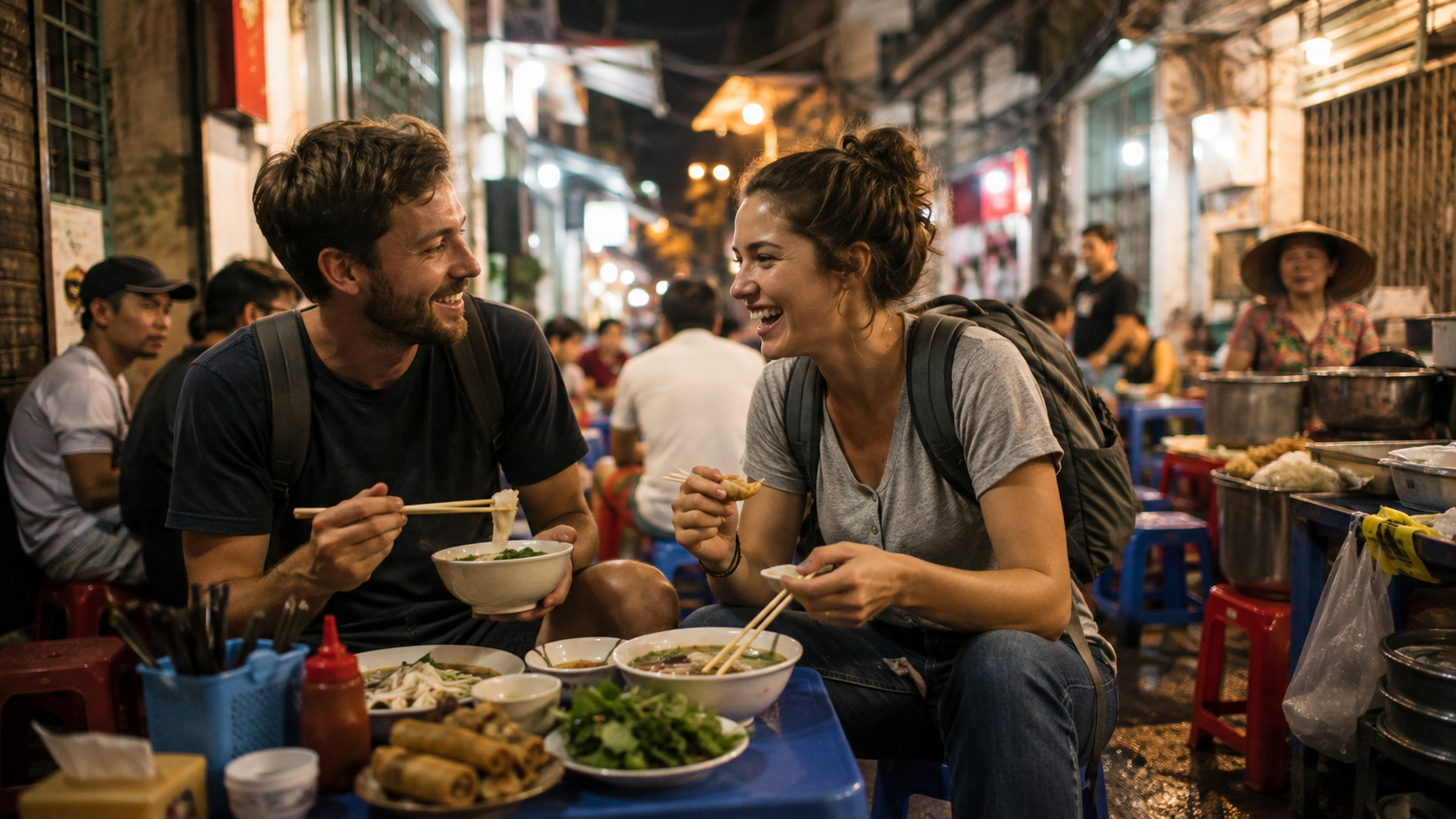
The seventh check concerns meals and optional experiences. A food tour should identify the approximate number of tastings, drink policy, portion style and ability to handle allergies or dietary restrictions. A half-day programme may include snacks rather than a full meal, while a full-day itinerary should explain whether lunch is in a restaurant, family setting or tourist venue. Cooking classes, performances, cyclo rides and craft activities need to be marked as included or optional. When a traveller declines an element, the group should know whether it can be replaced with free time or another visit. Meal quality and relevance are more important than the total number of dishes written in a promotional description.
The eighth check is the deposit, cancellation and amendment policy. Travellers need the free-cancellation deadline, non-refundable portion and process when participant numbers change. Tours involving advance tickets, private vehicles or limited-capacity activities normally have stricter conditions than a simple walking programme. The provider should explain whether poor weather leads to cancellation, postponement or an alternative route. When a flight or train delay makes the guest late, the group needs to know whether the start can move or the booking is treated as a no-show. Written terms allow travellers to understand financial risk before payment and prevent different expectations when a change occurs close to departure.
Prepare Alternatives and Confirm the Support Contact
The ninth check is the alternative plan for weather, traffic or an activity that cannot operate. Heavy rain can affect walking, cycling and outdoor heritage spaces, while heat increases the difficulty of even a moderate route. Attractions may also close areas, change hours or host private events. A strong tour can use museums, food experiences, covered craft spaces or a shorter outdoor section without losing the main theme. The alternative should not consist only of an unrelated shopping stop. Travellers should understand which parts are fixed, which can change and whether a replacement creates a difference in price, duration or physical demands.
The group also needs to know who can authorise an amendment and how additional costs are approved. The guide may change the order of visits, while a replacement vehicle, new tickets or extended hours may require the coordinator’s and traveller’s agreement. The support number should operate before pickup and throughout the programme. When one guest becomes tired or wishes to return early, the options for a taxi, private vehicle or split group need discussion. Good support does not mean every amendment is free. It means travellers receive clear choices, prices and consequences before deciding, while the guide can continue supporting the remaining participants without creating confusion about responsibility.
Before the tour, guests should receive the final schedule with pickup time, guide name, contact number, clothing advice, useful cash, visits, meals and expected finish. Information about children, older travellers, allergies, walking limits and special interests must appear in the final briefing. The group should send the exact hotel location because Hanoi contains similarly named properties and streets. A short final review allows the guide to prepare suitable content, helps the driver arrive at the correct entrance and gives travellers a realistic understanding of the day. When everybody uses the same current information, the tour begins with fewer delays and more time for the cultural and local experiences the group selected.
Choose a Tour That Reveals More of Hanoi
Guided tours in Hanoi create the strongest value when nine practical areas are checked before departure: tour format, guide expertise, itinerary purpose, pickup, transport, price scope, meals, amendment conditions and support. The best programme does not need the longest attraction list. It needs a coherent story, appropriate pace and services that suit the participants. Tradition Việt can use the available time, ages, interests, budget and activity level to propose a private or small-group experience with realistic timing. When content, costs and responsibilities are confirmed early, travellers gain more time to observe, ask questions and understand the city. The guided day then becomes a meaningful part of the Vietnam journey rather than a rapid transfer between famous Hanoi landmarks.
Tradition Việt contact information
Hotline: (+84) 967 04 88 91 / (+84) 376 304 008
Email: info@traditionviet.com
Address: CT2A Hanoi Homeland, Hanoi, Vietnam