

A Hanoi street food walk can become one of the most memorable parts of a Vietnam journey when it is planned at a realistic pace. The experience is not limited to pho, bun cha or egg coffee. It also reveals eating times, alleyways, long-established stalls, ordering customs and the social habit of sitting on low stools. A programme containing many dishes is not automatically better when portions are excessive, the route lacks logic or dietary needs remain unclear. The six reasons below explain why this activity can become a genuine trip highlight, while also showing how to choose the timing, tasting volume, guide and level of local support. Good planning allows flavour, culture and everyday observation to reinforce one another.
Why a Hanoi Street Food Walk Adds Cultural Depth
The first three reasons concern the cultural depth of the experience. Hanoi has a distinctive culinary identity shaped by restrained seasoning, regional ingredients, specific eating times and the use of pavements and small shopfronts. The Old Quarter also lets travellers move from food into stories about historic trading streets, narrow houses, markets and resident life along a compact walking route. With a knowledgeable local guide, each stop becomes part of an urban narrative rather than an isolated tasting. The walk can therefore connect flavour, history and observation without requiring a full day. Its strongest value comes from understanding why the food belongs in that setting, not merely from recording the names of several famous dishes.
Experience the Culinary Identity of the Capital
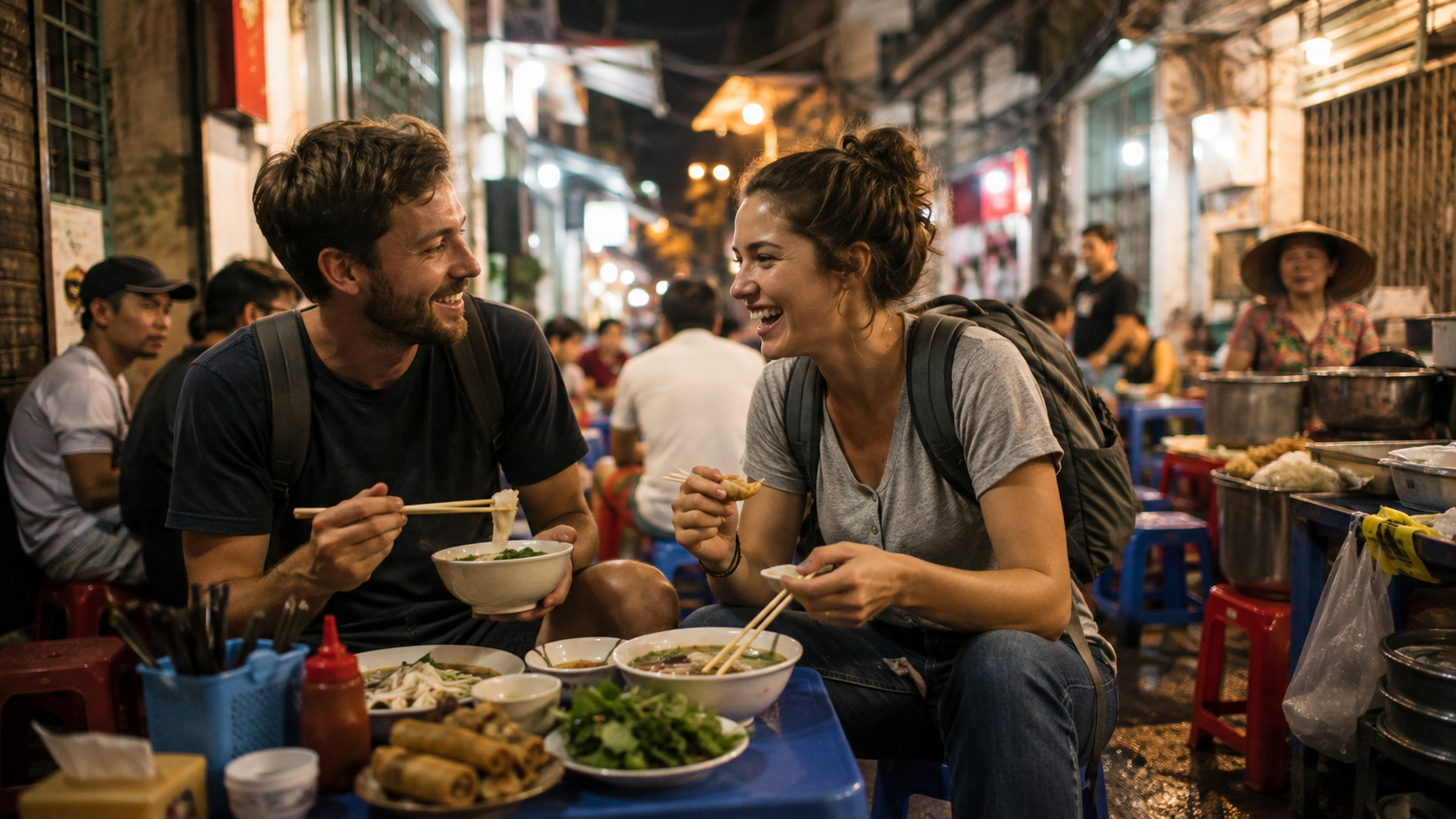
The first reason is the opportunity to experience the culinary identity of the capital within a concentrated area. Hanoi dishes often follow particular moments of the day, including banh cuon at breakfast, bun cha at lunch, afternoon snacks and coffee as a social pause. A strong route does not attempt to collect every famous food. It selects representative flavours so travellers can compare broths, herbs, grilling, dipping sauces and overall balance. Hanoi cooking is often associated with careful layering and measured seasoning rather than extreme sweetness or heat. This character makes the walk a clear introduction to northern food culture. Vietnam Tourism likewise presents the capital’s street food as both highly regional and closely connected to dishes that remain distinctive to Hanoi.
Learn More Through a Knowledgeable Local Guide
The second reason is that a local guide can turn an eating session into a learning experience. They explain which dishes belong to particular hours, how to mix or dip them, which ingredients may be unfamiliar and why a small stall retains loyal customers over many years. This support matters with fish sauce, shrimp paste, offal, raw herbs or components not fully described in English. A Hanoi food tour guide can help travellers prepare questions before departure. During the walk, the guide can order tasting portions, communicate vegetarian needs and replace a stop when a venue has closed or sold out.
A capable guide does not turn the experience into a long lecture or a race through too many eateries. They observe eating speed, fullness and the interests of the group, then adjust the route. Travellers interested in the Old Quarter may receive more context about trading streets and tube houses, while food-focused guests may want deeper explanation of stock, ingredients and cooking technique. Families benefit from shorter stories and details children can see or taste directly. Vietnam Tourism’s published street-food walk example also emphasises the value of telling the guide about preferences and restrictions before the first stop, showing how flexibility supports a more comfortable tasting experience.
Connect Food with the Old Quarter and Daily Life
The third reason is the way the walk connects food with urban space. In the Old Quarter, travellers can observe shops opening onto the pavement, vendors preparing ingredients, residents moving through narrow lanes and businesses changing according to the hour. Food is therefore understood in its real setting. Bun cha at lunchtime, a snack in late afternoon or coffee in a quiet alley creates a different impression when experienced at the appropriate moment. Travellers can review an Old Quarter planning guide before deciding where the food walk should begin or finish. The city becomes part of the tasting rather than a background seen only between restaurants.
Walking also reveals transitional spaces that are easily missed when travelling by vehicle. The group may pause beside a small communal building, notice a street associated with a former trade or observe how homes and businesses share a narrow frontage. These are not major monuments, but they make Hanoi easier to understand. A coffee stop in the middle of the route is also more than a drink. It gives the group time to rest, compare impressions and watch the city at a slower pace. Vietnam Tourism describes the Old Quarter as a district where speciality eateries, hidden alleys, temples and coffee shops can all be explored on foot, reinforcing the value of combining food with neighbourhood observation.
The experience also benefits from respectful interaction with vendors and small local spaces. A manageable group can order, ask about eating methods and listen to explanations without occupying an entire shop. Travellers see why an eatery serving only one or two dishes may remain successful through consistency and loyal local customers. This helps explain why many Hanoi establishments do not need long menus or elaborate decoration. A guide to Hanoi food tour activities can help distinguish meaningful stops from repetitive tastings. Participants should still request permission before close photographs, avoid blocking entrances and never ask vendors to repeat their work merely for video.
How to Plan an Enjoyable and Comfortable Food Walk
The remaining three reasons concern the practical design of a walk that is enjoyable, safe and compatible with the wider itinerary. The activity normally lasts several hours, takes place outdoors and involves repeated changes between walking, low seating and short periods of standing. Timing, route length, portion size, health needs, allergies and weather alternatives should therefore be confirmed in advance. A good programme does not prove its value through the largest number of stops. It protects digestion, includes rest and finishes somewhere convenient. When these operating details are clear, the experience becomes flexible enough for couples, friends, families and first-time visitors. Careful structure also makes it easier to preserve spontaneity without creating avoidable discomfort.
Choose the Right Timing, Route and Portion Sizes
The fourth reason is that the activity fits into many itineraries when the timing is chosen carefully. Morning works well for noodle soups, banh cuon and market rhythms, while late afternoon or evening can support grilled dishes, snacks, fresh beer and coffee. The walk should not begin immediately after a large hotel breakfast or on the evening of a long-haul arrival. Travellers need an appetite, suitable footwear and enough energy for uneven pavements. A session lasting several hours is usually more effective than a full-day food programme because curiosity remains high and the walk can still connect with Hoan Kiem Lake or another Old Quarter visit. A sample Hanoi food itinerary can help place the activity within the city stay.
The fifth reason is that route length and portion size can be adapted to the group’s fitness and curiosity. A well-designed programme selects stops close enough that most of the time is spent tasting, listening and observing rather than covering unnecessary distance. Each dish should be a tasting portion or shared, especially when several stops are planned. If one main dish is too large, later foods become obligations rather than discoveries. The guide should know where seating is available, where the nearest toilet is and which sections involve heavy traffic. Older travellers and young children usually need a shorter route, clear breaks and fewer venues that require long periods on very low stools.
The pace must also reflect weather and street density. On hot days, a later afternoon departure, drinking water and stops with airflow can make the experience more comfortable. During rain, large umbrellas are difficult in narrow lanes, so light rain protection and a covered alternative route are often more practical. Weekend conditions can change pedestrian flow and crowd levels in parts of the Old Quarter, making a precise meeting and finishing point important. These small details determine whether the group still has enough energy to appreciate the final tasting. Reviewing practical Hanoi food tour tips can help identify operational questions before booking. A strong tour can shorten itself without losing its main narrative.
Adapt the Walk to Dietary Needs
The sixth reason is that the walk can suit varied dietary profiles when information is provided accurately. Travellers should disclose allergies, vegetarian requirements, religious restrictions, spice tolerance and whether fish sauce, shrimp paste or animal-based stock is acceptable. Vegetarian guests should clarify the use of eggs, dairy and animal-derived seasonings. Small eateries may not have completely separated preparation areas, so people with severe allergies need to understand practical limits and may require safer alternatives. Drinking water, clean hands, personal medicine and small initial portions also support adaptation. Vietnam Tourism advises choosing busy stalls with fresh-looking ingredients and eating when local customers do, useful principles that should complement individual medical caution rather than replace it.
Respect Local Spaces and Maintain Clear Support
A genuine highlight also depends on respectful behaviour in local spaces. Groups should remain manageable, speak quietly in alleys, avoid occupying every seat during peak hours and ask before photographing vendors. Purchases should not be compulsory at every stop. The guide needs to prioritise active local businesses and explain when a venue is replaced because it has closed, sold out or become too crowded. This approach spreads spending among small operators without turning daily life into a performance. It also helps visitors understand that many Hanoi foods are tied to particular hours and specialist vendors. Vietnam Tourism’s Hanoi food guide describes a broad range of local dishes beyond the best-known names, supporting a selective route rather than one repetitive standard menu.
Finally, the walk needs the right position within the whole Hanoi programme. It can work as a gentle introduction on the second day, an afternoon following cultural visits or a final city highlight before departure. It should not finish immediately before an overnight train or a tightly timed flight because traffic and service duration can vary. One support contact should confirm the meeting place, timing, group size, tasting quantities, dietary information and finishing point. Clear coordination allows the group to return to the hotel or continue independently without managing several suppliers while tired. It also ensures that the food walk supports the wider Hanoi stay rather than creating pressure around the next confirmed transport service.
Make the Food Walk a Genuine Trip Highlight
A Hanoi street food walk can become a genuine trip highlight through six connected strengths: the capital’s culinary identity, cultural interpretation from a local guide, the relationship between food and the Old Quarter, easy itinerary placement, adaptability to dietary needs and respectful local coordination. Quality should not be measured by the number of dishes. A compact route, moderate portions, suitable timing and accurate health information are what preserve curiosity until the final stop. Tradition Việt can use the city schedule, group size and dietary profile to suggest a balanced walk with meaningful context and practical logistics. The strongest experience helps travellers taste Hanoi, understand its everyday rhythm and still feel comfortable enough to enjoy the rest of the journey.
Tradition Việt contact information
Hotline: (+84) 967 04 88 91 / (+84) 376 304 008
Email: info@traditionviet.com
Address: CT2A Hanoi Homeland, Hanoi, Vietnam