
Backpacker friendly Vietnam tours can still deliver strong value without reducing the journey to the cheapest bed, the longest transfer or the fastest route. For independent-minded travellers, value comes from using money where it protects time, safety and access, while keeping simple the parts that do not need extra comfort. A compact itinerary, well-located accommodation, suitable transport and a few carefully chosen experiences usually perform better than a crowded programme full of low-cost inclusions. The 12 ways below show how to control the route, season, lodging, meals, bookings, contingencies and local support. When each decision has a clear purpose, backpacker travel becomes flexible and culturally rich rather than uncertain or exhausting.
Build the Budget Foundation Before Booking
The first six ways concern decisions that should be settled before payment. Backpackers can choose among hostels, trains, buses, flights and hundreds of activities, but that variety can easily produce an oversized route or many small costs. Effective saving does not mean cutting every category equally. It means identifying the elements that determine whether the trip remains safe, comfortable and worth the time. Route sequence, stay length, season, accommodation location, transport type and principal experiences should support one another. Once this foundation is clear, travellers can keep the remaining details flexible, use local services more confidently and avoid paying for stages that add fatigue without adding meaningful discovery.
Reduce the Route and Define the Real Budget
The first way is to reduce the route to a clear geographic sequence. On a seven-to-ten-day trip, Hanoi with Ninh Binh and Ha Long, or Da Nang with Hoi An and Hue, usually creates better value than repeated flights across all three regions. Every additional destination introduces tickets, transfers, luggage handling, check-in and waiting time. These costs are not always prominent in the first quotation, yet they quickly raise the real budget. Travellers can use a practical affordable Vietnam overview to compare route options, then select one or two experiences that matter most. A longer cross-country journey is possible, but it needs more days and fewer secondary stops.
The second way is to define the total budget and the minimum standards that should not be sacrificed. Separate accommodation, transport, food, entrance fees, activities, insurance and contingency funds, then identify which categories protect the journey most. A clean bed, a safe location, a reasonable overnight connection and dependable transport usually deserve priority over decorative room features or additional attractions. Do not build the budget only from advertised daily prices because luggage, station transfers, independent meals and change fees can alter the total substantially. A clear Vietnam travel budget framework helps travellers make consistent decisions and recognise when a cheaper-looking service transfers important costs elsewhere.
Choose Timing, Accommodation and Transport Carefully
The third way is to choose timing according to the route rather than searching for one cheap season for the entire country. Northern, central and southern Vietnam, as well as the major islands, follow different weather patterns. A low rate offers little value when the principal activity cannot operate. Trekking depends on rainfall, visibility and trail conditions, while beach stages depend more on waves and boat schedules. Shoulder periods can balance cost and visitor numbers, but the itinerary needs alternatives. Check conditions close to departure and place weather-sensitive activities before the final day in each destination. This structure preserves the possibility of rescheduling instead of forcing travellers to lose the experience or pay for an urgent replacement.
The fourth way is to choose accommodation by location and function, not only by bed price. A hostel far from food, transport terminals or the main walking area can create repeated short journeys and reduce useful time. Check walking distance, check-in hours, lockers, ventilation, bathrooms, laundry facilities and quiet rules. In dormitories, review bed size, curtains, power sockets and luggage storage. Paying slightly more for a central position or a smaller dorm can reduce total transport costs, improve sleep and lower the risk of returning late through an unfamiliar area. Accommodation value comes from the way the property supports the whole day, not from the lowest number shown in a search result.
The fifth way is to combine transport according to each stage instead of automatically selecting the cheapest ticket. An overnight train may save one hotel night, but only when the arrival time, berth quality and ability to rest suit the traveller. Buses work well on moderate routes, while a flight can be sensible when the distance is long and time is limited. Add the fare to luggage, transfers to the terminal, waiting meals and the hours lost. On some routes, a shared vehicle or small group can divide costs while keeping a clear schedule. The objective is to optimise the complete itinerary rather than proving that every individual ticket was purchased at the lowest possible price.
Prioritise Valuable Local Experiences
The sixth way is to invest in several local experiences that can create lasting memories. A small cooking session, a Ninh Binh boat ride, a guided mountain walk, a food tour or a craft-village activity may provide more value than a long list of paid photo stops. Travellers should choose experiences with clear inclusions, enough time and meaningful contact with the destination. A guide to Vietnam local experiences can help compare budget, difficulty and logistics before booking. Free periods still matter because walking, sitting in a neighbourhood cafe, visiting a market or observing daily life can add cultural depth without making the itinerary expensive.
Control Costs While the Journey Is Operating
The next six ways focus on keeping the budget stable after the route has been chosen. Many journeys exceed their estimate not because of one large payment, but because of repeated small costs such as tourist-area meals, luggage charges, late pickups, last-minute activities or unclear changes. Backpackers need both flexibility and structure. They should read service details, plan meals, protect important connections, retain a reserve and understand when local support is useful. Once these operational points are prepared, travellers can still change plans according to energy and interest without constantly solving avoidable problems. This approach protects the main experiences while preserving the freedom that makes independent travel attractive.
Review Services, Meals and Transport Connections
The seventh way is to read inclusions and exclusions before booking. A low-priced tour may omit entrance tickets, drinking water, meals, pickups, guides or holiday supplements, making the final cost higher than expected. Ask for the hotel or precise standard, vehicle type, group size, start time, real duration and the policy when services change. For shared activities, confirm local payments and luggage limits. Travellers considering organised stages can compare small-group tour costs to understand when shared transport and guiding create value. Quotations should be compared on the same service structure, not only by the final number, so travellers know which parts they can organise independently.
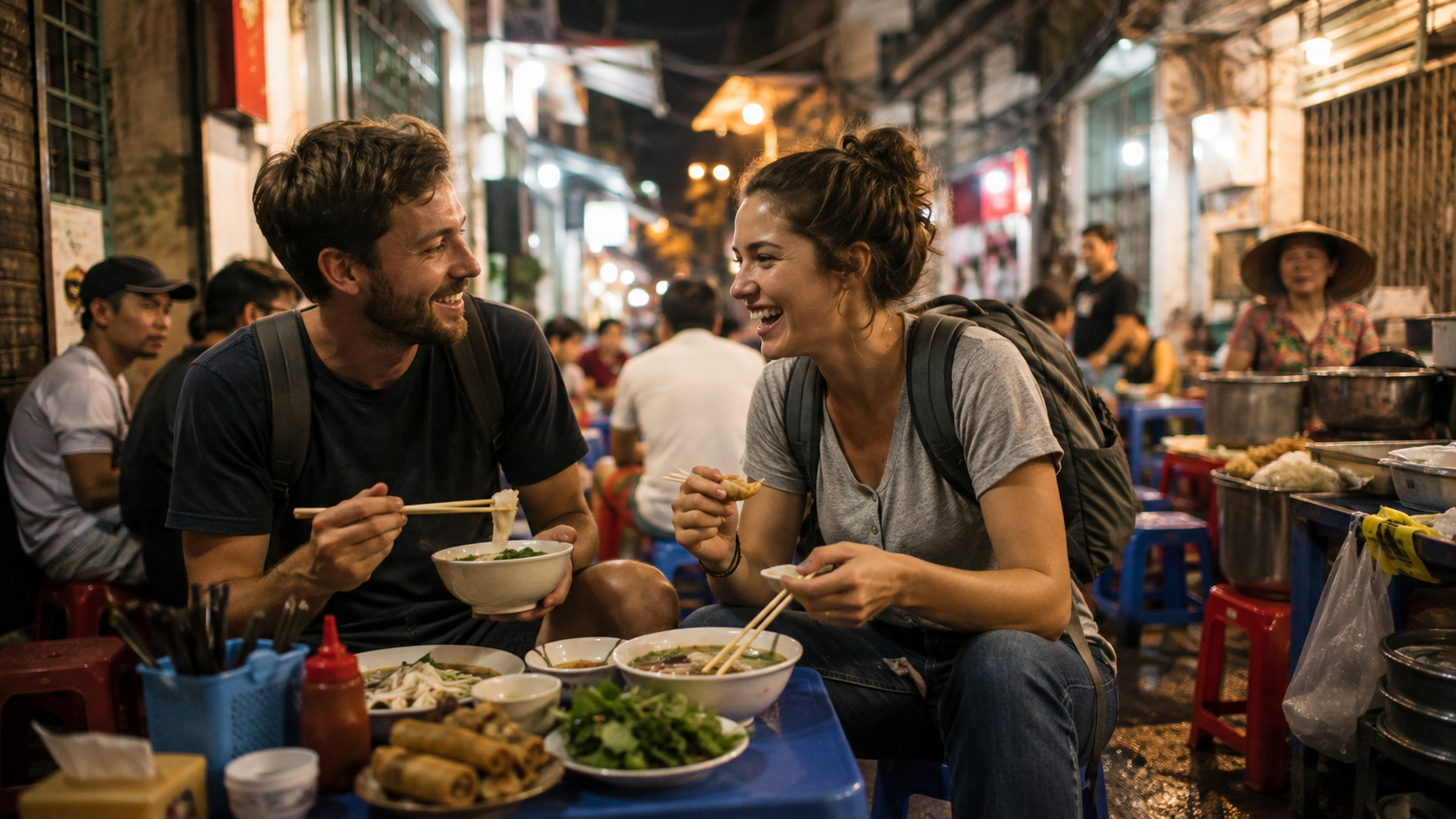
The eighth way is to organise meals according to location and travel rhythm. There is no need to buy a package containing every meal because local food offers choices across many budgets. However, long transfer days, late arrivals and remote areas require a clear plan to avoid expensive or inconvenient decisions. Choose busy local establishments, visibly priced dishes and safe drinking water, and confirm the cost of seafood or other items sold by weight. Carrying a simple snack on long stages reduces hurried purchases at rest stops. A daily food allowance is more useful than one vague total for the entire journey because it shows when a special meal remains affordable and when spending should return to a simpler level.
The ninth way is to protect important connections with realistic buffers. A cheap ticket loses value when a bus arrives too close to a train, a flight connection leaves no room for luggage or a tour finishes immediately before an overnight departure. Add time at transport hubs, especially when different suppliers manage each stage. Sea excursions, trekking and cruises should occur before the last day in a destination so that a change remains possible. One night near a station or airport can be better value than a cheaper distant bed followed by an urgent taxi or replacement ticket. Buffer time is not wasted expenditure. It is operational insurance for the wider route and every booking that depends on it.
Keep a Reserve and Preserve Flexibility
The tenth way is to keep a contingency reserve separate from activity money. It may cover laundry, basic medicine, replacement transport, an additional night, luggage charges or meals during a schedule change. When contingency money sits inside the sightseeing budget, every small problem forces the traveller to cancel a principal experience. The reserve does not need to be large, but it should be accessible through a practical combination of cash and payment methods. Keep document copies and support contacts available offline as well. This preparation helps travellers respond calmly when a phone battery fails, a card does not work or transport is delayed, and prevents a minor inconvenience from becoming an expensive chain of decisions.
Protect Safety and Maintain Local Support
The eleventh way is not to save on elements directly connected to safety and health. Select transport with clear information, accommodation with dependable reviews, outdoor activities with suitable equipment and insurance that matches the route. For overnight vehicles, check pickup and drop-off points, seat or berth type and luggage handling. Trekking, diving and boat activities may require professional guidance even when a cheaper informal option appears available. Drinking water, sun protection, mosquito protection, personal medicine and adequate rest should also sit within the budget. A journey that is inexpensive but leaves the traveller exhausted or exposed to unnecessary risk does not provide strong value, regardless of how low the original booking price looked.
The twelfth way is to retain one support contact for complex sections. Backpackers can organise much of the route independently, but long-distance transfers, mountain excursions, cruises, island trips or itineraries with several connections may benefit from a local review. Good support does not turn the journey into a rigid package. It confirms timing, conditions, pickup points, weather alternatives and responsibility when plans change. A practical Vietnam travel guide can help travellers identify which sections need assistance. Sharing dates, budget, draft route and the desired level of independence allows support to remain limited and relevant, preserving freedom while reducing mistakes that consume both time and money.
Keep Strong Value Without Losing Independent Freedom
Backpacker friendly Vietnam tours keep strong value when these 12 ways operate as one plan. A compact route, clear budget, suitable season, well-located accommodation and transport chosen by total journey time reduce cost without making the experience shallow. Reading service details, organising meals, protecting connections, maintaining a reserve and safeguarding health preserve that value once travel begins. Backpackers do not need to purchase the cheapest version of everything or manage every complex stage alone. Tradition Việt can support the sections that require local coordination while leaving travellers in control of their pace and independent style. The best-value journey is one that remains affordable, workable and rich in genuine discovery from arrival to departure.
Tradition Việt contact information
Hotline: (+84) 967 04 88 91 / (+84) 376 304 008
Email: info@traditionviet.com
Address: CT2A Hanoi Homeland, Hanoi, Vietnam