
Guided tours in Ho Chi Minh City can help travellers connect history, architecture, food and urban life within a manageable period. However, the city is extensive, traffic changes throughout the day and major attractions serve very different interests. A programme with many landmarks does not automatically create a strong experience when the route lacks logic, the guide is unsuitable or each stop is too brief. Before booking, assess 13 points covering purpose, tour format, route scope, guide quality, group size, pace, transport, meals, free time, total cost, flexibility, support and possible extensions. When these elements are reviewed together, the tour becomes a useful framework for understanding the city rather than a crowded schedule. A structured comparison also makes it easier to recognise genuine value beyond an attractive headline price or a long attraction list.
Build the Right Framework for a Ho Chi Minh City Tour
The first seven points form the framework of the programme: travel purpose, tour format, route scope, guide quality, group size, pace and transport. These choices directly influence how every hour in the city is used. Many central landmarks are relatively close, while Cholon, riverside districts, residential areas, Cu Chi and departure points for the Mekong Delta require different planning. A tour selected only by the number of stops may spend much of its time boarding vehicles or waiting for the group. A well-designed framework should connect the sites through a clear story, match the physical needs of participants and leave enough space to observe local life. The detailed Ho Chi Minh City travel guide can support this first route-planning stage.
Define the Purpose and Tour Format
The first point is what you want to understand about the city, and the second is the tour format that best supports that goal. Travellers interested in modern history may prioritise the Independence Palace and War Remnants Museum, while those drawn to urban architecture may focus on Dong Khoi Street, the Central Post Office, the Opera House and other central buildings. Walking works well for compact routes, private vehicles help connect wider areas, and motorbike or cycling tours require closer attention to safety and personal confidence. Vietnam’s national tourism platform identifies Dong Khoi, the Central Post Office and the Opera House among the central landmarks, so the theme should be chosen before the schedule is filled with unrelated stops.
Check Route Logic and Time at Each Stop
The third point is route logic. Central attractions should be grouped geographically to reduce backtracking and vehicle waiting. A modern-history session may connect the Independence Palace with the War Remnants Museum, while an architecture and city-life route could follow Dong Khoi, Nguyen Hue, the Central Post Office and market districts. The Palace is an official historical site open to visitors daily, while the museum presents thematic exhibitions dealing with war and its consequences, so both require enough time for reading, observation and discussion rather than a brief photo stop. Request the expected time at each location and the transfer time between stages before deciding whether the programme is realistic.
The fourth point is geographic scope. Ho Chi Minh City is more than the central area of District 1. Cholon, riverside neighbourhoods, residential districts, Cu Chi and several regional departure points require different routing. A half-day tour should normally focus on one theme and one cluster. A full-day programme may connect two clusters, but it must still account for traffic, meals and fatigue. Do not accept a schedule that combines central sightseeing, Cu Chi and several shopping stops without a credible timing plan. A wider route requires appropriate transport, an earlier departure and a response when traffic takes longer than expected. The Ho Chi Minh City tours overview can help compare city-centre and wider-area formats.
The fifth point is the real time available at each place. An eight-hour programme does not provide eight hours of experience when hotel pickups, transport, ticketing and group assembly occupy a large share. Ask when the first visit begins, how long lunch lasts and when the tour is expected to finish at the hotel. Museums and historical sites may require time to read and process difficult material. Markets, neighbourhoods and food experiences lose value when the group moves too quickly to observe or communicate. A strong itinerary distinguishes primary stops, secondary stops and places seen only from outside. This allows travellers to understand where detailed guiding will occur and where the programme offers only a brief orientation.
Assess the Guide, Group Size and Transport
The sixth point is guide quality. Confirm the working language, relevant experience, ability to explain different perspectives and confidence in handling sensitive historical questions. A strong guide does not simply repeat dates. They establish context, distinguish periods and connect the past with the contemporary city. Storytelling and age-appropriate explanations matter for families, while returning visitors or specialist groups may value deeper knowledge and references. Read reviews that describe what the guide actually contributed rather than relying only on an average score. Also ask whether the named guide is confirmed or may be changed, and how the company maintains quality when a substitution becomes necessary close to the departure date.
The seventh point concerns group size and transport. Small groups usually hear explanations more easily, ask more questions and move efficiently through markets or narrow spaces. Large groups may reduce the price but require more time for pickup, boarding and assembly. Ask for the maximum number of travellers, vehicle type, air conditioning, seat belts, luggage space and collection arrangements. When motorbikes are used, confirm who drives, what helmets are supplied and how insurance applies. For walking tours, review distance, stairs and rest options. Transport should support the route and the travellers rather than being chosen only because it looks adventurous in promotional material. A practical vehicle and meeting system can save more time than adding another attraction.
Review Daily Experience, Costs and Operational Support
The remaining six points examine how the tour works in practice: pace, meals, free time, cost, flexibility and support. These factors determine whether a well-chosen route still feels smooth during the day. Ho Chi Minh City can be hot, receive sudden rain and become congested during peak periods. Weekday and weekend activity patterns may also differ. A reliable programme therefore needs buffer time, transparent inclusions and a clear way to communicate when travellers separate from the group or the sequence changes. You should know which activities are essential, which may be skipped and which expenses are paid locally. Transparency gives travellers useful control without removing the structure that keeps the group moving and protects the most important experiences.
Assess Pace, Meals and Free Time
The eighth point is pace. Check pickup time, the number of vehicle exits, walking periods, breaks and how continuously the activities are scheduled. An early departure may avoid heat or crowds, but a programme continuing into the evening needs appropriate food and rest. Families, older guests and travellers arriving after a long flight should consider a lighter option. When the tour includes several emotionally demanding historical sites, add a break in a cafe, park or riverside area. A balanced pace helps travellers maintain concentration and prevents the most important places near the end of the day from being experienced in a state of exhaustion. It also creates a realistic buffer when traffic or ticket queues take longer than expected.
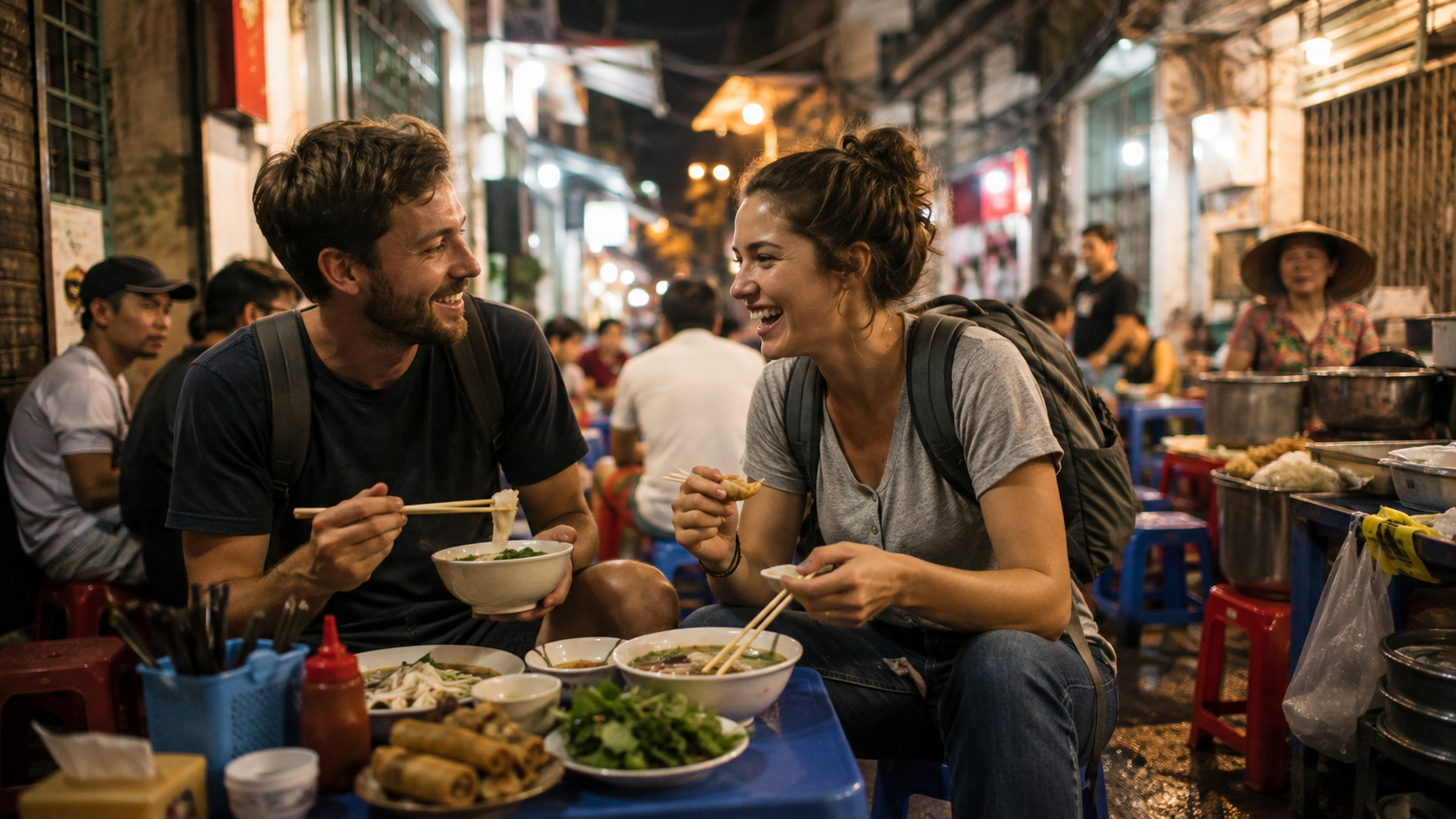
The ninth point is meals and food experiences. Establish whether the tour includes a full meal, tastings or only a restaurant stop where travellers pay separately. Ask about the number of dishes, drinks, vegetarian options, allergies and the hygiene standards used to select vendors. A strong culinary programme explains ingredients, ordering customs, neighbourhood history and how local people eat rather than only providing a large amount of food. Travellers who want this emphasis can compare a dedicated Saigon food tour with a general sightseeing programme. Even on a history or architecture tour, a well-planned lunch creates a useful rest period and makes the city experience feel more natural.
The tenth point is free time. A break at Ben Thanh Market, Nguyen Hue Walking Street or a shopping district is useful only when the meeting point, return time and contact method are clear. Ask whether the guide remains nearby and what happens when someone returns late. A private tour may extend the time at a favourite place and shorten another stop. A shared programme must balance individual preferences with the group schedule. Good free time is not an empty period that reduces the organiser’s responsibility. It is a structured opportunity to shop, drink coffee or observe at a personal pace while preserving a dependable way to reconnect with the guide and continue the programme without unnecessary delay.
Clarify Total Cost and Flexibility
The eleventh point is the total cost. Read the price together with transport, entrance tickets, guiding, meals, water, insurance and pickup supplements outside central districts. A low opening price can increase significantly when tickets to the main attractions or major activities must be purchased separately. Gratuities, holiday charges and child policies should also be stated. Compare programmes through the same inclusion table instead of looking only at the headline amount. Real value comes from guide quality, time at each stop, group size and support. A more expensive tour can be reasonable when it reduces waiting, avoids repeated extra payments and provides a route that would be difficult to organise independently in the available time.
The twelfth point is flexibility. Ask which parts can be changed before departure, which can be adjusted during the tour and which limits come from tickets, opening hours or supplier conditions. Heavy rain, traffic or public events may require the sequence to change. A good organiser provides an alternative of comparable value instead of simply removing the affected stop. Private tours usually allow more adjustment but still follow the operating hours of historical sites. Shared programmes must protect the interests of the group. Reliable flexibility is not a promise that every request will be accepted. It is a clear process for changing the route while protecting its main purpose and explaining any additional cost before the traveller agrees.
Check Support and Choose Suitable Extensions
The thirteenth point is support before, during and after the tour. Before the day begins, receive the contact name, telephone number, pickup location, departure time and guide identification. During the programme, the organiser should have a response when a traveller feels unwell, property is lost, transport is delayed or a site closes. After the activity, feedback and lost-property procedures should remain available. Regional extensions should be planned separately rather than forced into an already crowded city day. Travellers can compare South Vietnam tours or a Mekong Delta tour when they have additional days. Checking all 13 points allows the guided experience to remain informative, comfortable and operationally dependable.
Plan a Smoother Ho Chi Minh City Tour
Guided tours in Ho Chi Minh City work best when purpose, route, guide, group size, pace, cost and support are treated as one system. These 13 points help travellers identify whether a programme genuinely fits their needs or only appears attractive in its introduction. Before booking, request a timed itinerary, maximum group size, inclusion list and change conditions in writing. A smaller number of sites explained carefully usually creates more value than many landmarks passed in a hurry. Tradition Việt can design private or small-group tours around your available time, interests and preferred activity level, while connecting the city logically with suitable extensions in southern Vietnam. The result should feel like a coherent introduction to the city rather than a race through destination names.
Tradition Việt contact information
Hotline: (+84) 967 04 88 91 / (+84) 376 304 008
Email: info@traditionviet.com
Address: CT2A Hanoi Homeland, Hanoi, Vietnam