
A day of Vietnam local experiences does not always need to begin with a major attraction. A market just opening, a local breakfast stall, a lane carrying the smell of cooking smoke, a small craft workshop or a family meal can be enough for travelers to feel closer to real life. The beauty of local experiences is that they are not overly loud. They allow travelers to look, listen, taste, ask and slowly understand what may appear ordinary at first.
For international travelers, these moments often feel deeper than an itinerary built only around famous landmarks. They do not only see Vietnam on the surface. They feel how people begin the day, how a dish is prepared, how an old craft is kept or how a family receives guests with quiet simplicity. When organized well, local experiences are not performances for visitors. They are gentle meetings between travelers and local life.
A local day begins with markets, food and small encounters
A morning market reveals the real rhythm of a place
A local experience day can begin at a morning market. This is when produce is fresh and sellers are arranging vegetables, fish, flowers, fruit, spices, breakfast dishes and ingredients for the day’s meals. The atmosphere may be noisy and the walkways narrow, but that is exactly what makes the market feel real. Travelers see people quickly buying herbs, asking about fish, choosing fruit, ordering breakfast or stopping to speak with someone they know.
Walking through the market with someone who understands the area helps travelers notice details they would easily miss alone. Why people shop in the morning, which herbs are used in soup, which cakes are sold only for a few hours, or why a small stall has regular customers waiting. These short explanations turn the market from a colorful busy place into a doorway to the daily habits of the region.
A simple meal can tell more than a long explanation
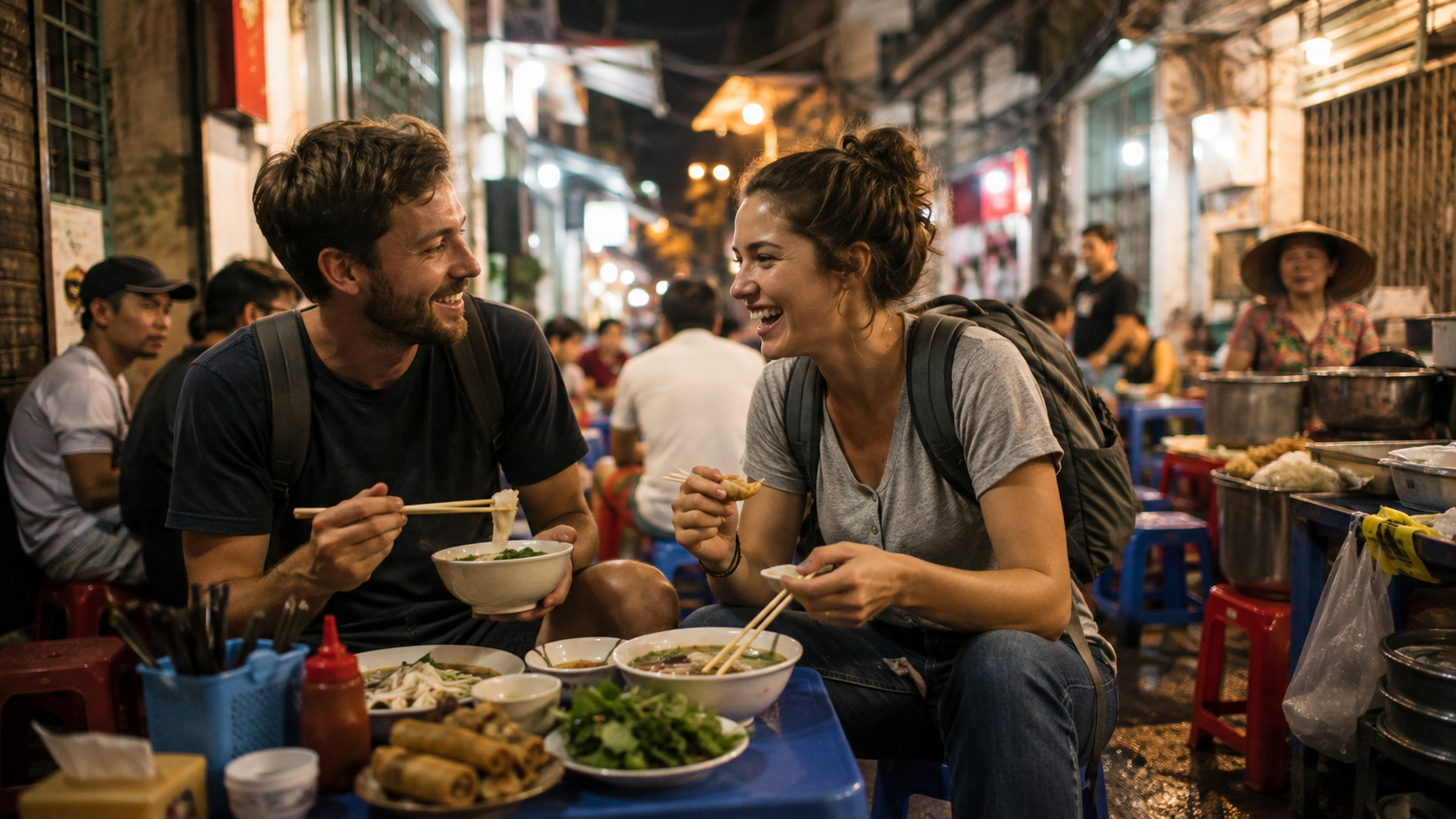
After the market, a local meal brings the story closer. It may be breakfast at a small stall, lunch with a family or a dish prepared from ingredients just bought. Travelers do not only taste flavor; they begin to understand how Vietnamese meals combine rice, vegetables, dipping sauces, savory dishes, soup and herbs. A simple meal can reveal the differences between the North, Central Vietnam and the South more clearly than a general introduction.
Short encounters give the experience emotion
The most memorable parts of local experiences often come from short encounters. A seller smiles when travelers try to pronounce a dish, an artisan slowly explains one step of the work, a host offers another cup of tea, or a local person shows visitors how to eat a familiar dish. These moments do not need heavy staging. They come naturally when travelers have enough time and when the local connector knows how to keep the rhythm comfortable.
A guide or local host helps these encounters become easier to understand. They may translate a friendly joke, explain a small gesture of politeness, or help travelers know when to ask more and when to quietly observe. This matters because local spaces do not exist only to serve visitors. They are real places of work, time, privacy and personal limits.
When approached well, these small encounters create warmth. Travelers may not remember every dish name or village name, but they remember the seller’s smile, the sound of a knife on a chopping board, steam rising from a morning broth, an artisan’s hand passing over an unfinished object, or the way a host gently invites them to sit down. These details give the journey people, scenery and memory.
An immersive itinerary example for travelers who want to feel Vietnam more closely
A gentle one-day route for observing daily life
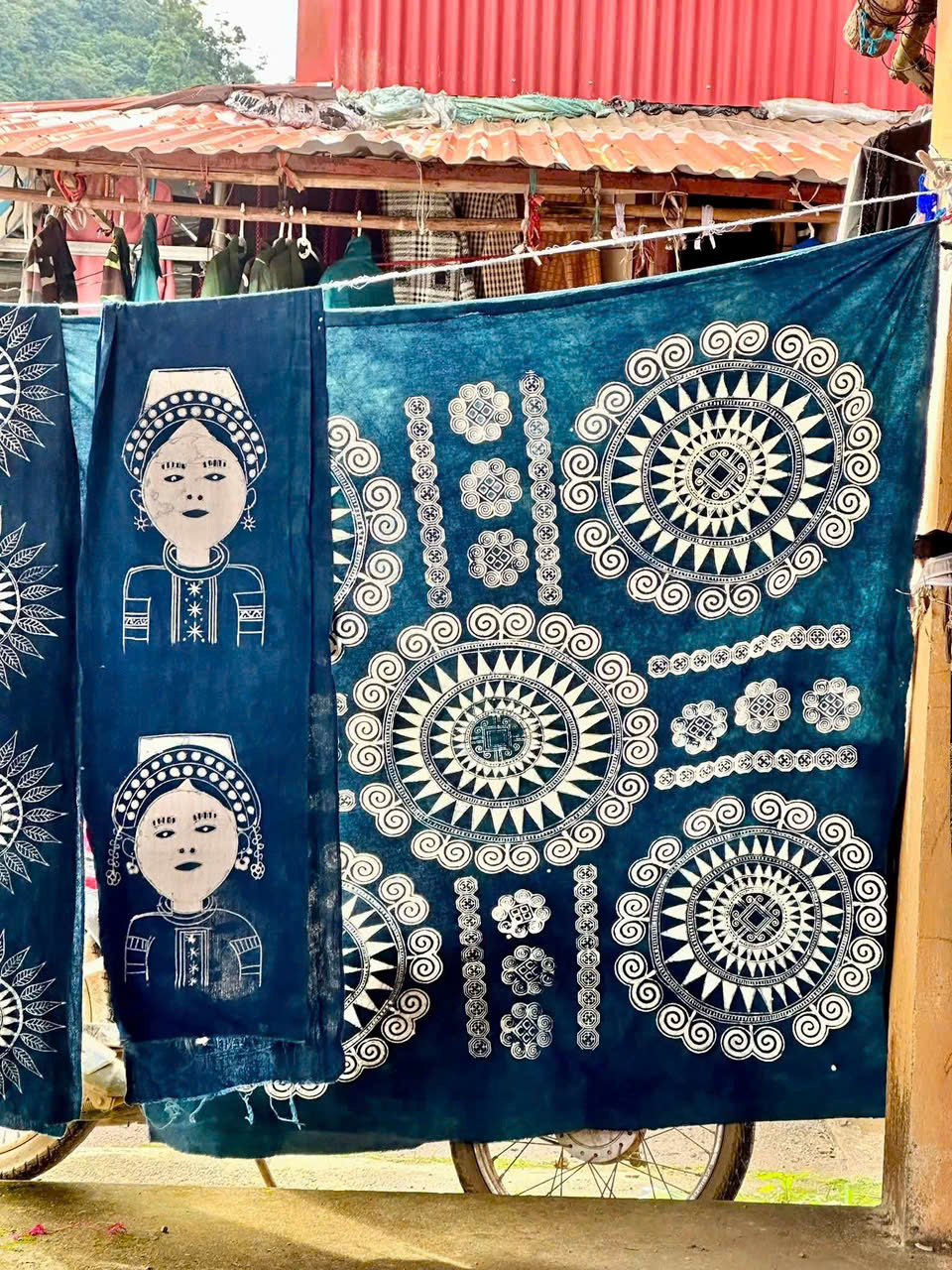
A gentle itinerary can begin from a city or small town, continue to a morning market, include a local breakfast, stop at a craft village or family space, and end with lunch built around regional food. The route does not need to be far. What matters is that the stops are connected, allowing travelers to move naturally from ingredients to work, from local stories to a meal.
For first-time visitors to Vietnam, this style is easy to enjoy. It does not require heavy movement or special fitness, but still reveals several layers of local life. Travelers can walk slowly through a market, stop at a few stalls, learn about ingredients, then visit a working space or share a meal in a warm setting. A day like this is lighter than a long tour, but if carefully designed, it still has depth.
This soft route also suits photography lovers, food-focused travelers, families or visitors who want to avoid a tiring schedule. Instead of trying to cover too many places, the itinerary leaves time for morning light, market stories, a dish explained properly and a meaningful stop with local connection. This keeps the experience from feeling fragmented and preserves a natural rhythm.
A deeper route for culture, craft and community stories
For travelers who want more depth, the route can extend beyond the main center: traditional craft villages, old houses, farming areas, river landings, local markets or communities that still keep strong daily practices. These places help travelers understand that Vietnamese culture is not only found in museums or monuments. It also lives in daily work, artisan hands, family meals and the ways communities preserve older habits.
A deeper route needs more time and better preparation. Travelers should not be taken to too many places in one day. If visiting a craft village, there should be time to see real work, hear the story behind the craft, understand how the product is used in daily life and, if there is hands-on participation, keep it light and respectful. If sharing a family meal, arrangements should be made in advance so the host feels comfortable and travelers understand simple manners.
Personalize the journey so the experience does not feel generic
Local experiences become truly valuable when they fit the traveler. Food lovers should have more time for markets, kitchens, regional dishes and family meals. Photography lovers need suitable light, routes with daily-life scenes and enough time to stop. Culture-focused travelers may appreciate craft villages, old houses, community spaces or local history. Comfort-focused travelers may need fewer stops, more breaks and smoother transport.
What should be avoided is turning local experiences into the same checklist for everyone. Not every traveler wants to cook, not everyone likes crowded markets, not everyone feels comfortable eating inside a local home, and not everyone wants too much cultural explanation in one day. A good planner listens first and chooses stops afterward.
When the route is personalized well, ordinary things become meaningful. A bowl of noodles is not only breakfast, but a story of ingredients and eating habits. A craft village is not only a place to see products, but a story of hands, time and change. A short encounter is not only a quick interaction, but a moment when travelers feel welcomed into a real space.
In the end, a beautiful local experience does not need too many activities. It needs the right place, the right people, the right timing and the right approach. When these elements meet, travelers do not simply add another item to the itinerary. They carry away a soft, warm memory that feels very close to Vietnamese daily life.
Plan a better-value Vietnam journey with local support
Send us your expected travel dates, number of travelers and main wishes to receive itinerary advice and a suitable quote from Tradition Việt.
📞 Hotline: (+84)967 04 88 91 / (+84)376 304 008.
📧 Email: info@traditionviet.com.
Address: CT2A, Hanoi Homeland, Thuong Thanh Ward, Long Bien District, Hanoi.