

Vietnam local experiences often feel close and natural, but for the journey to be comfortable, travelers should understand the budget, difficulty and logistics behind them. A morning market, a family meal, a craft village visit or a day through the countryside may not seem complicated, yet each activity needs the right timing, the right local connection and the right level of access for the traveler.
Local experiences should not be treated as small extras that can be added to an itinerary at any moment. If they are arranged too quickly, travelers may only take a few photos and leave. If they are poorly prepared, the activity may inconvenience local people or make travelers feel out of place. When budget, timing, transport, guide support and participation level are planned clearly, local experiences become easier, more genuine and more valuable within the whole Vietnam journey.
Understand cost and difficulty before choosing local experiences
Cost is not only entrance fees or meals
Many local experiences look simple, so travelers may assume the cost should be very low. In reality, the budget is not only about entrance fees, meals or a small contribution to a local family. It may include a guide, transport, local coordination time, interpretation, meal preparation, activity arrangement, suitability checks and backup options if weather or local schedules change.
What makes the budget change between experiences
Budget changes according to the type of experience. A market walk and local breakfast are different from a private family meal. A craft village near the city is different from a journey to a rural area that requires private transport, local contacts and longer travel time. If the experience is private, low-volume, well interpreted and designed around the traveler’s interests, the cost is usually higher, but the comfort and depth are also stronger.
Preparation level also affects price. A family meal is not only about buying ingredients and cooking. The host needs to prepare time, space, menu, guest comfort and sometimes adjust dishes for vegetarians, children or travelers with dietary limits. A craft village is not only a place to observe. If travelers are to understand it properly, the visit needs explanation, suitable timing and a way to participate without disturbing real work.
Group size matters too. Small groups often cost more per person, but the experience is deeper, conversation is easier and the local space is less disturbed. Larger groups may reduce cost, but if not handled carefully, the experience can become noisy and superficial. For activities connected with real daily life, small scale usually preserves more sensitivity.
Difficulty is not only about how much walking is required
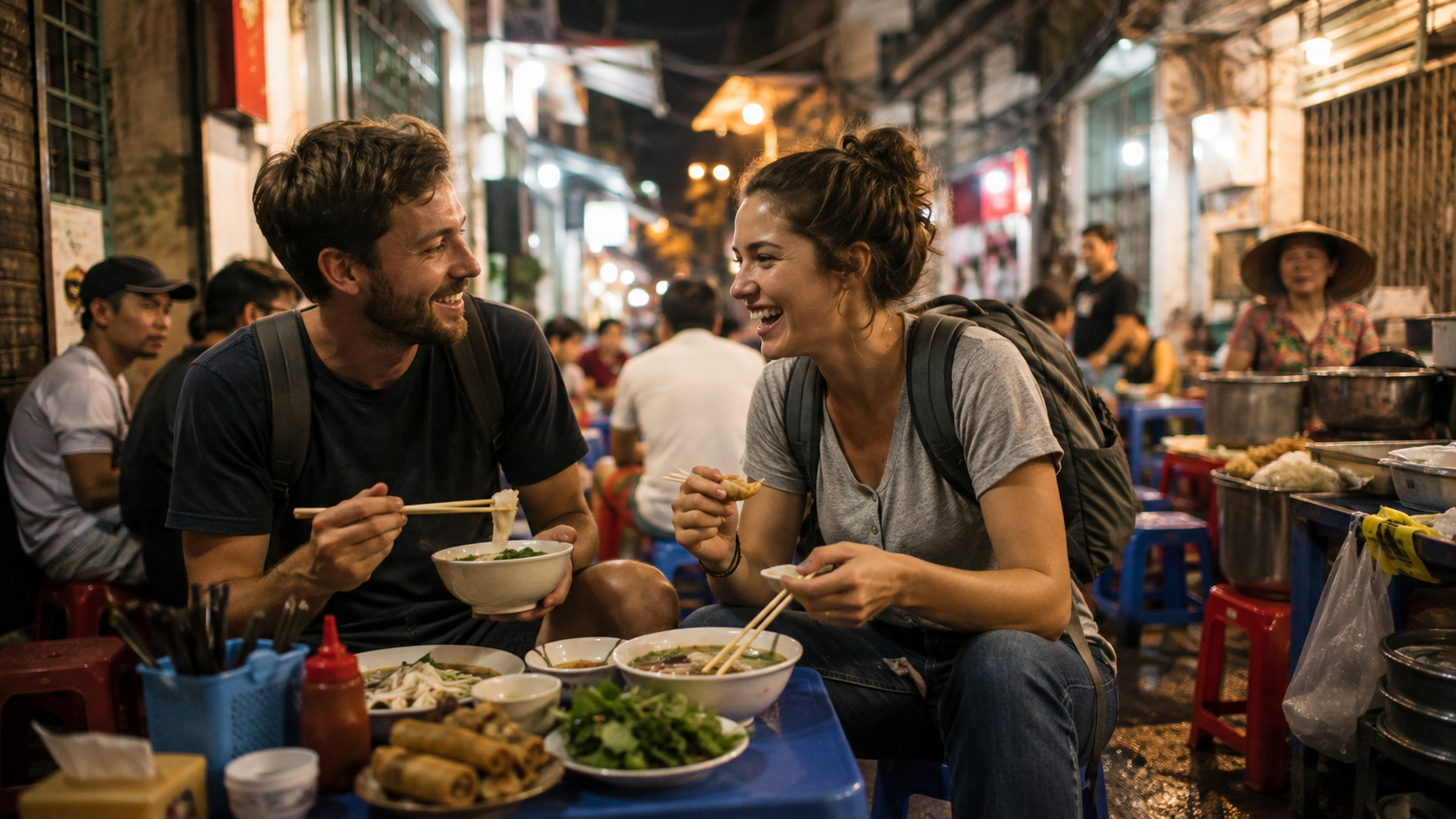
Local experiences are not always physically demanding, but they still have different levels of difficulty. A market visit may seem easy, but a crowded, hot, noisy and narrow space can tire some travelers quickly. A craft village may be close to the city, but standing for a long time, walking on uneven ground or observing work in a warm space can still require consideration. Difficulty is therefore not only about walking distance.
There is also cultural difficulty and personal comfort. Some travelers love entering kitchens, eating with families and talking with people they have just met. Others need more time to feel natural. Certain foods, smells, household spaces or social habits may be very new to international guests. Without preparation, they may feel uncertain even if the activity is not physically hard.
Logistics help local experiences remain natural and respectful
Transport, timing and rest points should be planned first
Even if a local experience seems light, transport still needs careful planning. A small market may be located inside narrow lanes, a craft village may not suit large vehicles, and a local family may not be able to welcome guests during private daily routines. Transport should match the road, group size and distance. Sometimes a smaller vehicle, a short walk or a different pickup point makes more sense than trying to bring a large vehicle too close.
Timing should follow the real rhythm of local life. Markets have busy hours, family kitchens have cooking times, craft villages have working hours and local people have rest periods. If the itinerary ignores these rhythms, travelers may arrive when the activity is already quiet or may force hosts to adjust too much. A good experience often begins with the right timing: not so early that it disturbs people, and not so late that daily life has already moved on.
The local connector determines the quality of the experience
For local experiences, the guide or connector plays a major role. They do not only translate language; they translate cultural context. They know what should be explained first, what travelers should observe quietly, when to ask, when to stop, how to greet people and which behavior may make locals uncomfortable. This is difficult to replace in a self-guided visit.
A good connector also protects the natural quality of the experience. They do not force hosts to perform, do not turn artisans into display figures and do not allow travelers to enter private spaces clumsily. They hold the rhythm for both sides: travelers receive enough information to understand, and local people still feel respected. When this balance is kept, the experience becomes deeper and less awkward.
A person who understands the local area can also handle small changes. If the market is too crowded, they can choose another route. If a dish does not suit the traveler, they can suggest another option. If it rains, the activity can move indoors. If travelers want to stay longer at an interesting stop, the later part of the day can be adjusted. These soft responses keep the journey natural without losing control.
Keep the boundary between genuine experience and disturbing local life
A good local experience should satisfy travelers while respecting local people. Travelers should not be brought into homes, markets, workshops or community spaces unless locals are genuinely comfortable. Photos should not be taken too closely, personal questions should not go too far, and artisans should not be interrupted only to create a beautiful moment. Authenticity needs sensitivity.
Plan a better-value Vietnam journey with local support
Send us your expected travel dates, number of travelers and main wishes to receive itinerary advice and a suitable quote from Tradition Việt.
📞 Hotline: (+84)967 04 88 91 / (+84)376 304 008.
📧 Email: info@traditionviet.com.
Address: CT2A, Hanoi Homeland, Thuong Thanh Ward, Long Bien District, Hanoi.