

A good Hue travel guide should do more than list monuments. Hue is one of the places in Vietnam where history, architecture, ritual, food and river life still meet in a quiet and readable way. It was the imperial capital under the Nguyen Dynasty, and the Complex of Hue Monuments is now one of Vietnam’s most meaningful cultural heritage areas. Yet the city does not feel frozen in the past. Temples, family restaurants, garden houses, local markets and the Perfume River continue to shape the daily rhythm of the former capital.
For many international travelers, Hue is the moment when Vietnam becomes deeper than a sequence of beautiful landscapes. Hanoi may introduce the old quarter and northern energy. Hoi An may offer lanterns, tailoring and riverside evenings. Ho Chi Minh City may bring movement, commerce and contemporary life. Hue, by contrast, invites you to slow down and ask how a country remembers its royal past, how food can carry regional identity, and how silence, water and architecture can make a travel day feel more meaningful.
This guide is designed for travelers who want to enjoy Hue with comfort and clarity. It explains why Hue deserves proper time, which experiences should be included, how to pace the visit, when to travel, and how Tradition Việt can help you build a more coherent Vietnam itinerary around this essential Central Vietnam destination.
Why Hue deserves a real place in your Vietnam itinerary
Hue is not only an ancient capital; it is a living cultural landscape
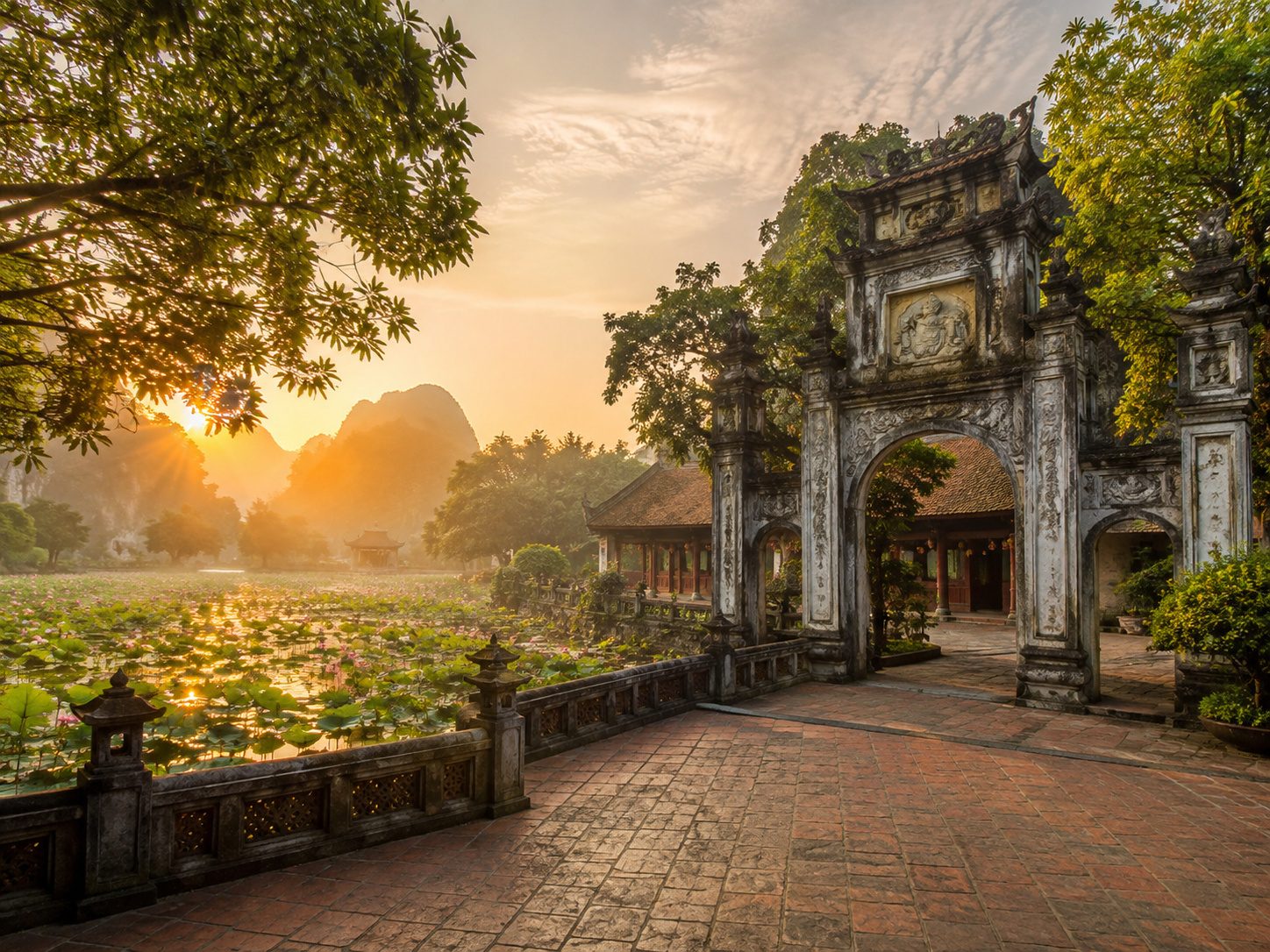
Hue is different because its heritage is still connected to everyday life. You can walk through imperial gates, stand in large courtyards, follow tiled corridors, then leave the monument area and find a small family restaurant, a quiet coffee shop, a pagoda bell or a local market nearby. This makes Hue feel less like a closed museum and more like a city where memory is still part of the street. A well-planned visit should leave room for that feeling, not only for taking photos at famous entrances.
The essential experiences to include in a balanced Hue itinerary
The Imperial City is usually the starting point. It deserves time, especially if you want to understand the scale and symbolic order of the former royal capital. The gates, courtyards, halls, ponds and remaining structures are easier to appreciate when you move slowly rather than rushing from one photo stop to another. Even where restoration is ongoing, the space itself tells a story about power, ceremony and the way the Nguyen Dynasty organized court life.
The royal tombs add another layer. Minh Mang, Tu Duc and Khai Dinh are often included in classic Hue itineraries, but they should not be treated as identical stops. Some tombs feel more harmonious with nature, some are more personal and poetic, while others show strong decorative ambition and cultural mixture. A balanced day may combine the Imperial City in the morning with one or two tombs in the afternoon, followed by local food in the evening instead of adding too many monuments.
Why local guiding changes the quality of a Hue visit
Hue contains many details that are easy to miss without context. The position of a gate, the axis of a courtyard, the role of water, the decoration on a roof, the location of a tomb, or the difference between royal and popular food traditions can all change the way you see the city. A good guide does not need to overload the day with dates and names. The best guiding in Hue is selective, clear and human. It helps you understand why a place matters, then gives you time to observe it with your own eyes.
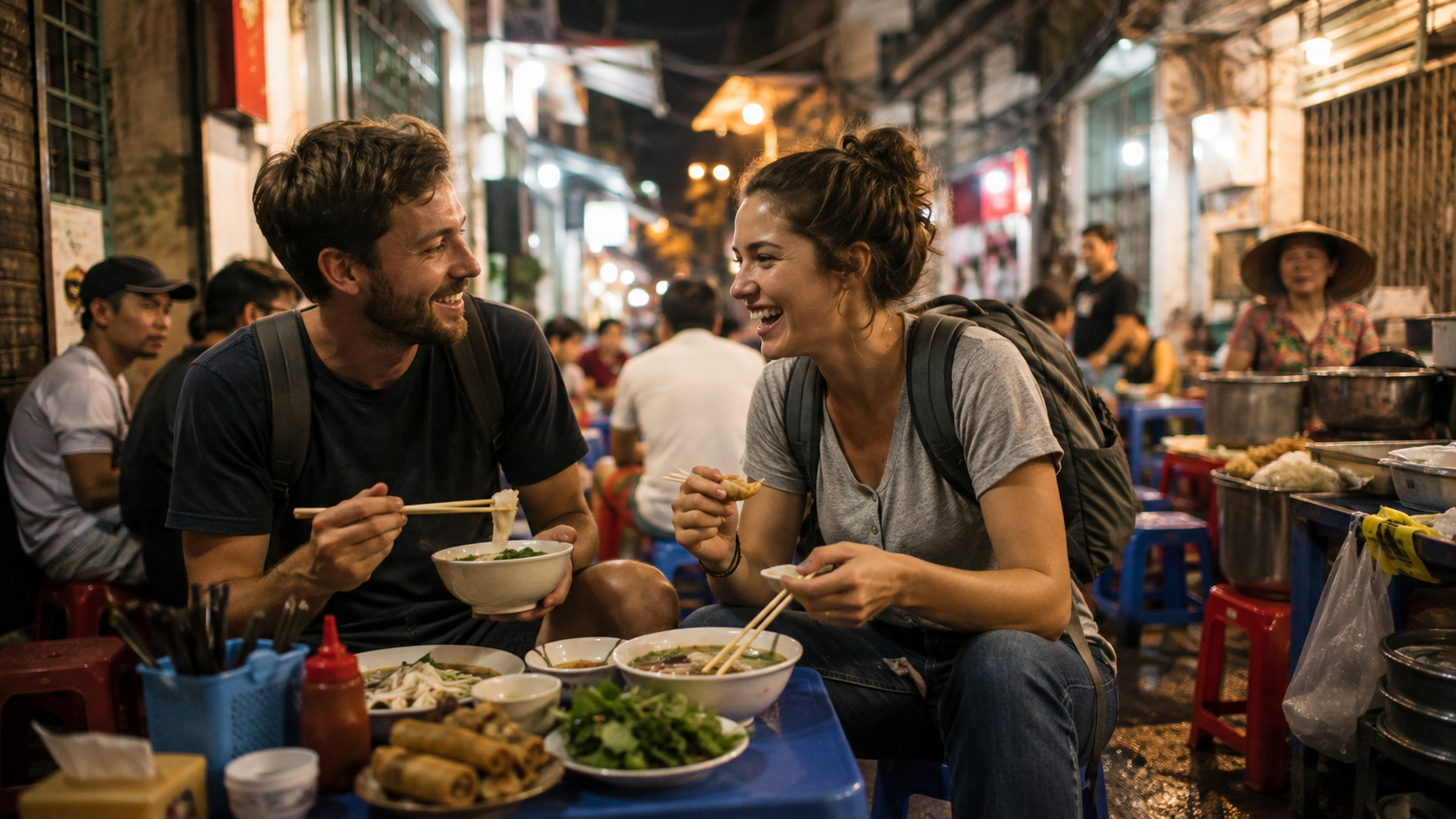
This is especially important for different traveler profiles. A couple interested in architecture may want more explanation about spatial design and restoration. A family with children may need a lighter narrative, shorter walking sections and more visual storytelling. Senior travelers may require careful pacing and shaded breaks. Food lovers may want to connect monuments with market visits, garden houses or regional dishes. Hue can serve all these interests, but not with the same fixed route for everyone.
That is why a private or tailor-made itinerary is often the best way to experience Hue. If you have only one day, the selection must be precise. If you have two or three days, the city can open up through river views, pagodas, garden houses, craft villages, local meals or even a wider Central Vietnam route. The difference is not only how many places you see, but whether the day feels coherent, comfortable and worth remembering.
How to plan Hue with comfort, depth and better connections across Vietnam
How long should you stay in Hue?
One night in Hue is the minimum for travelers who want a meaningful first impression without rushing too much. It allows you to see the Imperial City, include one or two major royal tombs, enjoy a local dinner and feel the slower atmosphere of the city after day visitors have moved on. A day trip can work in some situations, but it often reduces Hue to a checklist and makes the experience feel thinner than it should.
Two nights are more comfortable for most international travelers. With two nights, you can separate the Imperial City from the tombs, add Thien Mu Pagoda or a Perfume River moment, and still keep time for meals and rest. Three nights suit travelers who enjoy cultural depth, photography, local food, craft villages or slower travel. Hue is not a destination that needs to be hurried. The more you try to compress it, the more its quiet value disappears.
The right length also depends on the larger Vietnam itinerary. If you are traveling from Hanoi to Central Vietnam, Hue can connect naturally with Danang and Hoi An. If your focus is heritage and landscape, Hue may also combine well with Phong Nha, Ninh Binh or other culturally rich stops. The key is to avoid placing too many long transfers and heavy walking days back to back. Hue is rewarding, but it asks for energy and attention.
Best time to visit Hue and what to prepare
Hue is most enjoyable when the weather supports walking and outdoor sightseeing. The spring months from February to April are often appreciated for a softer atmosphere, while the hot summer period requires earlier starts, shaded breaks and a realistic pace. Rain can affect Central Vietnam later in the year, so travelers visiting in wetter months should keep the itinerary flexible and avoid overloading every day with outdoor monuments. Comfortable shoes, light rain protection when needed, sun protection in hotter months and a hotel with a convenient location can make the experience much easier.
How Tradition Việt can make your Hue itinerary more coherent
The strongest Hue itinerary starts with your travel style. Some travelers want the most important monuments in a compact route. Others prefer a slower day with more stories, local meals, garden houses or river scenery. Some visitors come to Vietnam for the first time and need Hue to connect clearly with Hanoi, Hoi An, Halong Bay or the Mekong Delta. Others have already seen the highlights and want a more personal cultural experience. These differences matter.
Tradition Việt can help you decide how many nights to spend in Hue, which monuments to prioritize, how to order the visits, when to include a guide, and how to avoid unnecessary fatigue. For travelers who want comfort, a private vehicle and an experienced local guide can make the day smoother, especially when royal tombs are outside the city center. For families or senior travelers, pacing is just as important as the choice of sites. For culture-focused travelers, we can build more depth into the visit without making it feel academic.
Talk to a Vietnam travel advisor to shape your Hue travel guide into a real itinerary. Share your travel dates, number of travelers, preferred pace and the places you already want to include in Vietnam. We will help you connect Hue with the rest of your journey in a way that feels balanced, personal and easy to follow.
Hue Travel Guide FAQ
Is Hue worth visiting on a first trip to Vietnam?
Yes. Hue is one of the best places to understand Vietnam through heritage, royal history, architecture and regional food. It is especially valuable for travelers who want more than beaches and city sightseeing.
How many days do I need in Hue?
One night gives you a first impression, two nights are more comfortable, and three nights are ideal if you enjoy culture, food, photography or slower travel. The best choice depends on your full Vietnam itinerary and travel pace.
Can I visit Hue as a day trip from Danang or Hoi An?
It is possible, but it can feel rushed. A day trip may suit travelers with limited time, while at least one night in Hue gives a better sense of the city and reduces transfer fatigue.
What are the main places to visit in Hue?
Most first-time visits include the Imperial City, selected royal tombs, Thien Mu Pagoda, the Perfume River and local food experiences. The exact selection should depend on your interests, time and energy level.
Do I need a guide in Hue?
A guide is highly recommended for the Imperial City and royal tombs. Local explanation helps you understand the meaning of the architecture, court history and cultural details that are easy to miss when visiting alone.
When is the best time to visit Hue?
February to April is often a pleasant period for sightseeing. Summer can be hot, so early starts and midday breaks are useful. Wetter months require more flexibility and backup options for outdoor activities.
Contact Tradition Việt
Send us your expected travel dates, number of travelers and main wishes to receive itinerary advice and a suitable quote from Tradition Việt.
📞 Hotline: (+84)967 04 88 91 / (+84)376 304 008
📧 Email: info@traditionviet.com
Address: CT2A, Hanoi Homeland, Thuong Thanh Ward, Long Bien District, Hanoi.
Tradition Việt SEO EN | TVEN-EN-20260601-1