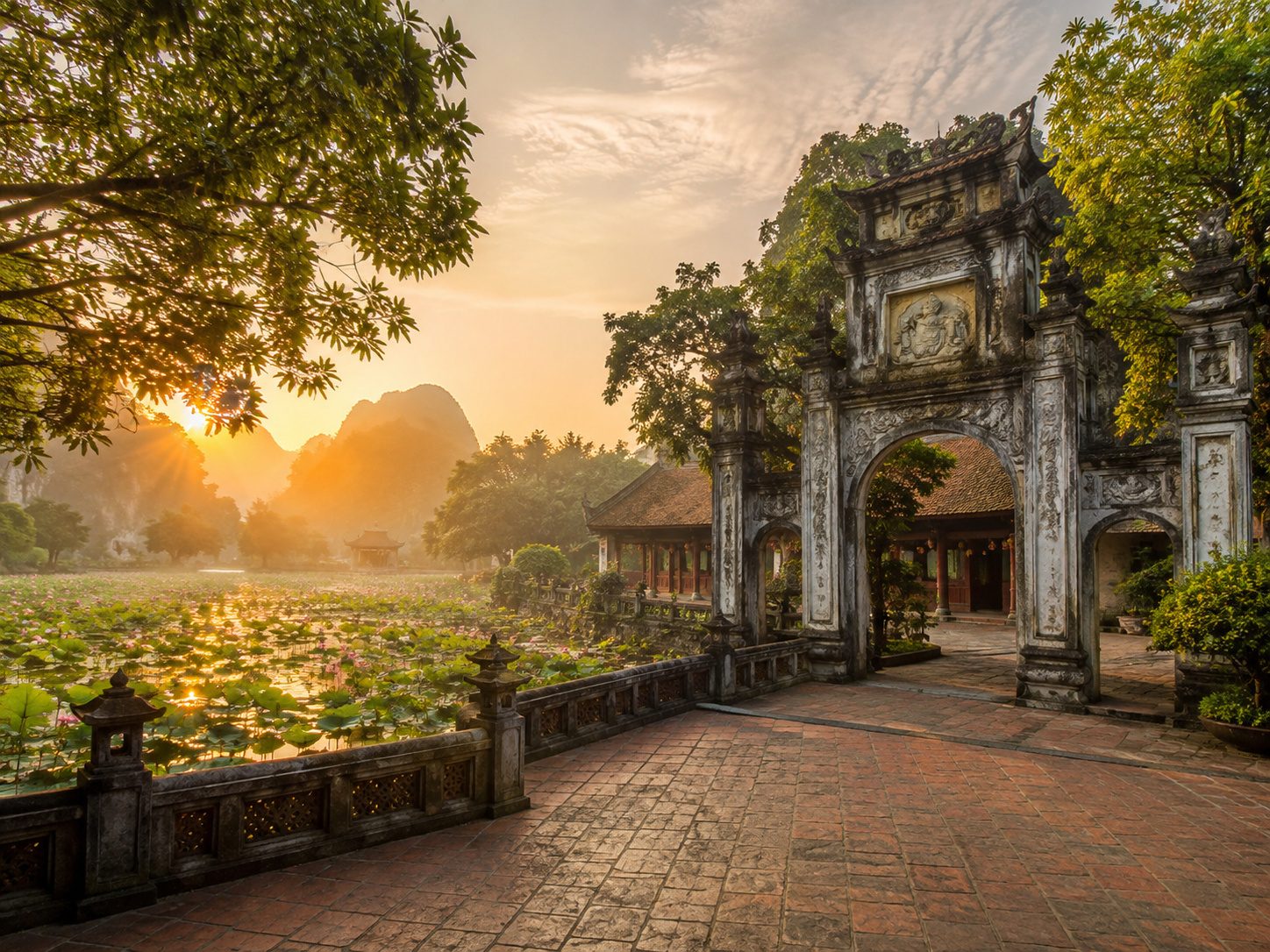


A memorable Hue guided tour does not begin by counting how many attractions are included. It begins with the feeling of the city opening slowly: mossy citadel gates, the surface of the Perfume River, pagoda bells, tree shadows in royal tombs, the aroma of morning bun bo, and small stories behind life in the former capital. Hue does not invite loudly. This city needs a guide with enough subtlety to help travelers see the depth within its quietness.
When guided well, Hue is not only the Imperial City, royal tombs, or Thien Mu Pagoda. It is where history, religion, cuisine, architecture, and local rhythm appear together in one journey. Each stop feels like a small chapter: some solemn, some melancholic, some very everyday beside a tray of Hue cakes or a cup of hot tea. This connection turns a Hue tour into an immersive experience, not only a heritage visit.
The Local Story Behind a Hue Guided Tour
Hue is a city of many layers. A tiled roof, a screen wall, a lotus pond, a riverside road, or a small dish can open a story about aesthetics, rituals, climate, and how Hue people keep memory in daily life. A good guide does not need to turn the tour into a long lecture. They know how to choose the right details at the right moment so travelers understand why this city has its own voice in Vietnam travel.
Hue tells stories through quietness, not display
Unlike many energetic tourist cities, Hue does not impress through speed. The city often stays in memory through pauses: standing before an old citadel gate, hearing wind through trees at Tu Duc Tomb, watching the Perfume River change color in the late afternoon, or eating a small banh beo while understanding more about the refinement of Central Vietnam cuisine. A guided tour helps these moments avoid passing too quickly.
The Imperial City, royal tombs, and ancient pagodas are connected
When traveling independently, visitors may see the Imperial City, royal tombs, and Thien Mu Pagoda as three separate types of attractions. But in Hue’s story, they are closely connected. The Imperial City speaks of power and court order. Royal tombs reveal how each emperor chose to converse with nature, time, and memory. Ancient pagodas, the Perfume River, and Buddhist life soften that solemnity with spiritual depth.
A good guide helps travelers notice the differences between royal tombs instead of remembering only that they all have courtyards, gates, ponds, and steps. Minh Mang Tomb feels balanced, calm, and clearly ordered. Tu Duc Tomb is more poetic, private, and melancholic. Khai Dinh Tomb is entirely different, marked by cultural fusion and a more debated aesthetic. Once travelers understand this, Hue becomes more alive in each architectural choice.
Cuisine and daily life bring Hue closer
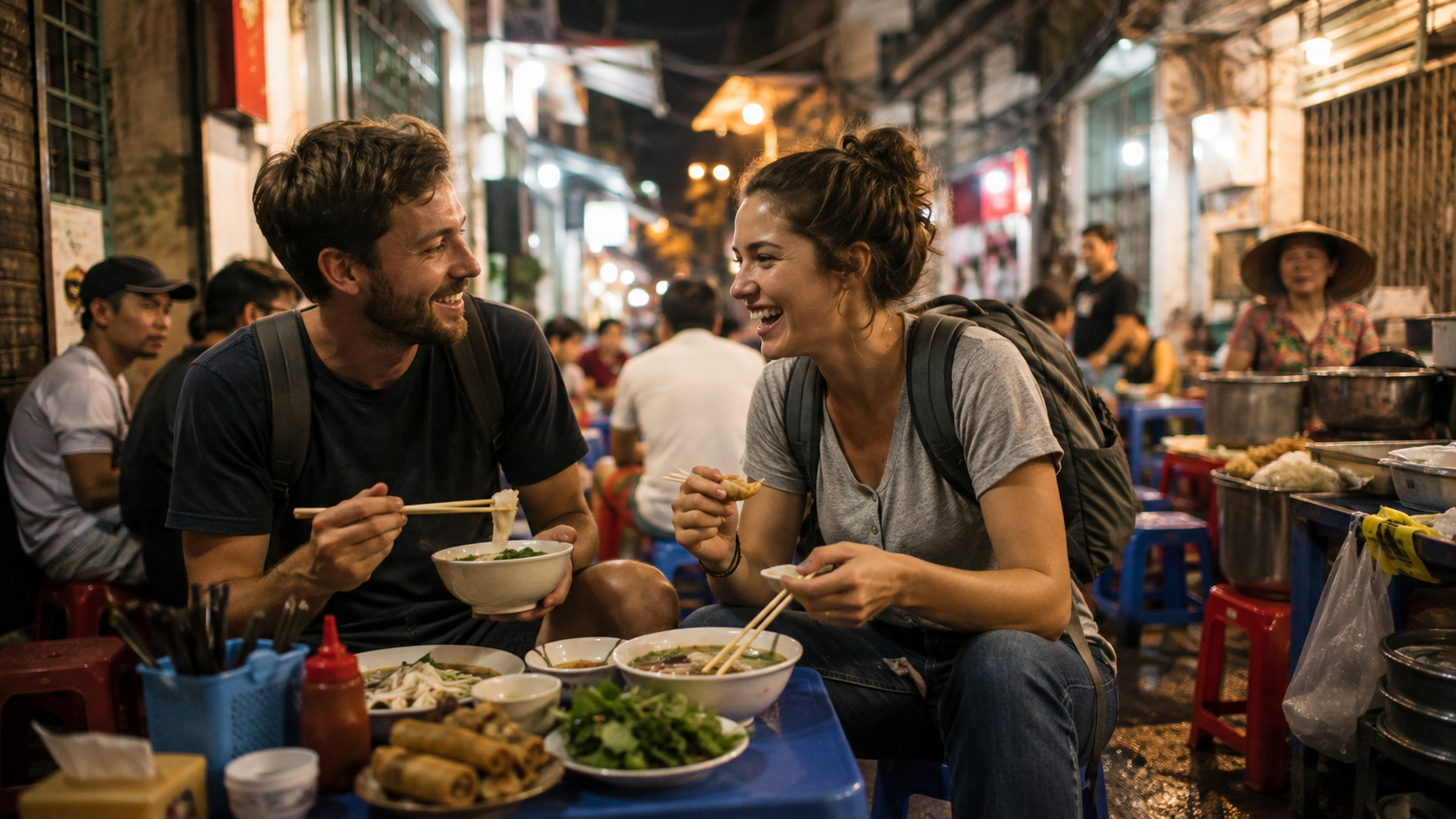
Heritage gives Hue depth, but cuisine makes the city feel close. A meal with bun bo, mussel rice, banh beo, banh nam, banh loc, Hue sweet soup, or small dishes in a market can show another Hue: meticulous, restrained, layered in flavor, and attentive to balance. Hue dishes do not always need large portions; they need precision in seasoning, presentation, and eating style.
When the tour moves from heritage sites to a local meal, the story of the former capital becomes less distant. After hearing about palaces and royal tombs, sitting in a small eatery lets travelers feel Hue physically: gentle heat, fermented shrimp aroma, soft rice cakes, quiet voices, and the local habit of eating slowly. This part is essential if a Hue tour is to become more than knowledge.
Everyday life also appears in less famous stops. A market, an incense village, a garden house, a riverside road, or a small tea shop can help travelers see that Hue is still living, not only remaining in the past. A good guided tour brings these details in just enough, so the journey has breath without weakening the heritage thread.
An Immersive Hue Experience Example
Imagine a day in Hue that does not rush through too many sites, but follows a carefully arranged emotional thread. The morning is for imperial space, lunch brings local food, the afternoon enters royal tombs or an ancient pagoda, and the day ends with a softer moment by the Perfume River. Such a day does not chase too many stops, but it gives travelers enough layers of the city.
Morning in the Imperial City: reading the city through gates, axes, and tiled roofs
Morning is a beautiful time to enter the Imperial City, especially before the sun becomes too strong. The guide can begin with how the citadel sits within the wider space of Hue, then take travelers through gates, courtyards, palaces, and remaining traces. Instead of explaining too much, the guide can choose a few clear points so travelers understand the main axis, rituals, court life, and how historical changes transformed the heritage.
What makes the Imperial City experience deeper is not only information, but knowing when to pause. Some places deserve a longer look at architectural proportion. Some details need a short explanation before travelers observe quietly. Some empty spaces may carry more emotion than a fully preserved building. When the guide controls this rhythm well, travelers do not drown in facts but still understand the spirit of the citadel.
After the Imperial City, a Hue lunch is a natural transition. Instead of continuing immediately to royal tombs, travelers can sit down for bun bo, mussel rice, or small Hue cakes. This meal becomes a pause for both body and mind. What has just been heard in the heritage site softens through local flavor, keeping the day from becoming overly solemn or too information-heavy.
Afternoon at royal tombs, Thien Mu Pagoda, and the Perfume River
The afternoon can focus on one or two carefully chosen stops instead of trying to visit many tombs. If travelers like balanced space, Minh Mang Tomb offers a strong sense of structure. If they want a more poetic and private mood, Tu Duc Tomb has powerful atmosphere. If they are interested in aesthetic fusion, Khai Dinh Tomb creates a different story. Each choice should serve a clear angle, not only because the place is famous.
Thien Mu Pagoda and the Perfume River can make the end of the day gentler. After stories of power, dynasties, and royal tombs, a riverside pagoda helps travelers feel Hue through spiritual depth and landscape. This does not need to be a long visit. Sometimes just enough time to hear about the pagoda’s location, look at the river, and let the city slow down is already worthwhile.
Tradition Việt can help you choose a suitable Hue tour through /en/hue-guided-tour/. If you want the Hue experience to be more than visiting monuments, and instead become a day with story, pauses, food, and stops that match your interests, Talk to a Vietnam travel advisor so the itinerary is designed around season, timing, and companions.
Why Hue experiences should be designed around the traveler
Hue should not have one fixed formula for every traveler. History lovers may want deeper stories about the Nguyen Dynasty and citadel architecture. Families with children need a lighter tour, fewer outdoor stops, and more pauses. Older travelers need reasonable walking distances. Couples may enjoy a softer afternoon by the river, with coffee, a garden house, or a Hue dinner. Each group needs a different way to open Hue.
Customization helps avoid two common problems: too dense or too thin. A schedule that is too dense makes travelers tired and leaves nothing clear in memory. A plan that is too thin turns Hue into a few beautiful places without enough depth. When the itinerary is built around interest, energy, and season, the city has enough space to appear more naturally.
An immersive Hue tour also needs to know what to leave out. Not every royal tomb must be visited. Not every attractive-sounding experience should be added. Not every meal needs to be elaborate. Sometimes removing one stop to gain twenty minutes by the river, hear the right story, or enjoy a proper local meal makes the journey much more memorable.
FAQ
How is a story-based Hue tour different from a normal sightseeing tour?
A story-based Hue tour does not only take travelers through famous sites. It connects the Imperial City, royal tombs, pagodas, Perfume River, cuisine, and local life into a clearer experience.
Do I need to love history to enjoy a Hue tour?
No. A good Hue tour is not only about history. It also includes architecture, landscape, cuisine, religion, local life, and beautiful pauses.
Which royal tomb should I choose if time is limited?
It depends on your interests. Minh Mang Tomb suits those who like balanced structure, Tu Duc Tomb suits poetic atmosphere, and Khai Dinh Tomb suits travelers interested in distinctive architectural fusion.
Should I include food in a Hue tour?
Yes. Food brings Hue closer and softens the heritage experience. Bun bo, mussel rice, banh beo, banh nam, banh loc, and Hue sweet soup are all worth trying.
Is an immersive Hue tour suitable for families?
Yes, if the itinerary is comfortable, includes rest time, chooses stops suitable for children, and avoids placing too many outdoor heritage sites in one day.
When should I choose a customized Hue tour?
Choose a customized tour if you want deeper storytelling, travel with family or older guests, have limited time, want to include food, garden houses, craft villages, or need flexibility according to weather.
A deep Hue guided tour does not only tell stories through words. It tells them through citadel gates, tiled roofs, ponds, tree shadows, small dishes, pagoda bells, and the river passing through the city. When arranged with the right rhythm, Hue is no longer a solemn and distant stop, but a soulful part of the Vietnam journey.
To build a Hue experience that is deep, gentle, and rich in local stories, Talk to a Vietnam travel advisor. Tradition Việt can help choose the stops, duration, food, transport, and guiding style so your Hue visit becomes more natural, refined, and memorable.