

A good Hanoi food tour should balance famous dishes with real-life experience. Pho, bun cha, rice rolls, or egg coffee help travelers touch recognizable flavors. But morning markets, alley eateries, seasonal dishes, and the way local people order food give the journey more depth. Instead of moving only from dish to dish, the route should help travelers understand why Hanoi eats this way, where each dish fits, and when it tastes best.
Try Hanoi’s signature street food
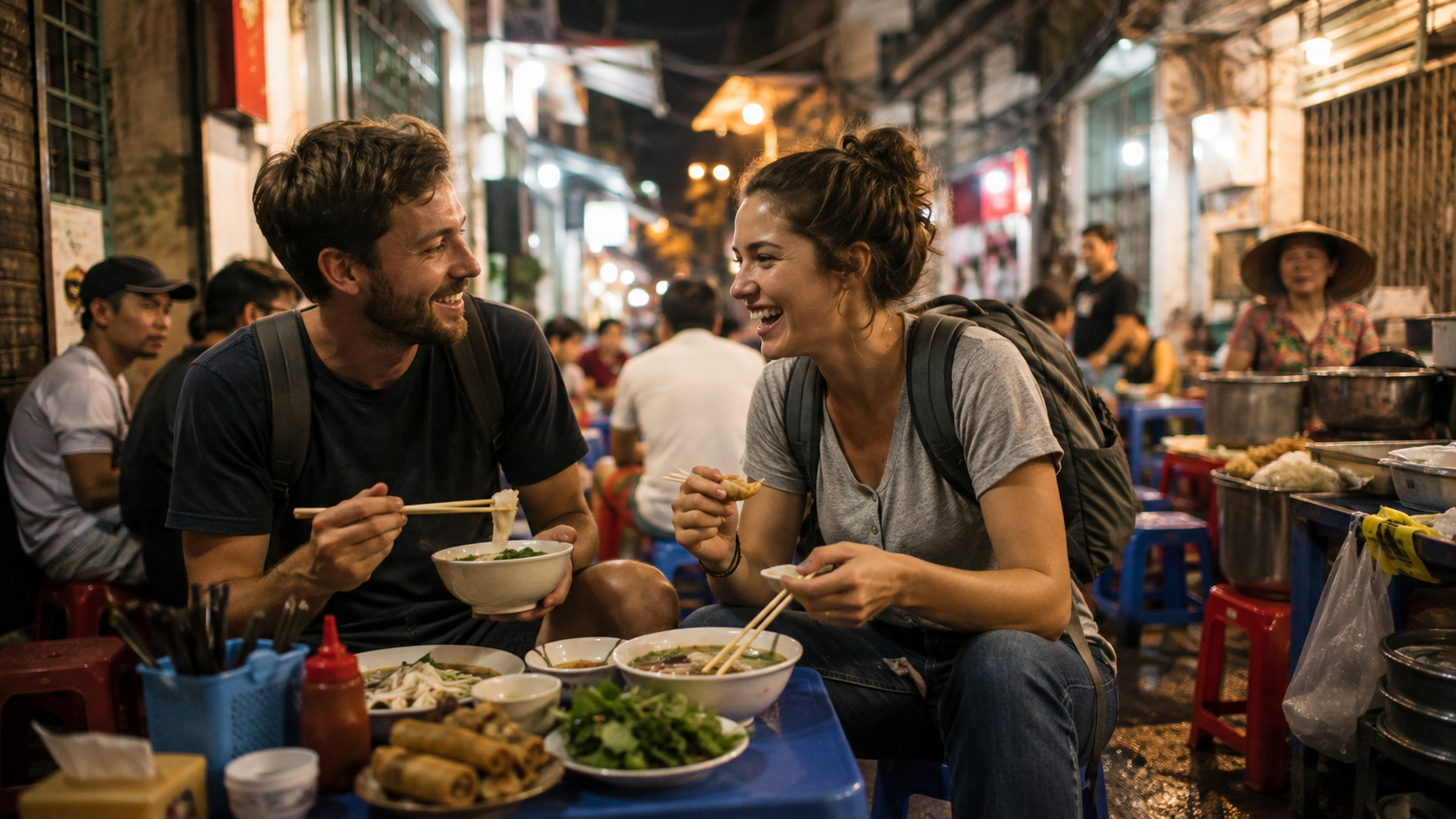
Street food belongs in any Hanoi food tour. A morning bowl of pho, smoky bun cha, soft rice rolls, crab noodle soup, or hot fried spring rolls can introduce travelers to the basic layers of Northern Vietnamese flavor. Each dish has its own eating style: some need herbs, some depend on dipping sauce, some taste better with garlic vinegar, and some are best at a certain time of day.
What makes these dishes memorable is not only flavor, but also the surrounding setting. Travelers may sit on low stools, watch vendors move quickly, hear orders being called, and see local customers enter and leave naturally. This kind of experience makes Hanoi feel closer because the city is no longer only a sightseeing destination. It is living, eating, and moving right in front of you.
Walk through the Old Quarter and taste the city corner by corner
The Old Quarter is a very suitable area for connecting several food stops in one route. Distances between eateries are short, small streets have many layers of atmosphere, and each corner can lead travelers to a different flavor: noodle soup, grilled food, rolls, sweets, or coffee. Walking makes the tour feel softer because travelers do not only eat; they also see trade, old architecture, traffic, and Hanoi’s evening life.
Explore markets, local eateries, and seasonal dishes
For a food tour with more depth, travelers should include an experience connected to a market or local eatery. Morning markets show ingredients before they become dishes: herbs, noodles, rice cakes, spices, meat, fish, dried goods, and small stalls serving breakfast. This is where travelers see the foundation of Hanoi cuisine, not only the finished bowl.
Local eateries in small alleys are also worth noticing. Many places sell only one dish, open during specific hours, and serve mostly regular customers. The space may be simple, but the flavor often feels clearly Hanoian. For food lovers, these stops help the trip move beyond a list of famous dishes and touch real eating habits.
Seasonal dishes should also be included when timing is right. Cooler months suit hot soups, warm dishes, and grilled food. Summer suits lighter dishes, rolls, sweet soup, fruit, and iced coffee. When the tour follows the season, the experience feels much more natural. Travelers are not only eating Hanoi food; they are tasting Hanoi as it feels on that particular day.
Choose food experiences according to traveler style
Not everyone should follow the same food route in Hanoi. First-time visitors need approachable dishes, a moderate pace, and clear explanations. Food lovers may want to go deeper into ingredients, long-running shops, and less common dishes. Families need comfortable stops, child-friendly food, and a route that is not too long. Vegetarians or travelers with allergies need careful planning. When experiences are chosen according to traveler style, the tour becomes tastier and more comfortable.
First-time visitors should begin with approachable dishes
For first-time visitors to Hanoi, dishes such as pho, bun cha, rice rolls, spring rolls, sweet soup, or egg coffee are usually good choices. They are distinctive enough to make an impression, but not too difficult to try. The tour should have a clear order: main dish, lighter bite, rest stop, sweet dish, or coffee. This helps travelers understand broth, herbs, dipping sauce, and local eating spaces without feeling overwhelmed.
Food lovers should choose deeper routes with stories
For travelers who truly enjoy food, a tour that stops only at famous dishes may not be enough. They often want to know what ingredients are used, why a shop opens only at certain hours, how broths differ, how fermented shrimp paste is used, or why Hanoians eat a dish at a specific time. These questions require a route with more depth and a guide with practical knowledge.
A deeper route may include morning markets, family-run shops, seasonal dishes, or foods that rarely appear on tourist menus. However, not every unfamiliar dish should be added to one tour. The guide should understand the traveler’s taste, willingness to try new food, and dietary limits. When chosen well, a less familiar dish can become one of the most memorable parts of the trip.
A deeper food experience also needs time for conversation. Travelers should not only eat and move on; they should have moments to hear about cooking methods, eating style, shop stories, and differences between versions of a dish. Talk to a Vietnam travel advisor if you want a Hanoi food tour that feels deeper, less generic, and suited to your personal taste.
Families should prioritize safe and comfortable stops
Families with children or older travelers should choose a lighter food route. Some excellent eateries in Hanoi are small, use low stools, become crowded, or require waiting during peak hours. These places may be exciting for adults, but not always convenient for children. A family food tour should prioritize easier seating, approachable dishes, moderate duration, and routes without too much continuous walking.
If the group includes vegetarians, spice-sensitive travelers, people with allergies, or anyone needing lighter food, this information should be shared in advance. Hanoi cuisine uses fish sauce, broths, herbs, and some ingredients that can confuse foreign visitors. With good preparation, the route can reduce risk while keeping the local experience. A good family tour is one that makes everyone feel comfortable, not only the most adventurous eater.
Frequently asked questions about things to do on a Hanoi Food Tour
What should a Hanoi food tour include?
It should include signature dishes such as pho, bun cha, rice rolls, spring rolls, sweet soup, or egg coffee. Depending on taste, travelers can add markets, local eateries, or seasonal dishes.
Is the Old Quarter the best place to begin?
The Old Quarter is very convenient because many food stops are close together, it is walkable, and the atmosphere is lively. It is a good choice for first-time visitors or evening tours.
Should a food tour include a market visit?
Yes, if travelers want to understand ingredients and local daily life more deeply. Morning markets are especially good for food lovers and those who enjoy observing real routines.
Is a Hanoi food tour suitable for families?
Yes, if the route includes easy-to-eat dishes, comfortable stops, moderate duration, and avoids overly crowded or very late hours. Families should share children’s ages and food needs in advance.
Can vegetarians join a Hanoi food tour?
Yes, but they should mention it before booking. Some dishes use meat broth, fish sauce, or fermented shrimp paste, so the route must be checked carefully.
Should I book a private food tour?
A private tour is useful for dietary needs, families, slower pacing, or travelers who want deeper access to less common local eateries.
A memorable Hanoi food tour should include flavor, stories, and enough pauses for travelers to feel the city. From familiar street dishes to morning markets, from small alley eateries to a final cup of coffee, each experience reveals another layer of capital life. When activities are chosen according to taste and group energy, eating becomes one of the closest ways to understand Hanoi.
Tradition Việt can help design a Hanoi food tour according to taste, length of stay, group age, dietary needs, and other destinations in your Vietnam itinerary. Talk to a Vietnam travel advisor to choose experiences that are delicious, safe, and truly Hanoian.