

Hanoi is a city that can be felt very clearly through food. A hot bowl of pho in the morning, smoky bun cha from a charcoal grill, egg coffee in a small café, or thin rice rolls just lifted from the steamer all tell part of the capital’s story. Food here does not live only in restaurants. It is found on sidewalks, in alleys, morning markets, family-run shops, and simple tables where local people have returned for years.
A good Hanoi Food Tour should not be only about eating as many dishes as possible. What matters more is understanding why a dish belongs to a certain street, when it tastes best, how to order it, which foods suit first-time visitors, and which experiences are better with a local guide. When arranged with care, a culinary journey does more than fill the stomach. It opens the rhythm, habits, and memories of Hanoi.
Why a Hanoi Food Tour belongs in a Vietnam itinerary
Hanoi’s food is special because it is deeply connected to daily life. Many of the best dishes are not found in luxurious spaces, but in small shops that sell only a few items, open at familiar hours, and keep their flavor across generations. For first-time visitors to Vietnam, a food tour makes discovery easier: what to try first, which dishes are approachable, what to know about dipping sauce, herbs, spice, seating, and eating style. It is a very natural way to enter Hanoi, not through a monument, but through aroma and the table.
Street food shows Hanoi at its most familiar
Street food is one of Hanoi’s most lively layers. Travelers can begin with pho, bun cha, rice rolls, crab noodle soup, sticky rice, fried spring rolls, or small snacks in the Old Quarter. These dishes are famous not only for taste, but also for how they belong to different moments of the day. Some suit the morning, some feel right at lunch, and others become more enjoyable in the evening when the streets light up.
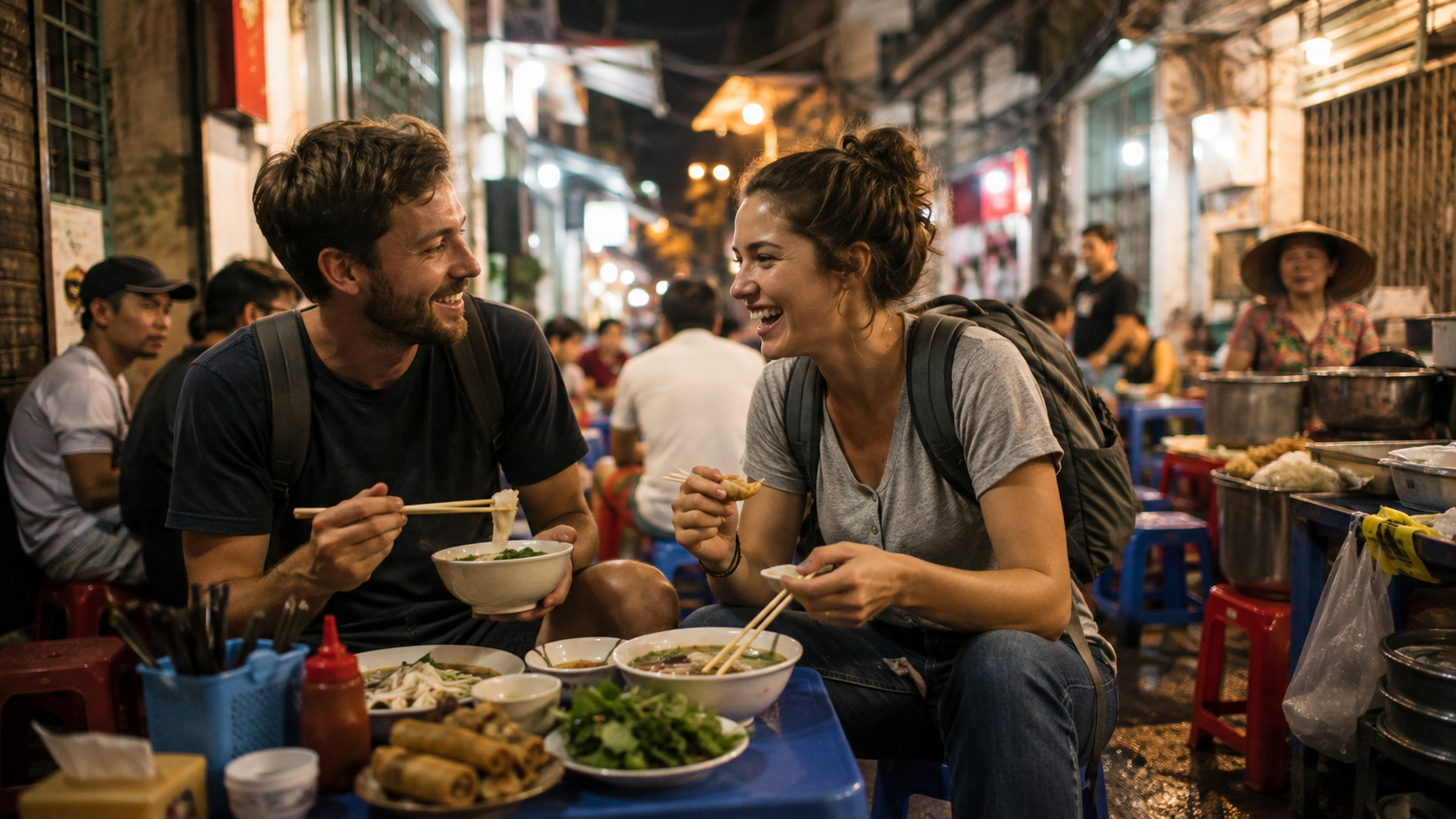
The charm of street food also comes from its real setting. A low stool, a bowl of dipping sauce, a basket of herbs, traffic passing nearby, and a vendor preparing each portion by memory create a feeling very different from a restaurant. For many travelers, this is the moment Hanoi feels less distant. The city becomes closer through the way locals eat, order, wait for seats, and talk around the table.
Still, street food needs careful selection. Not every crowded place suits foreign visitors, and not every dish is easy to try on the first day. A local guide can help choose clean places, suitable timing, approachable dishes, and the right way to eat. This allows travelers to have a real experience while avoiding the confusion of facing too many choices alone.
The Old Quarter is an easy place to begin a food journey
Hanoi’s Old Quarter is a very convenient area to begin a food tour. Its narrow streets sit close together, and each corner may offer a familiar dish, an old shop, or a café worth stopping at. In one evening, travelers can walk through many layers of flavor: hot noodle dishes, grilled food, rolls, desserts, coffee, or a final light snack. Short distances make the journey softer, without requiring much transport.
What makes the Old Quarter appealing is not only the number of dishes, but also the feeling of walking through a working city. The smell of charcoal, voices calling orders, light from small storefronts, moving crowds, and narrow houses create a very Hanoi setting. With good storytelling, each dish can be placed in the context of the street: why local people like it, when the shop is busiest, and how the dish changes with the season.
Coffee and sweets soften the journey
After savory dishes, a coffee or sweet stop helps balance the food tour. Egg coffee, iced milk coffee, sweet soup, fried cakes, ice cream, or a local dessert can slow the journey at the right moment. It also gives travelers a chance to sit down, watch the street, and feel Hanoi in a gentler way after several dishes in a row.
How to choose a Hanoi Food Tour by traveler style
Not every traveler needs the same kind of food tour. First-time visitors need an approachable route, safe dishes, and clear explanations. Food lovers may want to go deeper into markets, family-run shops, or less common dishes. Families need a lighter pace, suitable seating, and easy-to-try food. Vegetarians, spice-sensitive travelers, or people with allergies need better preparation before the tour. When the tour matches real needs, the food experience becomes tastier, more comfortable, and lower risk.
First-time visitors should choose an approachable route
For first-time visitors to Hanoi, the tour should begin with dishes that are easy to enjoy but still distinctive. Pho, bun cha, rice rolls, spring rolls, egg coffee, or a local dessert are good choices. These dishes introduce travelers to broth, dipping sauce, herbs, grilled flavors, and Vietnamese eating style without making the first experience too challenging.
The first food route should also have a moderate pace. It is not ideal to eat too many dishes in a short time, because travelers need space to taste, ask questions, rest, and move. A good tour should include something warm, something lighter, a main dish, a smaller bite, and a pleasant ending. With this order, new visitors can see Hanoi’s food richness without feeling overwhelmed.
Food lovers can go deeper into markets and local shops
For travelers already familiar with culinary travel or wanting deeper understanding, Hanoi has many layers beyond famous dishes. Morning markets, small noodle shops, single-dish restaurants, long-running alley eateries, or seasonal foods can open a more interesting flavor journey. This type of tour is not only about eating, but also about seeing how ingredients are sold, how locals choose meals, and how a dish exists in daily life.
A deeper route, however, needs careful guidance. Some dishes have stronger flavors, unfamiliar eating styles, or very local settings, so they may not suit everyone. Travelers should explain how adventurous they are, any food limits, and what they hope to experience before the tour. When properly prepared, less familiar food experiences can become the most memorable part of the trip.
For food-focused groups, a guide who understands cuisine makes a major difference. The guide does not only bring travelers to a shop; they explain ingredients, eating methods, the shop’s story, differences between versions of the same dish, and small details travelers may not notice alone. Talk to a Vietnam travel advisor if you want a Hanoi Food Tour that goes deeper, feels more selective, and matches your taste.
Families and travelers with dietary needs should prepare in advance
Families with children, older travelers, vegetarians, spice-sensitive guests, or people with allergies should share information before booking. Hanoi has many suitable dishes, but not every shop can adjust easily on the spot. When requirements are clear from the beginning, the route can include easier dishes, more convenient seating, and a duration that works for the whole group.
Frequently asked questions about Hanoi Food Tour
What dish should a Hanoi Food Tour start with?
For first-time visitors, it is good to begin with approachable dishes such as pho, bun cha, rice rolls, spring rolls, or egg coffee. They are distinctive but not too difficult to try.
Is the Old Quarter suitable for a food tour?
Yes. The Old Quarter has many food stops close together, a lively atmosphere, and long-running shops. It works well for an evening or half-day food tour.
Is a Hanoi Food Tour suitable for children?
Yes, if the dishes are easy to eat, stops are not too crowded, the duration is moderate, and seating is suitable. Families should share children’s ages and food needs in advance.
Can vegetarians join a Hanoi Food Tour?
Yes, but they should mention it before booking. Some dishes use meat or fish-based broth and sauces, so the route needs to be selected carefully.
Should I explore food alone or book a guided tour?
If you know Hanoi well, exploring alone can be fun. For first-time visitors, a guide helps choose suitable places, explain dishes, reduce confusion, and save time.
What time of day is best for a food tour?
Evening is excellent in the Old Quarter because the atmosphere is lively and many foods are available. Morning works well for pho, rice rolls, markets, and local daily rhythm.
A memorable Hanoi Food Tour is not about eating the largest number of dishes. It is about eating the right dishes, at the right time, while understanding the story behind each flavor. From morning pho to smoky bun cha, from egg coffee to small alley dishes, each stop can open a new way to see the city. When the route has rhythm, food becomes one of the most intimate ways to experience Hanoi.
Tradition Việt can help design a Hanoi Food Tour according to taste, length of stay, group age, dietary needs, and other destinations in your Vietnam itinerary. Talk to a Vietnam travel advisor to create a safe, natural, and experience-rich culinary journey.
TVEN-EN-20260511-1