
Vietnam is a rewarding destination for travelers who enjoy hiking, light mountain walking, village trails, and nature-focused journeys at a slower pace. From terraced rice fields in the northern mountains to limestone valleys, national parks, cool highlands, and coastal paths, each region offers a different way to meet the country. Walking in Vietnam is not only an outdoor activity. It is a way to move through landscapes, cultures, and local ways of life.
Good vietnam hiking tours require more than a beautiful trail. Travelers need to understand the right season, suitable difficulty level, where a local guide is needed, what to prepare, and how to travel respectfully through local communities. Some routes are gentle enough for families or beginners, while others require better fitness, more time, and careful planning. This guide gives travelers a clear overview before choosing the right hiking experience.
Why Vietnam is appealing for hiking travelers
Vietnam has remarkable geographical diversity within a relatively compact country. In one journey, travelers may encounter high mountains, valleys, tropical forests, terraced fields, ethnic villages, streams, caves, and coastlines. This constant change makes hiking in Vietnam feel varied rather than repetitive. Each region has its own difficulty level, scenery, climate, and story, so choosing a tour should depend on the experience you want, not only on the destination name.
Northern Vietnam is ideal for mountains, terraces, and villages
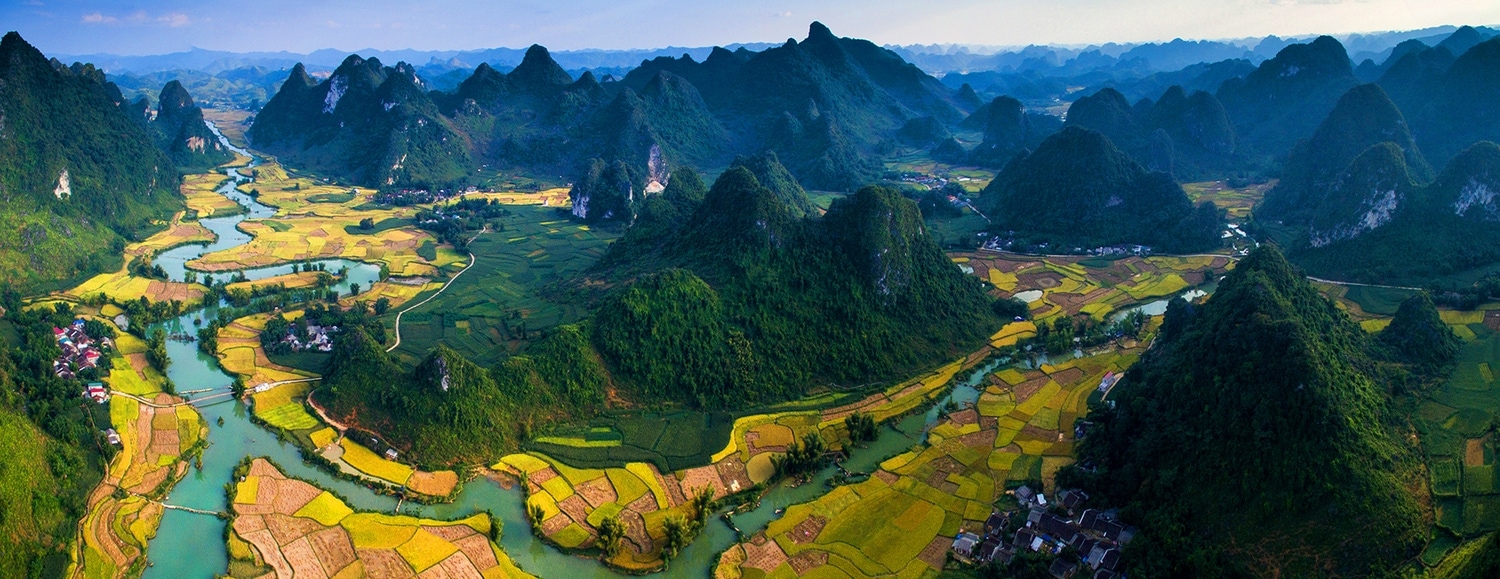
Northern Vietnam is often the first region that comes to mind for hiking tours. Sapa, Hoang Su Phi, Ha Giang, Mu Cang Chai, Pu Luong, and Mai Chau all offer routes that combine mountain scenery, terraced fields, and local community life. Travelers may walk through small villages, pass stilt houses, see people working in the fields, or pause in valleys where daily life feels very different from the city.
The strength of the North lies in its cultural depth. A single day of walking can move through many textures: small dirt paths, seasonal rice fields, family kitchens, local markets, children’s voices in villages, and uphill sections opening into wide views. For photography lovers, the green rice season and golden harvest season can be especially powerful. For culture-focused travelers, ethnic minority communities add a depth that short sightseeing rarely provides.
However, Northern Vietnam also needs careful preparation. Mountain weather changes quickly, paths may become slippery after rain, some areas require long transfers, and not every trail suits beginners. Travelers should discuss fitness level, hiking experience, daily walking hours, and comfort expectations in advance. A well-designed tour makes the mountain experience safer, smoother, and more meaningful.
Central Vietnam and the Highlands offer forests, caves, and plateaus
Central Vietnam and the Central Highlands are suitable for travelers who want to combine hiking with forests, caves, waterfalls, or cooler plateau landscapes. Some routes pass through national parks, conservation areas, pine hills, valleys, or trails near local villages. The scenery here differs from the North: fewer rice terraces, but more forest space, rock formations, rivers, and climate shifts by elevation.
Routes in these regions can vary greatly in difficulty. Some are gentle enough for relaxed walking, while others require professional guiding, suitable equipment, and the ability to adapt to forest terrain. For travelers who love nature, plants, birds, waterfalls, or cave landscapes, Central Vietnam and the Highlands can be valuable additions to a longer itinerary.
Hiking in Vietnam brings travelers closer to local life
Walking allows travelers to see Vietnam from a closer distance. Instead of sitting in a vehicle and passing villages, hikers have time to greet people, observe daily work, smell woodsmoke, hear streams, or stop before an unexpected view. These small moments often make the journey more memorable than the final destination itself.
How to choose the right Vietnam hiking tour
Not every beautiful trail is suitable for every traveler. A good hiking trip should match fitness level, walking experience, season, length of stay, and comfort expectations. Beginners should choose shorter routes with moderate slopes, enough rest stops, and local guidance. Experienced walkers may prefer deeper routes, longer days, or more varied terrain. Choosing well from the beginning makes the trip more enjoyable and prevents unnecessary fatigue.
Check the difficulty level before choosing the destination
Before choosing Sapa, Ha Giang, Pu Luong, or any other area, travelers should first decide how long they can comfortably walk each day. Some people are happy with two or three hours of gentle walking, while others want five or six hours on mountain terrain. Difficulty is not only about distance. It also depends on elevation gain, trail surface, weather, altitude, and repeated uphill and downhill sections.
It is also important to consider whether the route suits the whole group. Families with children, older travelers, or people who are not used to long walks should choose softer trails, vehicle support, and convenient accommodation. Younger groups looking for a challenge can choose longer routes, but they still need clear guidance on safety, footwear, clothing, and weather conditions.
Choose the season by region, not by the whole country
Vietnam stretches from north to south, so weather conditions vary by region. A month may be beautiful in the northern mountains but rainy elsewhere. For hiking plans, travelers should check the season for the specific destination. In Northern Vietnam, rice seasons, dry months, cool months, and rainy periods all create different experiences. Some periods bring stunning scenery but slipperier paths, while others are easier for walking but less dramatic in color.
In forest, highland, or Central Vietnam areas, rain, humidity, and daily weather changes should be considered carefully. After rain, forest paths may become more difficult; on sunny days, exposed sections can drain energy quickly. Local advice helps travelers choose a season that fits both landscape expectations and safety.
Travelers should not choose timing only from beautiful online photos. Images of terraces, clouds, or green forests are often taken during very specific periods. If you travel outside that window, the experience may still be rewarding, but the scenery may look different from expectations. Saying clearly whether you want rice fields, lower rain risk, easier paths, or fewer crowds will help make the itinerary more accurate.
Prepare properly for a lighter and safer journey
A suitable pair of shoes matters much more than stylish clothing. Travelers should choose shoes with good grip, a comfortable fit, and enough support for dirt or rocky paths. A light rain jacket, seasonal outer layer, water bottle, sunscreen, personal medicine, and a compact daypack are also useful. The more practical the packing, the more comfortable the walking experience becomes.
When passing through villages, travelers should also bring a respectful attitude. Do not take close photos without permission, do not enter homes unless invited, do not leave trash, and listen to local guidance about customs. Hiking is not only about crossing terrain. It is also about moving through other people’s living spaces. A good journey should leave a positive feeling for both visitors and host communities.
For multi-day routes, travelers should check accommodation type, meals, bathroom conditions, privacy level, and support options during bad weather. Some people enjoy simple homestays, while others need more comfortable lodging after a long walking day. There is no single correct choice; what matters is understanding the conditions before departure so expectations stay realistic.
Local guides are important for deeper routes
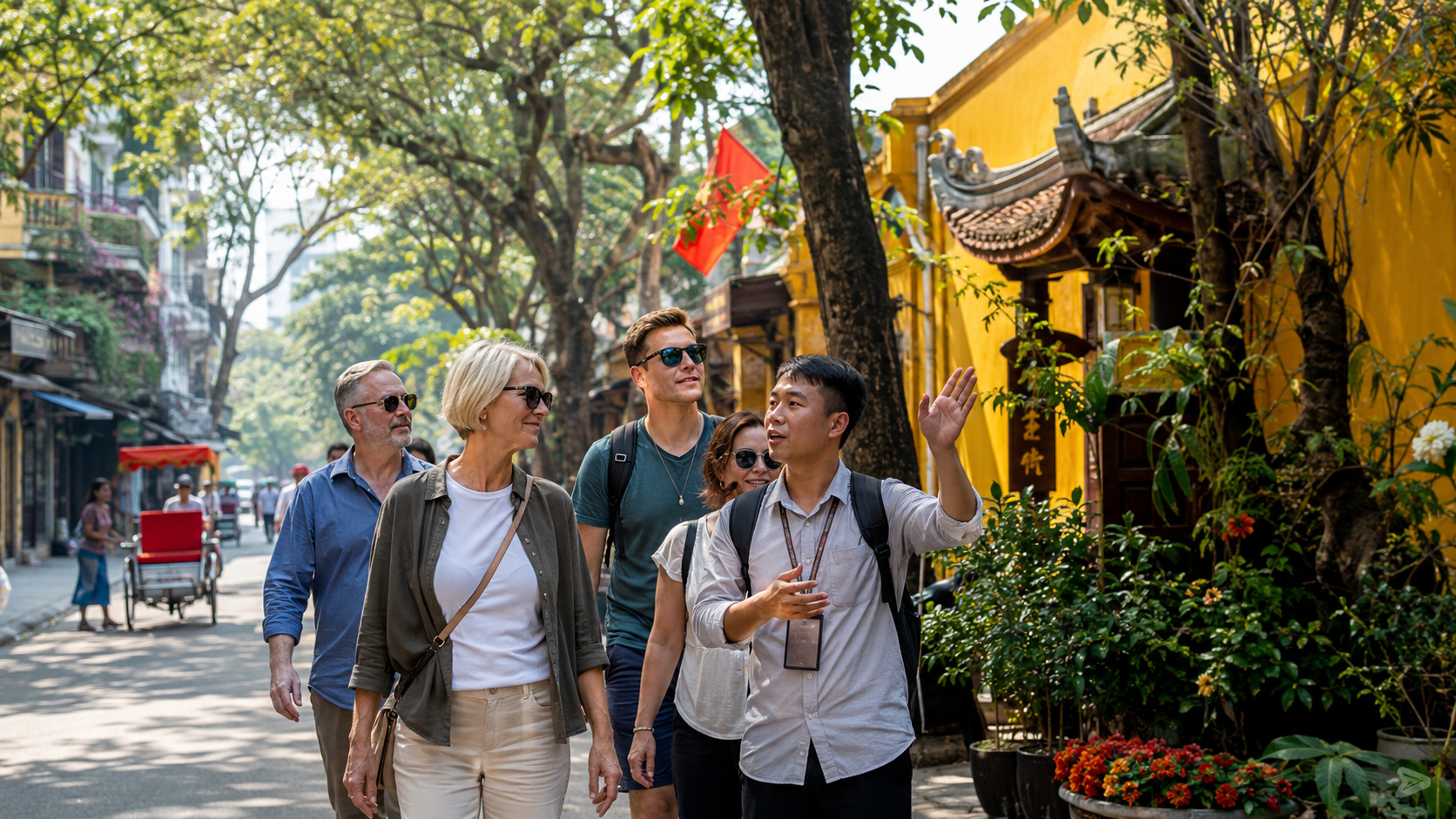
For easy routes near main areas, experienced travelers may walk independently. But for mountain trails, forests, remote villages, or areas with limited signage, a local guide is strongly recommended. Guides help read the trail, adjust the pace, manage weather changes, and connect travelers with local culture in a more natural way.
Frequently asked questions about Vietnam hiking tours
Can beginners join hiking tours in Vietnam?
Yes. Beginners should choose gentle trails, shorter walking times, moderate slopes, and local guidance. Pu Luong, Mai Chau, or selected easy routes around Sapa can work well when planned properly.
How many days do I need for a hiking tour in Vietnam?
For a light experience, one or two days may be enough. For deeper mountain areas, three to five days allow better transfers, walking time, and rest.
Do I need proper hiking shoes?
Yes, shoes with good grip and a comfortable fit are highly recommended. Avoid brand-new shoes or slippery sandals on dirt, rock, mud, or steep paths.
Are hiking tours suitable for families?
Yes, if the route is gentle and flexible. Families should prioritize short walking sections, clear rest stops, vehicle support, and comfortable accommodation.
What is the best season for hiking in Vietnam?
It depends on the region. Northern mountain areas are often attractive during dry periods, green rice season, or harvest season. Forest and highland areas require careful attention to rain, humidity, and trail conditions.
Can hiking be combined with cultural experiences?
Yes. This is one of the best ways to explore Vietnam. Travelers can combine hiking with villages, local markets, homestays, regional food, or craft experiences.
A memorable hiking journey in Vietnam does not have to be the hardest or longest route. What matters is that the trail suits the traveler, the season is chosen well, the pace feels comfortable, and the experience stays close to both nature and local life. With careful planning, each step becomes more than movement through beautiful scenery. It becomes a deeper way to understand the country.
Tradition Việt can help design Vietnam Hiking Tours according to season, fitness level, length of stay, comfort expectations, and other destinations in your itinerary. Talk to a Vietnam travel advisor to choose a route that is suitable, safe, and rich in experience.
TVEN-EN-20260524-1